Alberton
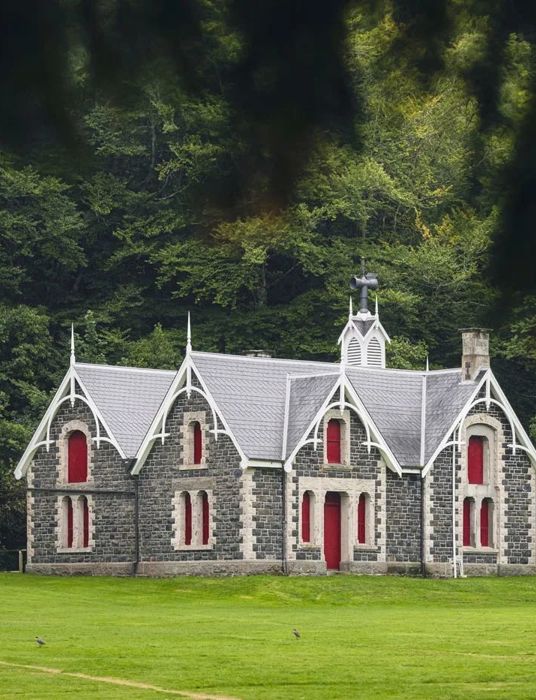
is a distinctive colonial mansion, built about 1863 by one of Auckland's elite
landed families. Originally belonging to Allan Kerr Taylor (1832-1890) and his
first wife, Patty (nee Meredith, 1839-1864), the dwelling was erected on the lower
slopes of Mt Albert as the centrepiece of their 203 hectare (500 acre) country
estate. Overlooking a sizeable proportion of their land, it may have replaced
an earlier scoria cottage, which Taylor is reputed to have constructed after buying
part of the property in 1849, aged seventeen. Taylor was one of several brothers
of Scots descent who purchased estates on the outskirts of early Auckland, funded
by their father, an officer in the Indian Army. Among the wealthier migrants to
the settlement, Taylor and his brothers prospered further by selling land for
suburban subdivisions as the town expanded.
Alberton began life as a two-storey
timber farmhouse with at least eleven rooms and a cellar. Its conversion to a
fashionable mansion probably occurred in the 1870s, after the family's income
had shifted from farming to land sales and company investments. Additions included
an eastern wing with ballroom and a set of exotic corner towers with curved, ogee-shaped
roofs. The latter may reflect oriental influences, linked to Allan Taylor's colonial
Indian origins. The remodelled house at the head of a long, tree-lined driveway
was increasingly used for social entertainment, including 'the first riding ball
in New Zealand' in 1877. Allan Taylor's second wife Sophia (nee Davis, 1847-1930)
made a number of modifications to the house, including the addition of a sewing
room, after he died in 1890, which may reflect the priorites and concerns of a
female-dominated household. The building remained in the family's hands until
1972, when it was bequeathed to the New Zealand Historic Places Trust/Pouhere
Taonga.
Alberton is significant as one of the best-preserved houses of the
colonial elite in the Auckland region, providing tangible evidence of the grandeur
and individuality of many such residences. It gives valuable insights into the
domestic lives of wealthy households, including the respective roles of women,
children and servants. It is a graphic reminder of the value of family networks
in colonial society and their connections with other parts of the British Empire.
The building provides important information on construction methods, materials,
design and decor, and shows how these technologies and fashions changed over time.
It is of value for its connections with the Taylor family, including Allan's second
wife Sophia, who was a supporter of women's suffrage. It is strongly linked with
the development of the surrounding landscape, especially in Mt Albert and Morningside,
and is important for its associated gardens. It enjoys high public esteem and
educational value as a much-visited house museum and historic property, with strong
aesthetic appeal due to its unusual architectural appearance and atmospheric interiors.
New Zealand Historic Places Trust Pouhere Taonga
The
Historic Places Trust Pouhere Taonga is the leading agency for the protection
of sites and buildings in New Zealand that are of historic and cultural significance
to its peoples.
Puritia
nga taonga tuku iho a nga tupuna hei tiki huia ma nga uri whakatupu a Aotearoa.
Keep the treasures
handed down by the ancestors as an adornment for the descendants yet to be born
in New Zealand.