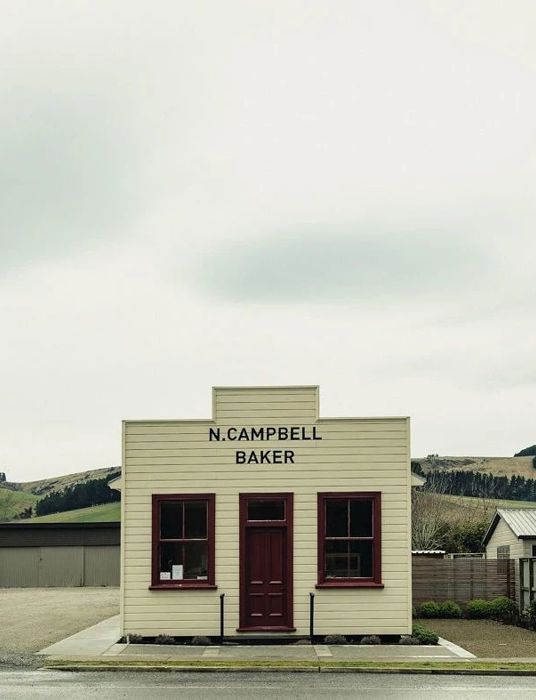
This French factory was built in pioneer New
Zealand to print Maori language books for the Roman Catholic Mission. The last
remaining building of a once-crowded mission headquarters, it is New Zealand's
oldest Catholic building, and our oldest industrial building.
In 1838 three
Frenchmen, a bishop, a priest and a brother of the recently-formed Society of
Mary landed at the Hokianga. The arrival of a French Catholic Mission in New Zealand
outraged the English Church Missionary Society and Wesleyan missionaries, who
despised Catholicism and thought Maori should be Protestant. It also disturbed
the British Resident at Waitangi, James Busby, who feared colonisation by France.
But despite their hostility Bishop Jean-Baptiste François Pompallier's
mission survived.
Reinforced by the arrival of more French Marist recruits,
the Bishop moved to the Bay of Islands in 1839 to found the headquarters of his
Vicariate of Western Oceania at Kororareka (now Russell). Kororareka, just across
the water from the Protestant Church Missionary station at Paihia and James Busby's
Residence at Waitangi, was by now the major trading port of the South Seas. New
French Catholic recruits and supplies arrived here from France and were despatched
around New Zealand and the Western Pacific. From here Bishop Pompallier and his
confreres attended Treaty negotiations at Waitangi in February 1840. And they
were here when war broke out on the neighbouring hillside five years later.
The
narrow site and single, simple building that the Bishop purchased here soon became
crowded with a chapel, cookhouse, well house, workshop, houses for Maori visitors
and boatmen, and other outhouses. But the Marists knew that to spread Catholicism
and to counter the "heresy" of their Protestant rivals they must produce
religious texts in Maori. Spurred by the arrival of a printer and printing tools
and equipment, they built a printery in 1841-42.
Short of funds, they resorted
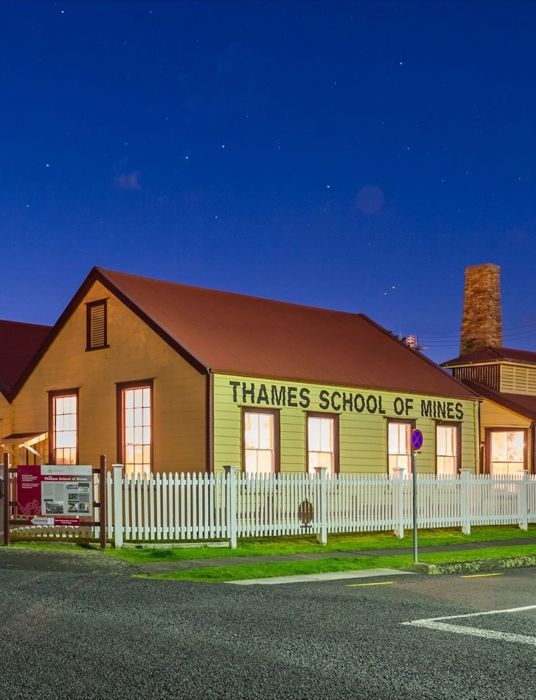
to the construction traditional to their native Lyon and Rhone Valley in the south
of France. The lower storey is made of pise de terre, or rammed earth. The upper
storey in pan de bois, or earth panels in a timber frame. The resulting impressive
and elegant two-storey French colonial building, completed in 1842, has been a
key feature of the town ever since.
In October 1842 the first Maori translations
were ready and the printery, complete with bookbindery and tannery, began production.
Its crowning achievement was 6,000 handmade copies of the 648-page Ko te Ako
me te Karakia o Te Hahi Katorika Romana (The Teachings and Prayers of the
Roman Catholic Church).
By
1850, disagreement between Bishop Pompallier and the Marist Society, together
with the demands of the growing colony, had led to their moving to Auckland and
Wellington respectively. In 1856 the Kororareka mission property was sold to James
Callaghan, who tanned leather in the printery until 1863, then moved into it with
his family. By 1879, when the Greenways acquired the property, the building was
derelict. But Hamlyn Greenway transformed it into an elegant home while his sister,
Jane Mair, created a garden from the once-crowded mission compound and the neighbouring
property, which Hamlyn also acquired. Then in 1904 the Stephenson family moved
in and further developed both house and garden.
All of the families altered
the building to suit themselves, but in doing so weakened it. This problem was
compounded in 1943 when the Government transformed the house into a historic monument,
"Pompallier House". The New Zealand Historic Places Trust took responsibility
for the building in 1967. Realising that its history had been misunderstood (it
had never been a bishop's palace) and that it had been structurally degraded,
in 1990-93 the situation was resolved by returning the building to its original
form in a restoration project that was a milestone for New Zealand heritage conservation.
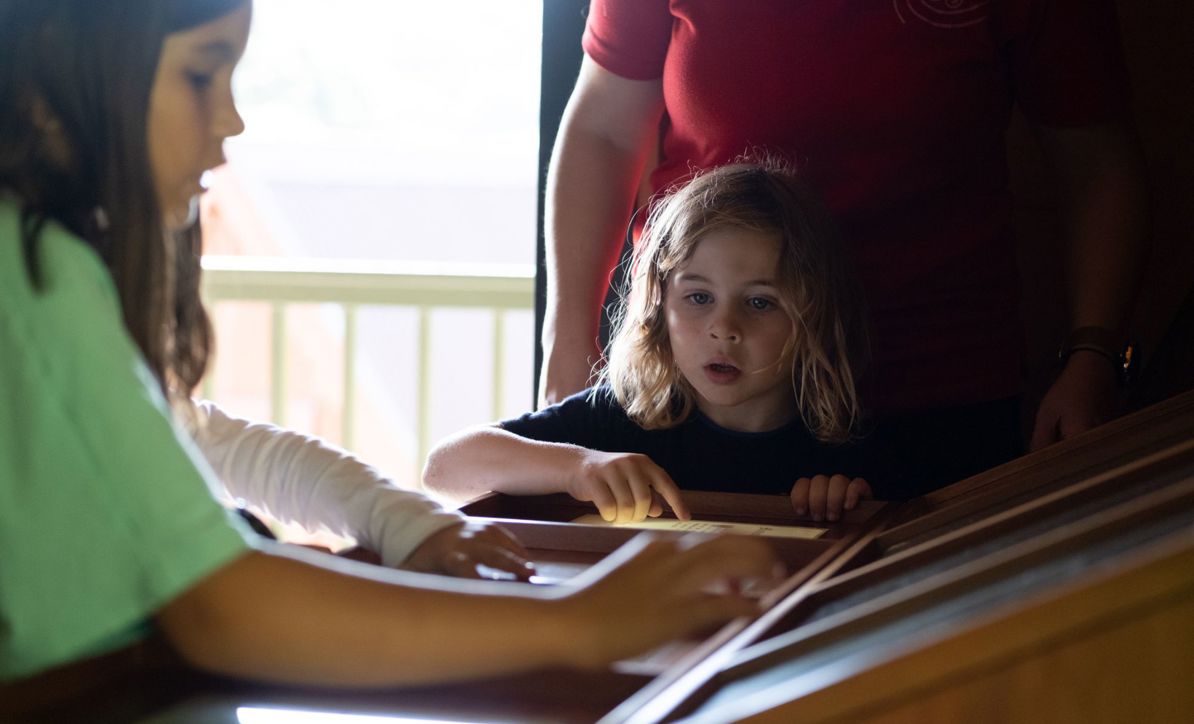
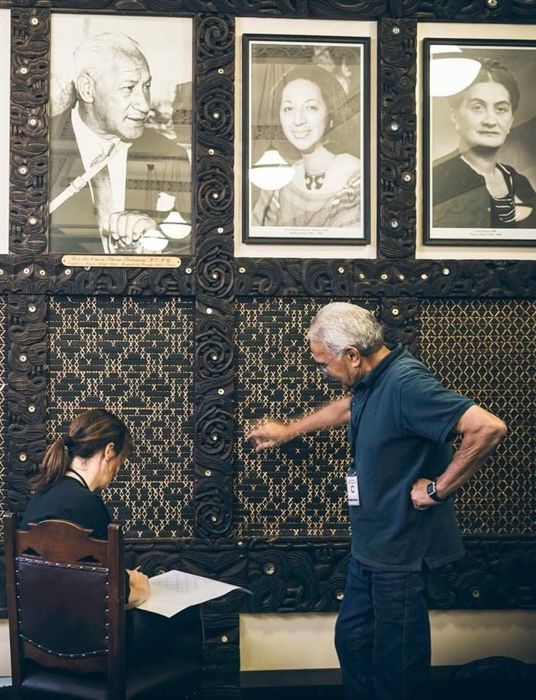
The
printery including the original printing press (pictured above), bookbindery and
tanning pits are again working to produce reproductions of the Roman Catholic
prayer and instruction books that were printed here in the Maori language through
the 1840s. The printery is the only building to survive of the crowded mission
site.
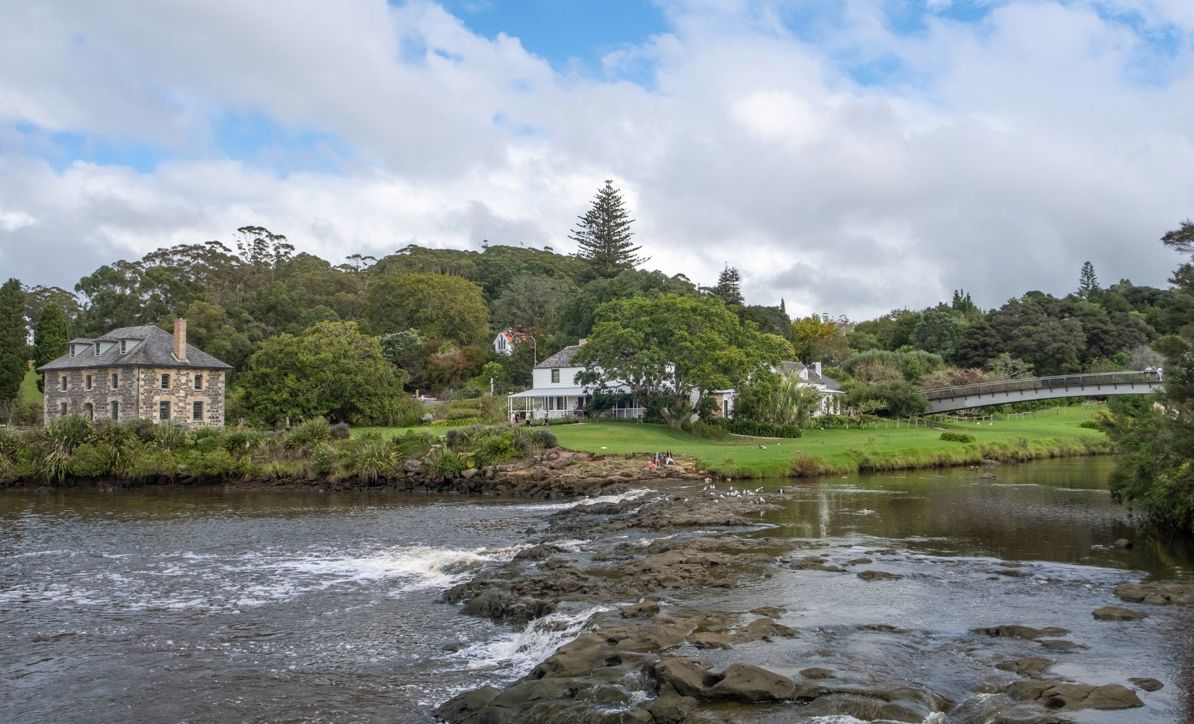
The site of the first Roman Catholic chapel is marked in the beautiful
garden that was created around 1880 long after the mission was disestablished.
The garden is restored to its full glory as the Victorian/Edwardian garden of
the later lay owners of Pompallier.
If you are looking for an experience with a difference, yet with close
ties to Pompallier Mission, visit Motuti
on the northern shores of the Hokianga Harbour -just across from Opononi.
Share our world and enjoy peaceful surroundings away from the humdrum
noise of the city.
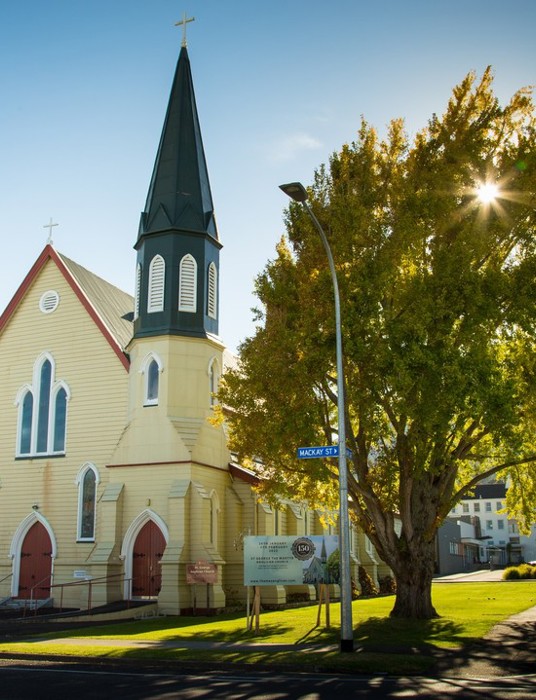
Visit Hata Maria church Motuti, the resting place
of Bishop Jean Baptiste Pompallier.