Registration Type
Historic Place Category 1
Register Number
1700
Date Registered
28-Jun-1990
City/District Council
Westland District
Region
West Coast Region
Summary
The Customhouse at Hokitika remains one of the few remaining links to the years when Hokitika was a busy and prosperous port. The discovery of gold in the Hokitika River at the end of 1864 led to a gold rush and the township of Hokitika sprang up almost overnight. In 1865 Hokitika was selected to be the administration centre by the Canterbury Provincial Council, thus making the town the official port-of-entry of the West Coast as well as the commercial centre of the West Coast goldfields. The first customhouse at Hokitika was constructed by the end of July 1865. By 1866 Hokitika was one of New Zealand's leading ports, second only to Auckland, with visitors reporting having seen over 40 ships in the harbour at one time, with more waiting offshore. However, Hokitika also had a deserved reputation as being one of the most dangerous New Zealand ports, with 21 wrecks in its first year. Between 1865 and 1867 there were 108 strandings and 32 ships were completely lost. Once the gold began to peter out, traffic in and out of Hokitika also dropped off and never regained the level it once had. While various industries, such as sawmilling, fishing and brickmaking were established in the area, the lack of coal meant the port declined more quickly than Greymouth or Westport.
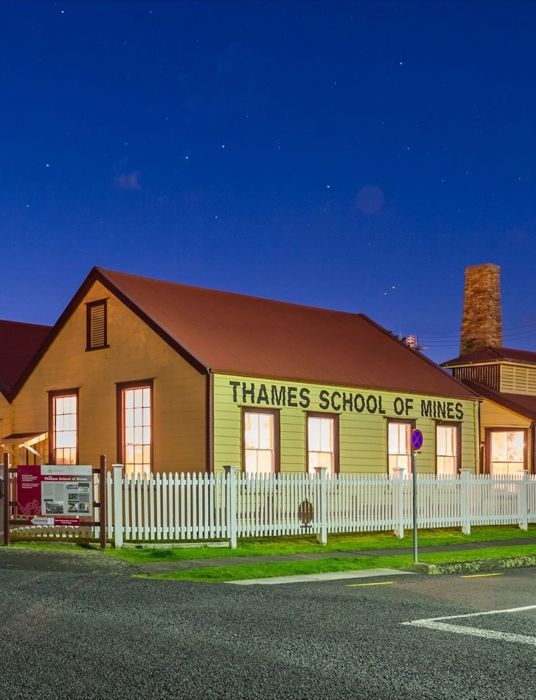
Despite the decline Hokitika retained a harbourmaster until the 1920s and remained an official port until the 1950s. As with many other customhouses throughout New Zealand Hokitika's was rebuilt during the 1890s, as part of the Liberal government's building programme initiated by Premier and West Coast politician Richard Seddon (1845-1906). The Hokitika Customhouse was designed by John Campbell (1857-1942), then a draughtsman in the Public Works Department. Campbell was eventually appointed to be Government Architect in 1909. Erected for £400, the Customhouse was a small single-storey building clad in weatherboard with a gabled porch over the entrance.
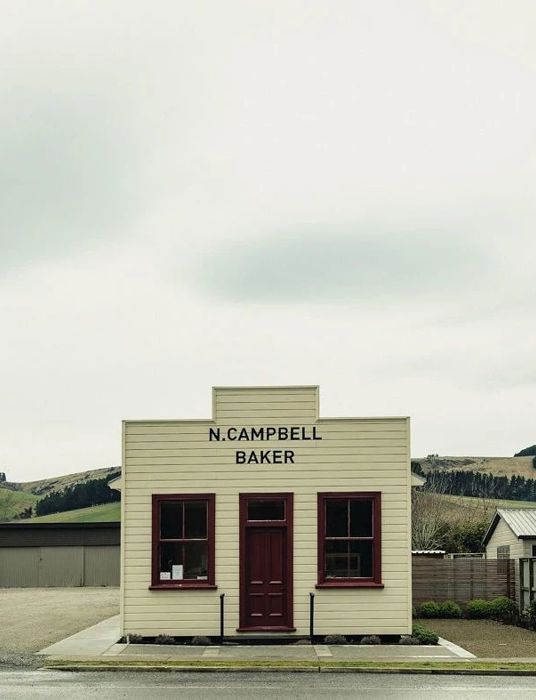
In design the customhouse is one of Campbell's standardised government buildings, which were typified by a rectangular plan, a hipped roof with a gabled porch over the entrance, the use of vertical and horizontal battens to subdivide the walls, and shingles above the windows. The latter reflects Campbell's interest in the American Stick and Shingle style. Other similar buildings include the former customhouse in Napier (1895) and the courthouse at Hunterville (1895), both of which are also registered by the New Zealand Historic Places Trust Pouhere Taonga.
After the harbourmaster was removed from Hokitika the customhouse was taken over by the Ministry of Works and used as a depot. It was threatened with demolition during the 1980s but was eventually preserved and moved onto a site across the road by the river. A lean-to addition at the rear of the building was removed and the interior returned to its original layout of three rooms. However, the public counter and one fireplace was removed during this work. A trust was established to look after the building and it has been used by community groups over the years.
The Customhouse at Hokitika is one of the last remaining links to Hokitika's heyday as a busy and prosperous port. The establishment of Hokitika as a port-of-entry with a customs officer was a direct result of the West Coast gold rush, and the customhouse stands as a physical link to the history of extractive industries on the West Coast. The building is one of Campbell's earlier designs and part of an attempt by the government to standardise public buildings for ease and quickness of construction. As Campbell preferred to design and build in brick, the customhouse at Hokitika is an interesting example of his timber buildings, which formed a very small part of his work. Today the Customhouse stands as a prominent landmark close to its original site.
Historical Significance
The Custom House is one of the few tangible reminders of Hokitika's heyday when it had its own resident Customs Officer and the West Coast was one of New Zealand's most important regional economies. From the gold rush of the mid-1860s through to the early twentieth century, Hokitika was one of the country's busiest ports, but gradually went into decline and finally closed in 1954.
Physical Significance
ARCHITECTURAL QUALITY:
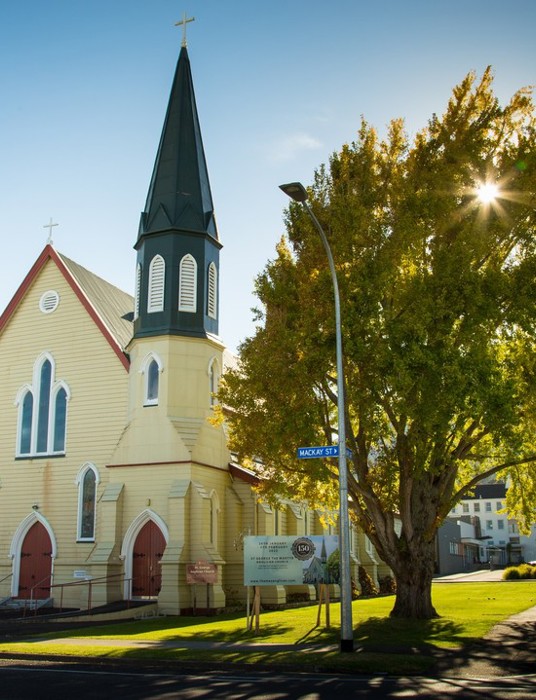
The Custom House is a modest building which has nevertheless been carefully designed and well built. It is a fine example of the buildings erected by the Public Works Department under John Campbell all over New Zealand for a multitude of government purposes ranging from custom houses to courthouses, and post offices to police stations.
In style it represents a successful local adaptation of features of the English 'Queen Anne' to a small wooden public building.
TOWNSCAPE/LANDMARK VALUE:
Standing on Gibson's Quay near its original site, the Custom House is a prominent landmark within the township of Hokitika and one which will gain further prominence when the new Hokitika River Bridge has been completed.
Construction Professionals
Historical Narrative
Following Hokitika's establishment in 1864 as a major port and town for the West Coast gold rush, the first Custom House was built in July 1865 and enlarged in the following year. It stood on Gibson's Quay where the Department of Conservation annex now stands. The present building was erected by Edward Gibson and William Goodrich on the same site in 1897 at a cost of £400. After it had ceased to be used as a custom house the building was occupied by the Ministry of Works. In 1985 it was taken over by the local borough council who shifted it to its present site.
Construction Dates
- Original Construction: 1896 (circa) - 1897 (circa)
- Relocation: 1984 (circa) - 1985 (circa)
- Modification: 1989 (circa)
- Modification - Original cresting from roof removed: pre-1984
Construction Details
Framing and weatherboards of rimu.
Corrugated iron roof.
Other Information
This historic place was registered under the Historic Places Act 1980. This report includes the text from the original Building Classification Committee report considered by the NZHPT Board at the time of registration.
Report Written By
Melanie Lovell-Smith
Report Completed
3-Sep-2002
Information on
this page is correct to the best of the Trust's knowledge. If you have any additional
information you would like to share with the Trust, please
contact the Registrar.
You may wish to contact the Trust to view our paper records.