Skip to content.

Historic New Zealand - Pouhere Taonga

Canterbury Provincial Government Buildings

print page

280 Durham Street North, Armagh Street and Gloucester Street, CHRISTCHURCH

Tell us what you think about the Register Online.

We're looking for ways to improve the Register Online and people's experiences when using it. Please help us by completing this brief survey.

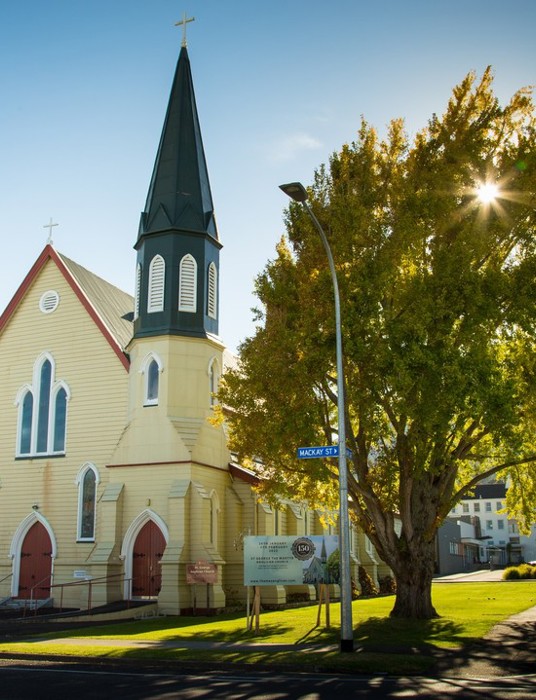
Canterbury Provincial Government Buildings
Canterbury Provincial Government Buildings. Photographed by Melanie Lovell-Smith 1/09/2001. Copyright NZ Historic Places Trust

Enlarge image

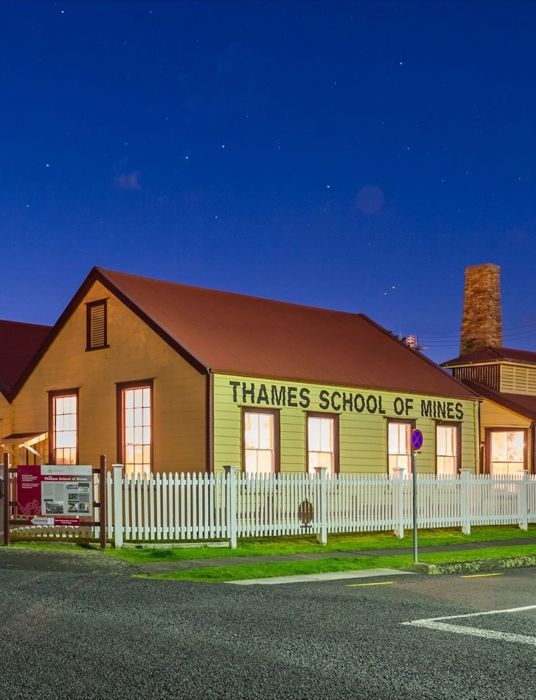
Canterbury Provincial Government Buildings
Canterbury Provincial Government Buildings. Photographed by Melanie Lovell-Smith 1/09/2001. Copyright NZ Historic Places Trust

Enlarge image

Canterbury Provincial Government Buildings
Canterbury Provincial Government Buildings. Photographed by Melanie Lovell-Smith 1/09/2001. Copyright NZ Historic Places Trust

Enlarge image

Registration Type
Historic Place Category 1
 
Register Number
45
 
Date Registered
7-Apr-1983
 
Legal Description
Pt Res 11 Sec 1 SO 19339, Canterbury Land District
 
Extent of Registration
Extent of Registration is the land described as Pt Res 11 Sec 1 SO 19339, Canterbury Land District and the building known as Canterbury Provincial Government Buildings thereon.
 
City/District Council
Christchurch City
 
Region
Canterbury Region
 
Summary
These stone and timber buildings were constructed between 1858 and 1865 to house the Canterbury Provincial Council. At this time New Zealand was divided into six (later to become ten) self governing provinces with a central government. This system of governance was created by the New Zealand Constitution Act 1852 and lasted until 1876. The first elections for the Canterbury Provincial Government were held in 1853 and it first met on 29 September 1853 in 'a lone and desolate looking tenement all by itself in a potatoe [sic] garden'. Whilst it was recognised that the Council needed purpose-built chambers, construction on these buildings did not start until 1858 and in the intervening years meetings were held in a house on a corner of Oxford Terrace.

The Canterbury Provincial Council Buildings were designed by Benjamin Woolfield Mountfort. and built in three stages. Mountfort was one of the foremost architects in Victorian New Zealand and, according to architectural historian Ian Lochhead, 'did most to shape the architectural character of nineteenth-century Christchurch.' In 1854 Mountfort prepared his initial plans for the Provincial Council buildings, which were to consist of a two-storeyed timber complex surrounding an enclosed courtyard. The complex was to be Gothic in style; Mountfort being, as Lochhead argues, a champion of the Gothic style and conscious of Sir Charles Barry and A.W.N. Pugin's Gothic design for the Houses of Parliament, London, formally opened in 1852. This proposed complex never eventuated but remnants of this first proposal, both in style and in plan, can be seen in the Provincial Council buildings of today.

Tenders were called for the first part of the Provincial Council buildings in 1857 and the foundation stone was laid in January of the following year. This first section was L-shaped in plan and relatively plain in style. The timber Council Chamber, modelled on fourteenth and fifteenth century English manorial halls, formed the heart of the complex. This section of the building was first used in September 1859. By the time it opened, however, tenders for an extension had already been called for. This extension increased the western frontage along Durham Street and added a north wing that fronted onto Armagh Street. This was more elaborately detailed than the first, featuring foliated windows and a tower in the centre of the north wing. The tower was made from alternate courses of red and grey stone, a distinctive feature of High Victorian architecture known as constructional polychromy, a way of achieving colour through the process of construction by combining different types of building materials.

The third part of the Chambers was erected because of the significant growth in Canterbury's population and a corresponding growth in the number of elected representatives. In 1861 the membership of the Provincial Council was increased from 26 to 35. Canterbury's economy was also rapidly on the rise and the Provincial Council had both the money and the incentive to build a further addition to their chambers in stone rather than timber.

Again designed by Mountfort, the stone chamber, built in 1864-1865, was attached to the southern end of the existing building on Durham Street. From the exterior the stone chamber is a massive block of dark grey stone, solidly buttressed. Mountfort dealt with the potentially awkward transition between the stone chamber and the much lower wooden building with a gable, which sits midway between the heights of the buildings on either side. From the outside the staircase in this gable is marked by a group of windows stepped up the side of the building. The entrance to the stone chamber on Durham Street is set within a grand arch.

The interior of the stone chamber is one of Mountfort's most impressive achievements. The floor and lower walls are decorated with encaustic tiles arranged in geometric patterns. Above the lower wall panels, light-coloured sandstone walls rise, banded with dark string courses and divided by dark columns. The stained glass windows set in the walls were presumably designed by Mountfort and executed by the London firm of Lavers and Barraud. They have been described as the 'most important set of High Victorian secular stained glass windows' in New Zealand, and their 'jewel-like' light makes a major contribution to Mountfort's richly coloured interior. The ridge-and-furrow ceiling was stencilled by the painter John Calcott St Quentin in 1867. Predominantly gold, red and dark blue, the ceiling is decorated with bands of stars on the furrows and stylised plant forms on the ridges. Again the overwhelming effect is of glowing colour and drama.

The refreshment rooms Mountfort designed at the same time as the stone chamber were built onto the eastern end of the earlier timber chamber. (This involved relocating the secretary's room and an octagonal tower to the south-east end of the north wing.) Mountfort provided a dining room on the ground floor and a smoking room on the first floor for the comfort of the Provincial Council members. Here the arrangement of the interior spaces dictated the asymmetrical appearance of the exterior, in a direct reflection of the Gothic revival ideal.

After the demise of the provincial councils in 1876 the building came under central government ownership and was used by various government departments. In 1928, under the Canterbury Provincial Vesting Act, the timber Council Chamber and the stone buildings were returned to local control to be maintained as a memorial, the first time that the New Zealand government had passed legislation to protect an historic building. It was not until 1971, however, that the remaining timber buildings were brought under the control of the local board.

The Canterbury Provincial Council buildings are a superb example of Mountfort's work and his stone chamber is a particularly fine example of Victorian Gothic Revival architecture. The Canterbury Provincial Council Buildings are the only surviving purpose-built Provincial Council chambers in New Zealand. As Lochhead points out 'Within an international context [the buildings] occupy an honourable place in the nineteenth-century tradition of Gothic legislative buildings deriving from Barry and Pugin's Houses of Parliament' (Lochhead, 1999: 116). The three distinct stages of the building show the history and growth of the province of Canterbury from its small beginnings in the 1850s through to its wealth and success of the 1860s and 1870s and they form a distinct and notable part of the townscape. Within the history of historic preservation in New Zealand the Provincial Chambers also occupy a significant place as one of the earliest buildings to be protected.
 
Associated Registrations


Construction Professionals
 
Construction Dates
  • Original Construction: 1857 (circa) - 1859 (circa)
  • Addition: 1859 (circa) - 1861 (circa)
  • Addition: 1864 (circa) - 1865 (circa)
  • Relocation: 1864 (circa) - 1865 (circa)
 
Information Sources
  • Fiona Ciaran, Stained Glass Windows of Canterbury, New Zealand. A Catalogue Raisonne, Dunedin, 1998,p.30
  • Historic Places in New Zealand,Reginald Harper-Hinton, 'Stained Glass Restored', 14, September 1986, pp.20-23
  • Ian Lochhead, A Dream of Spires: Benjamin Mountfort and the Gothic Revival, Christchurch, 1999,pp.91-117
  • A. Trapeznik (ed.), Common Ground? Heritage and Public Places in New Zealand, Wellington, 2000,Gavin MacLean, ' 'Where Sheep May Not Safely Graze' A Brief History of New Zealand's Heritage Movement 1890-2000', pp.25-44.
  • Thelma Strongman, 'The Heritage Values of the Canterbury Provincial Council Buildings and their Surrounds : report prepared for the Parks and Properties Unit, Christchurch City Council', Christchurch, 1994
  • John Wilson, The Canterbury Provincial Council Buildings, Christchurch, 1991
 
Report Written By
Melanie Lovell-Smith
 
Report Completed
11-Dec-2001


Information on this page is correct to the best of the Trust's knowledge. If you have any additional information you would like to share with the Trust, please contact the Registrar. You may wish to contact the Trust to view our paper records.