Registration Type
Historic Place Category 1
Register Number
4796
Date Registered
19-Mar-1987
Legal Description
Pt Lot 15 DP 33447 (CT NA52B/231), North Auckland Land District
Extent of Registration
Extent includes the land described as Pt Lot 15 DP 33447 (CT NA52B/231), North Auckland Land District, and the building known as Carnegie Free Library (Former) thereon, and its fittings and fixtures.
City/District Council
Auckland Council (Auckland City Council)
Region
Auckland Region
Summary
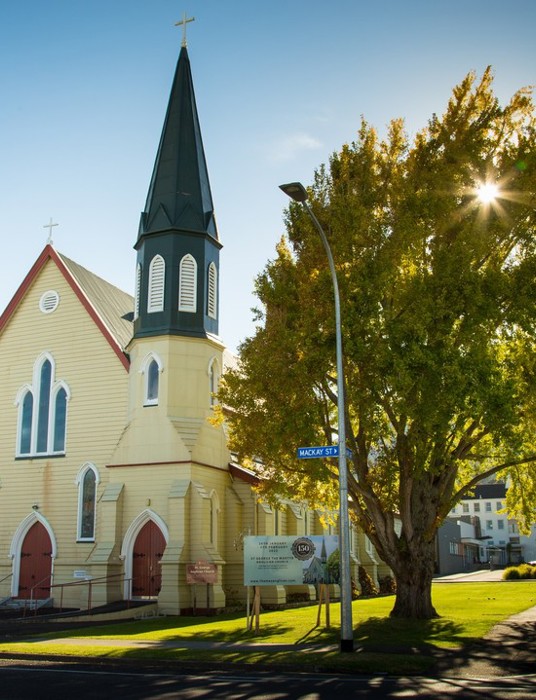
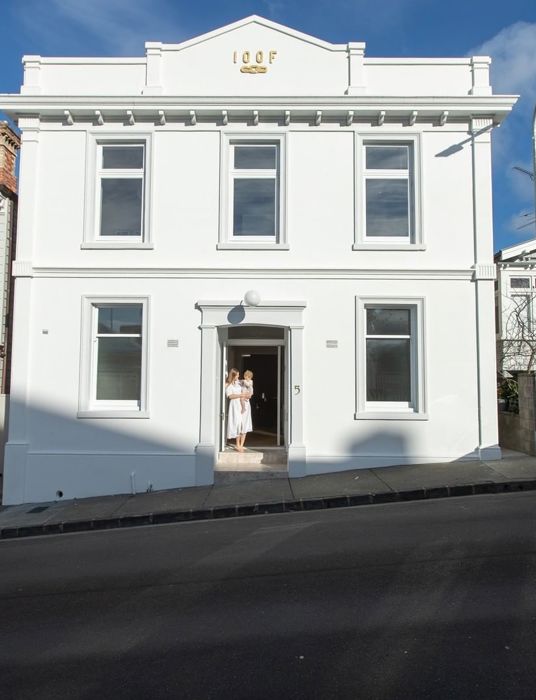
The Carnegie Free Library (Former) is a local landmark in the Auckland suburb of Onehunga and is notable for its outstanding architectural and aesthetic features, including its grand and elaborate street facade. Constructed in 1911-12, the building was funded by American industrialist and philanthropist, Andrew Carnegie, and reflects his considerable contribution to the provision of free libraries in communities throughout the world.
Prior to the arrival of Europeans, Onehunga was occupied by a number of Maori tribes, including Te Waiohua and Ngati Whatua. The Government established a military settlement for the Royal New Zealand Fencibles at Onehunga in 1847 and shortly afterwards a library was set up. By the turn of the century, the wooden building in which the collection was held, had become too small for the rapidly expanding borough of Onehunga.
The Onehunga Library Committee approached Andrew Carnegie about funding for the construction of a new library in 1904, at a time when New Zealand towns were investing considerable resources in improving their public infrastructure and amenities. Carnegie was one of America's most generous philanthropists. Having accumulated vast wealth through the development of the steel industry in the United States, Carnegie channelled his money into projects that helped the 'deserving poor', believing that the wealthy had an obligation to distribute their money amongst the community. One of his main philanthropic ventures was a programme of funding the construction of free public libraries. Carnegie financed the construction of approximately 2500 public libraries in the United States, Britain and the British dominions between 1881 and 1917, eighteen of which were built in New Zealand. Carnegie's library programme had a substantial impact on library development in New Zealand and internationally.
After several years of debate, the Onehunga Borough Council agreed to Carnegie's conditions that the local community provide a suitable building site, ensure a free service and guarantee ongoing maintenance costs. In 1910, Carnegie agreed to provide £2000 towards the construction of the library, with the Onehunga Borough Council providing costs over and above this amount.
The Library was constructed on Onehunga Borough Council land that had previously been set aside as a Military Parade Reserve for the Fencible town. It was built by Mr W. Maud junior for the cost of £2665, including fittings.
The building was designed by local architect, John Park (1880-1948), a prominent community leader who later served three terms as Mayor of Onehunga. His plans were reviewed by Carnegie, who wanted the libraries he funded to be useful, economic and well-designed. Park designed a single-storey, rectangular, brick building in the Edwardian Classical style with free eclectic elements. Its formal, monumental façade included a central, stepped triumphal entrance arch and four Corinthian columns with capitals incorporating detailed decorative plaster portraits of Andrew Carnegie, John Park, W. Maude and John Rowe. While the classical style of the building was typical of Carnegie libraries of similar scale and size internationally, its monumental elements, including the use of permanent materials and detailed ornamentation, were particular to New Zealand libraries and are considered to represent a local approach towards library design. The building also incorporated several unusual architectural devices, including its triumphal archway and decorative solid plasterwork.
The building, which measured 60ft (18m) by 45ft (14m), was approached by stone steps flanked by stone garden walls. Inside, the central entranceway opened to a reference room and a reading room at the front of the building and led to a circulating department containing 4000 volumes, a librarian's room and toilets at the rear of the building.
Mr John Rowe, the then Mayor of Onehunga, opened the building in a well-attended public ceremony on 11th September, 1912. The library operated successfully for almost 60 years, but eventually outgrew the building and was relocated to a new combined council and library building in 1970. Various community groups used the building for offices and meeting spaces for the next twenty years. The building deteriorated over this period and was threatened with demolition several times. Between 1987 and 1989, the Onehunga Borough Council commissioned structural upgrading works, which included some minor modifications to the interior and side walls.
The building passed into private ownership in 1998 and opened as a restaurant after minor alterations. It underwent further refurbishments in 2004 and 2007 and continues to operate as a restaurant (2010).
The Onehunga Carnegie Free Library has aesthetic value for its outstanding visual qualities, including its imposing and elaborate street façade, its grand interior and its prominent position in the Onehunga streetscape. The library has architectural significance as a well-preserved example of Edwardian Free Classicism with distinctive features, including its triumphal arch composition and external and internal plasterwork details. It also has architectural value as one of twelve remaining Carnegie libraries in New Zealand and as a rare example of the work of local architect and politician, John Park. The library has special historical significance as a physical reminder of Carnegie's corporate philanthropy and his substantial influence on the development of library programmes throughout the world, including New Zealand. The building also has historical significance as part of a movement in New Zealand towns to improve their public infrastructure and amenities in the early twentieth century. The library has social significance as a building that has been a focus for the Onehunga community since its construction.
Historical Significance
Opened on 11 September 1912, the library building was funded by philanthropist and industrialist Andrew Carnegie on land provided by the Onehunga Borough Council. The building is one of the most ornate of 18 Carnegie Free Libraries built from funds provided by Carnegie, about half of which have since been demolished. The Carnegie Corporation was established 'for the advancement and diffusion of knowledge and understanding among the people of the United States and the British Dominions and Colonies'. Part of the Corporation's early work was funding the construction of public libraries. Eventually 2,509 free public libraries were built throughout the English speaking world. The Onehunga library is a significant example of corporate philanthropy.
Physical Significance
ARCHITECTURAL SIGNIFICANCE:
An imposing Edwardian Institutional building with a main façade of rather unusual design. The building is of architectural significance for its boldly composed and decorative façade and its original condition both inside and out. Many interesting interior fittings have survived intact.
TOWNSCAPE/LANDMARK SIGNIFICANCE:
The building is visible from a number of viewpoints. It is a prominent feature in the local streetscape.
Construction Professionals
Notable Features
Portrait heads of Andrew Carnegie, John Rowe (Mayor of Onehunga), John Park (Architect) and W Maud (Builder) on façade. An elaborate and unusual oak World War I memorial, with roll and war scenes in watercolour is located in the foyer.
Construction Dates
- Modification:
- Modification:
- Modification:
- Modification: 1987 (circa) - 1989 (circa)
- Other: 2004 (circa)
- Other: 2007 (circa)
- Original Construction: 1911 (circa) - 1912 (circa)
Construction Details
225mm Brick masonry construction.
Other Information
A fully referenced registration report is available from the NZHPT Northern Regional office
This historic place was registered under the Historic Places Act 1980. This report includes the text from the original Building Classification Committee report considered by the NZHPT Board at the time of registration.
Report Written By
Lucy Mackintosh
Report Completed
11-Jun-2010
Information on
this page is correct to the best of the Trust's knowledge. If you have any additional
information you would like to share with the Trust, please
contact the Registrar.
You may wish to contact the Trust to view our paper records.