Skip to content.

Historic New Zealand - Pouhere Taonga

Homebush Station

print page

2142 Homebush Road, Homebush Station, DARFIELD

Tell us what you think about the Register Online.

We're looking for ways to improve the Register Online and people's experiences when using it. Please help us by completing this brief survey.

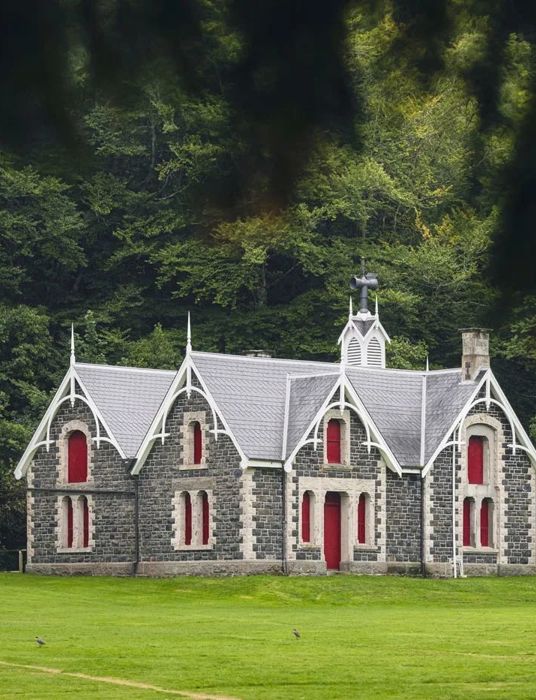
Homebush Station
Homebush Station. Photographed by Malcolm Duff 1/06/2009. Copyright NZ Historic Places Trust

Enlarge image

Aerial photograph of Homebush Station
Aerial photograph of Homebush Station. Photographed by Kevin L Jones 2/11/2009. Copyright Kevin L Jones Archaeologist Ltd

Enlarge image

Registration Type
Historic Place Category 1
 
Register Number
9483
 
Date Registered
15-Oct-2010
 
Location Description
The main access to the property is via a brick entrance gateway on the north side of Homebush Road.
 
Legal Description
Pt Lot 1 DP 2898, Sec 5 Res 1600 and Pt RS 10058 (CT CB34C/993), Pt Sec 4 Res 1600 (CT CB20F/1170) and RS 38156 (CT CB 637/95) Canterbury Land District.
 
Extent of Registration
Extent includes part of the land described as Pt Lot 1 DP 2898, Sec 5 Res 1600 and Pt RS 10058 (CT CB34C/993), Pt Sec 4 Res 1600 (CT CB20F/1170) and RS 38156 (CT CB 637/95) Canterbury Land District and the buildings and structures known as the Apple House (former Laundry, Bakehouse and Dairy); Brick Bridge; Sheep Dip; Pig Sties; Stables, Water Tower, Turbine and Grain Store Building; Woolshed; Shearers’ Quarters/Whare; Cottage called ‘The Bothy’; Mound Cottage; and the garden structure as laid out in the nineteenth and early twentieth centuries, including water courses and associated reservoir, tunnels, and the area of the skating pond, associated with Homebush Station thereon, and its fittings and fixtures and a range of chattels. (Refer to Section 2.3 of this report for a fuller discussion on Chattels, and refer to map in Appendix 1 of the registration report for further information on the physical extent of registration).. All the buildings on the Homebush farm as well as the land between the stables and the woolshed.
 
City/District Council
Selwyn District
 
Region
Canterbury Region
 
Summary
Homebush Station complex, at 2142 Homebush Road, near Darfield, has clear and continuing links to pivotal early European settlers in Canterbury, the Deans family, and forms an outstanding example as a collection of early European settlement station buildings and structures in New Zealand.

Homebush Station was taken up in October 1851 by William and John Deans, the Scottish brothers who first farmed on the Canterbury (Port Cooper) Plains at Riccarton in 1843. When the settlement of Christchurch subsequently was planned by the Canterbury Association, the Deans’ exchanged some of their land as the city’s site for a large 33,000 acre run in the Malvern Hills, some under 38 miles (60 kilometres) from their Riccarton base. This was the first hill run to be allocated by the Canterbury Association and it was soon named Homebush by the Deans.

Rudimentary buildings were first erected by station workers in the early years and as the complex developed, a series of particularly fine buildings were built. Most of the latter are of red brick, at first made from brick from kiln-firing on site and later from the family owned brickworks, the Homebush Brick and Tile Works located nearby at Glentunnel. These somewhat grand brick buildings are complemented by timber structures and landscaping planted up gradually over numerous decades. Key surviving components of the Homebush Station complex are: Apple House (former Laundry, Bakehouse and Dairy); Brick Bridge; Sheep Dip; Pig Sties; Stables, Water Tower, Turbine and Grain Store Building; Woolshed; Shearers’ Quarters/Whare; Cottage called ‘The Bothy’; Mound Cottage; and the garden structure as laid out in the nineteenth and early twentieth centuries, including water courses and associated reservoir, tunnels, and the area of the skating pond. On the property are numerous Chattels that belonged directly to the Deans or to other family members associated with Homebush. The brick Homestead was severely damaged by a 7.1 magnitude earthquake on 4 September 2010.

The continuing and unbroken ownership of Homebush Station by the Deans family since 1851 through to the present time tells an important story of early colonial settlement and pastoral history in Canterbury. Historic structures, set in a rural landscape with well established and noteworthy historic plantings, include a series of impressive brick station buildings as well as other features dating from the early 1850s onwards. The Stables, Water Tower, Turbine and Grain Store Building within the group adds a special quality both as an unusual example as a building combination and for its rare (possibly unique) turbine. The Pig Sties also have rarity value.


Historical Significance
The continuing and unbroken ownership of Homebush Station by the Deans family since 1851 through to the present time tells an important story of early colonial settlement in Canterbury. The first run to be allocated by the Canterbury Association, the station represents the emergence of pastoralism in Canterbury

Key historic features at Homebush Station constitute an important and comprehensive remnant of the significant pastoral history of the Canterbury region. The imposing buildings such as the Woolshed and the elaborate Stables, Water Tower, Turbine and Grain Store Building reflect the size of the station they served and the dedication with which the Deans family developed their property. The developments at Homebush, especially in the 1870s, demonstrate the confidence of the owners at that time.

 
Physical Significance
Aesthetic Significance or Value

Homebush Station has aesthetic value. As a group, the buildings and ruins, set in a rural landscape with well established and noteworthy historic plantings, has aesthetic value as an impressive early settler station. The aesthetic value of the place is something appreciated by both owners of and visitors to the place in writings, photographs, sketches and paintings over many years.

Archaeological Significance or Value

Homebush Station has archaeological significance. The place already has three recorded Maori oven site archaeological sites. The numerous pre-1900 buildings, ruins and other structures including paths and garden structure, chattels and artefacts together combine to give the place further archaeological significance. In addition, there is reasonable cause to suspect that the grounds of the property, especially the sites of nineteenth century structures that are no longer extant (for example, rudimentary farm buildings and accommodation places constructed from the early 1850s when the Deans first acquired the run, as well as the timber homestead built by manager Cordy) may hold archaeological material. The archaeology of the place therefore can contribute knowledge to enhance an understanding more of both the Maori use of the area and the lives of the Deans and their staff and of how the early farm operated.

Architectural Significance or Value

In New Zealand, brick was not favoured for the construction of farm buildings, since brickworks tended to be located in or close to towns. The distinctive Homebush Station buildings, however, are constructed using bricks which were produced either on site or at the brickworks established by the Deans family at Glentunnel in about 1870.

The architectural design of the crenellated brick water tower is an unusual feature of note. The grand design of the Woolshed, echoed by the smaller and more modest Shearers’ Quarters or ‘Whare’ building, is a noted architectural landmark. The arched brick bridge close echoes a simple design of Roman bridges. The modest scale and materials of the two nineteenth century timber cottages, The Bothy and Mound Cottage, are typical of colonial cottages throughout New Zealand.

Technological Significance or Value

The turbine driven by water conducted from the dammed up stream in the homestead garden is an intriguing example of colonial technology. Considered possibly unique in the western world, the water turbine is of technological value. Still in working order, it is of particular interest to engineers.

 
Cultural Significance
Social Significance or Value

Homebush Station is one of the few historic stations in Canterbury that have never left the original owners’ family. It is associated with key figures in Canterbury history, beginning with the brothers John and William Deans who became the first Europeans to farm the Canterbury (Port Cooper) Plains when they settled in Riccarton in 1843. The marriage of John Deans to Jane McIlraith led to both the continuation of the family line through their son John’s offspring, and to the involvement of James McIlraith (Jane’s half-brother) in the running of Homebush and related affairs. John and William’s brother, James Deans, also became involved with developing the place.

The story of Jane (McIlraith) Deans tells a story many early settler women in New Zealand would have been familiar with. Although based in Riccarton, she visited Homebush from the mid 1850s and had to learn to cope with unknowns, including overseeing the management of both Riccarton and Homebush following the death of her husband.

The lives of subsequent owners and visitors continue to reflect social values of the property. Owner of the Homestead block following subdivision in 1906, Bob Deans is renowned for his sporting prowess as an All Black. Until his untimely death in 1908, he would have been actively involved in rugby training while at Homebush. Several years after Bob’s brother, James Deans, took over the property he married Lillian Holdsworth in 1913 and they had five children. All lived in the Homebush homestead and it was during this period that a two storeyed verandah was added on the north side of the house. The siting of the Deans’ boys in open air bedrooms on the upper storey addition reflected the genuine fear of tuberculosis at this time.

The Deans’ management of the property, including the employment of various managers, servants, married men and their families living in cottages on the property, and payment of others at shearing time, tells stories of social interactions typical of such labour intensive operations.

Homebush was a social centre from the outset, being a draw card for notable Canterbury Association settlers, and has continued as a place for visitation to this day, with social gatherings, and garden and historical tours. Winter skating parties in the past were fun social occasions.

 
Summary of Assessed Criteria
(a) The extent to which the place reflects important or representative aspects of New Zealand history

The Homebush Station complex is largely representative of early cattle and sheep runs in Canterbury, integral to the story of the pattern of settlement in New Zealand. As a group, the buildings, structures and plantings form an important example of this type in New Zealand.

(b) The association of the place with events, persons, or ideas of importance in New Zealand history

Homebush Station is strongly associated with the Deans family, and descendants of John and William Deans, the original owners, retain ownership of the place today. John and William Deans were pioneers as the first European settlers to farm on the Canterbury (Port Cooper) Plains in Riccarton. When they took up the Homebush Run in 1851, it was the first run allocated by the Canterbury Association.

The early day to day running of the Homebush run as a cattle station was the role of early Akaroa settler, James (Jimmy) Robinson Clough, and his ‘half-caste’ Maori sons. This reflects the involvement of and relationships within the early settler and Maori community in the practicalities of working the land.

Exports to Britain of wool (and later meat) resulting from the farm activities contributed to New Zealand’s strong agricultural and pastoral economy, the well recognised economic back-bone of the nation for some 150 years.

As well as being active on the farm, owners and managers at Homebush were heavily involved in brick and tile and coal activities in the area, reflecting both exploration and commercial developments happening elsewhere in New Zealand in the nineteenth century.

While numerous members of the extended Deans family are associated with the place, as a nation known for its rugby focus, many New Zealanders recognise the name of the early All Black, Bob Deans, who owned the property in the early twentieth century.

(c) The potential of the place to provide knowledge of New Zealand history

The suite of buildings, early exotic plantings and chattels at Homebush assist in providing knowledge of New Zealand history, notably pastoralism, colonial building, brick production, water power and turbine use, recreation, horticulture and plant breeding.

(e) The community association with, or public esteem for the place

Homebush Station is a well-known farm in the Malvern Valley. The property has been made open to the public on numerous occasions and both the buildings and plantings have been included in numerous publications.

There is a strong community association for Homebush Station generally. The Homebush Stables Historical Society, made up of members of the local community, was established in 1992 with the aim of restoring, maintaining and protecting the Homebush Stables, Water Tower, Turbine and Grain Store Building. It operates a museum containing memorabilia from the Deans family and surrounding districts.

(f) The potential of the place for public education

Thousands of visitors, both national and international, come to Homebush every year and the place has a high potential for public education. Not only the buildings and structures themselves but the chattels and museum displays provide information about Homebush and the surrounding district.

(g) The technical accomplishment or value, or design of the place

The design of the buildings and techniques used in their construction demonstrate the use of locally available materials (including clay for the bricks and timber, some of which was brought from the other Deans’ base at Riccarton). The designs of the Woolshed and the Stables, Water Tower, Turbine and Grain Store Building display architectural accomplishment.

(j) The importance of identifying rare types of historic places

The Pig Sties structure appears to be one of the very few survivors of what must have been a relatively common form of animal housing during the nineteenth century. The combined Stables, Water Tower, Turbine and Grain Store Building is noted for being a rare combination of building types within the one building envelope and the turbine itself is believed to be unique in the western world.

(k) The extent to which the place forms part of a wider historical and cultural complex or historical and cultural landscape

Homebush forms part of a wider historical and cultural landscape which includes Maori occupation of the area and various named landmarks associated with early workers on the Homebush run. Remnants of tramways, coal mines and brickworks at Coalgate and Glentunnel are closely associated with the history of development of Homebush. Many blocks surrounding the present Homebush Station property have historical links with the original run and add to an understanding of the wider historical landscape of the area.

Summary of Significance or Values

It is considered that this place qualifies as a Category I historic place.

The historic features at Homebush Station form an outstanding example as a collection of early European settlement farm buildings and structures in New Zealand. The Stables, Water Tower, Turbine and Grain Store Building within the group adds a special quality as an example of a particular building type that includes a rare (possibly unique) turbine. The buildings and structures, including the garden layout, all provide important information about station life in what was an early allocated run in Canterbury.

 
Associated Registrations


Construction Professionals
 
NZ Archaeological Association Site
  • L35/13
  • L35/12
  • L35/17
 
Historical Narrative
The wider area that is occupied by Homebush Station was settled by Maori prior to European colonisation. Both the foothills and waterways were part of the close relationship between Maori and the land. Waterways such as the Hawkins and Waianiwaniwa Rivers were used for eeling, and moa are believed to have been hunted in the wider area. Whakaepa Pa was located on a sharp ridge at the junction of the Selwyn (Waikirikiri) and Hororata Rivers near Coalgate. Near the margins of the foothills with the plains, oven sites have been recorded near streams, particularly in the Homebush area. The Waianiwaniwa River and its tributaries weave through the Homebush area and are recognised as containing a number of indigenous and endemic species, notably the nationally endangered Canterbury mudfish and the Longfin eel.

Homebush Station was taken up in October 1851 by William and John Deans, the Scottish brothers who first farmed on the Canterbury Plains at Riccarton in 1843. The Deans family are early European settlers of note in Canterbury. William Deans had arrived in Wellington in January 1840 and spent the following two years exploring parts of the North Island before he was joined by his brother John Deans in October 1842. John and William Deans then determined to settle in the area they called Riccarton in 1843 and became the first Europeans to farm the Canterbury (Port Cooper) Plains. When the settlement of Christchurch subsequently was planned by the Canterbury Association, the Deans’ were urged to exchange some of their land as the city’s site for some elsewhere. Eventually, in 1851, it was settled that they should have a large 33,000 acre run in the Malvern Hills (Kakapotahi), between the Selwyn and Waimakariri Rivers, at the edge of the foothills, just under 38 miles (60 kilometres) from their Riccarton base. This was the first hill run to be allocated by the Canterbury Association.

The run was to be named Homebush. Soon after confirming the taking up of the run, William Deans set sail for Australia on the barque Maria to purchase stock for the new property. Tragically he drowned when the Maria sank in July 1851. John Deans undertook to continue with the farming ventures and gained financial support from his brother James Deans in Scotland. He employed James (Jimmy) Robinson Clough, a very early European settler closely involved with the Maori community at Onuku, and Clough’s ‘half-caste’ Maori sons to look after stock at Homebush. The first stock on the place was cattle. In 1851 there were over 350 and by 1873 the number had grown to 1,250. Clough established a garden and erected stockyards and rudimentary farm buildings. Grain and other crops soon became revenue generating. In 1852 Mr Rowe took overall charge of the stock, though Clough and his sons stayed on at Homebush for a time.

Homebush, one of the closest hill runs to the new settlement at Christchurch, soon became an attraction for notable pioneer settlers. Its list of early visitors reads like a ‘who’s who’ of colonial Canterbury: John Robert Godley, Edward Jerningham Wakefield, Hon James Stewart Wortley, James FitzGerald, Dr William Draper, Dr A C Barker, Humphrey Hanmer, Rev Henry Fendall, Mark Stoddart, Edward Templer, Isaac Cookson, John Watts Russell, Henry Cridland, Alexander Lean, Charles Torlesse, John Studholme, Thomas Cass, John Scott Caverhill and Henry Tancred. At times, these ‘pilgrim’ visitors stretched both the patience and the provisions of those trying to run Homebush.

The station employed stockmen, gardeners, shepherds, fencers, shearers, horse breakers, bullock drivers and harvesters. Where married couples were employed, the wife would often act as cook or servant. A number of pioneer settlers got their start working as farm workers at Homebush.

In 1854 the newly married John Deans died, leaving wife Jane (nee McIlraith) and infant son John at the Riccarton farm, with new manager John Cordy to run Homebush cattle station. Straight away Cordy built a new timber house at Homebush, since Robinson Clough’s simple whare was unsuitable for Cordy’s large family.

For a 20 year period the estate was under trust management until John Deans II came of age. Although she had little experience, Jane Deans proved capable and the trustees left administration of Riccarton farm and the Homebush run (which were operated as a single concern) largely in her hands. She made her first visit to Homebush in 1855.

Cordy not only managed the cattle but also leased part of the Homebush run for a dairy. The lease provisions allowed for a separate sheep operation, and in 1857 some 1,000 sheep for the new station were driven overland onto the property from The Levels. This new sheep station at Homebush was at the area to the north of the present Auchenflower Road, a part of the property that James Young Deans (brother of William and John) had arranged to acquire in 1852. It was leased to the McIlraith brothers from around 1855 until 1864 when the sheep station was taken over by the Deans estate trustees. James McIlraith, Jane Deans’ half-brother, took over the management of Homebush from Cordy in 1859. In 1864, James Deans arrived from Scotland to address some outstanding issues of the running of the station.

Around this time Homebush became known principally as a sheep station. Prices for sheep and wool were good and in 1876 almost all the cattle from Homebush were sold and replaced with Merino ewes. By 1878 there were 12,000 sheep, by 1880 this number had increased to 16,108, by 1889 it was 21,574, and by 1895 it was 26,000 sheep and lambs.

Initially leasehold, land was purchased as freehold at Homebush in a piecemeal fashion. In August 1874 the trustees of the Deans estate transferred the trust property to John Deans II. This inheritance included Riccarton and part of the Homebush run, the balance of the latter being with James Deans. In 1879 John Deans II married Edith Park and the subsequent birth of their 12 children ensured the continuation of the Deans line in Canterbury. John Deans II was actively involved in affairs at Homebush and, although they did not live there, the large family of John Deans II visited frequently from their Riccarton base.

James McIlraith, who managed Homebush between 1859 and 1895, was a visionary. During his time the place was extensively developed and most of the surviving structures at Homebush Station were built.

In 1863 Robert Smith and Frank Grump were engaged to build a new timber stable to replace an earlier stable which had fallen into decay. Around the early 1870s a major programme of building brick structures on the property was begun. Initially bricks had been made on the Homebush site itself but by circa 1870 a brickworks proper was established by the Deans at nearby Glentunnel.

In 1870 McIlraith replaced the old timber stables at Homebush with a grand brick complex which consisted of stables with nine stalls for draft horses, two separate stables for the riding hacks, a carriage house and a loft in which chaff and hay were stored.

In 1880 a water turbine with an 1859 patent was imported from Stout, Mills and Temple of Dayton, Ohio, and installed in a special turbine room adjoining the stables. An underground brick tunnel, 60 metres in length, was built to bring water from the dammed up Waianiwaniwa Stream down to a circular brick well in which the turbine sits. A similar tunnel, approximately 150 metres in length, drained the water away. The turbine is thought to be the only one of its type in New Zealand and may be the only one in the world. It drove a saw bench, chaff cutter, wheat mill, whetstone, seed dresser and other farm machinery housed in a workshop about a metre below ground level. A water tower was built outside the entrance to the turbine room, with the turbine operating a pump to deliver water to the homestead.

Other brick structures probably built in the 1870s include Pig Sties built to the south of the stables, a brick Sheep Dip and draining yards across the paddock, an arched brick bridge and a building by the original timber homestead which combined the laundry, bakehouse and dairy (now known as the Apple House).

In 1879 a 20 stand Woolshed was built by Thomas Lamport of Glentunnel. Many thousands of sheep have passed through the shed. In its first year of operation, 1880, 16,108 sheep were shorn. By the mid 1890s stock numbers peaked at 26,000 sheep and lambs. Both Maori and Pakeha were active in shearing gangs.

A brick Shearers’ Quarters called the ‘Whare’ was built to the north of the Woolshed, either at the same time as the Woolshed or a little later, and housed 20 shearers. It had a coal range, bread oven, copper and kerosene lamps for lighting.

In the 1880s foundations for a new brick homestead were laid to the east of the original timber homestead. However, financial restrictions meant that further work on the new house, which was intended to be single-storeyed, was delayed for some years.

John Deans II died in 1902 before he could see through the construction of the new homestead at Homebush. Jane Deans, his mother, lived until 1911, but after the death of John Deans II, the next generation took over Homebush. The Deans estate was subdivided in 1906 amongst Jane and John’s grandchildren and great grandchildren. John Dean III (known as Ian) chose to take over a portion of Homebush west of the homestead, bordering on the South Malvern Hills Road, and named it Kirkstyle. Robert (Bob) G Deans, next in line, took the homestead block (Homebush). Bob Deans was a bachelor who achieved national fame, playing in the first international All Black rugby tour in 1905-06, before dying tragically in 1908. James Deans had taken over the area north-west of the homestead block (Rowallan) and, after Bob’s death, he purchased Homebush from R G’s trustees and farmed it until the mid 1940s. James Deans married Lillian Holdsworth in 1913 and they had five children. All lived in the Homebush homestead.

Utilising the 1880s foundations, from 1904 the new Homestead was built using the Homebush factory bricks to the designs of well-known Christchurch architectural firm Collins and Harman. The grand two and a half storeyed house had, on the ground floor, a large foyer, living room, billiard room, dining room and kitchen, as well as a maids’ sitting room at a small room on the north side of the house. On the first floor were four large bedrooms and two smaller ones, the latter being for maids. In the attic were bedrooms initially used to accommodate the Deans’ children when they holidayed at Homebush from Riccarton. There was also accommodation at attic level for servants. A second stage was completed in 1909. A balcony and verandah was added in 1923. James’ and Lillian’s four sons slept on the first floor of the open verandah throughout the year, as the open-air bedrooms were considered a deterrent to contracting tuberculosis. The house was lit by gas and a small corrugated steel gas house was built immediately to the north-west of the homestead. A new kitchen-dining area was added on the western side of the homestead in 1981, incorporating an existing concrete block quarters which had been built in the 1950s to accommodate a cook and cowman/gardener.

As well as the large brick homestead, over time seven cottages were built for farm workers. Of the three constructed of timber, two were abandoned in the 1950s and became derelict and the third has been lived in continuously and added to over the years. One of the derelict cottages no longer survives but the other, situated approximately mid way between the homestead and the stables, was restored in 2005 and renamed ‘The Bothy’. While weatherboard on the exterior, its walls are made of cob and it may have originally had a thatch roof. It is believed to have been constructed in the 1850s (possibly 1853), most probably by James Robinson Clough, who specialised in sod or mud and lath house construction. In the 1950s two new workers’ cottages were constructed of concrete block.

In the 1920s the purpose-built laundry, bakehouse and dairy building was converted to become the Apple House and it is still referred to as such. When the current owners converted the building from an Apple House to become a self-contained sleep out in recent years, they removed shelving for storage of apples.

The Garden

The structure of the garden demonstrates the development of Homebush. An extensive programme of tree planting was begun from the earliest years after the run was taken up in 1851. A circular garden planted out in the 1850s alongside Cordy’s (later James McIlraith’s) timber house comprised a vegetable garden and fruit orchard as well as a tree nursery. In her memoirs, Jane Deans describes how they transformed the garden from fern, flax, toe toe (toi toi) and tussocks into a garden full of fruit and vegetable plants and trees.

From 1905 onwards James and Lillian Deans, working with two gardeners, extensively planted out the garden with trees and a notable flowering garden principally comprising rhododendrons and azaleas. In 1913 James Deans planted out the driveway in Atlas Cedar (cedrus atlantica).

Around the early twentieth century, the Waianiwaniwa Stream was diverted to reduce the flow of water by fifty percent in order to protect the homestead and garden from floods.

A skating pond was formed to the north of the house, providing winter entertainment. When frozen, ice skating on the pond was a very social affair. A brazier was lit by the skating pond for skaters to warm their hands.

Around the property, especially around the Homestead site and Apple House, are various items of pottery, bricks and tile work which have come from the Homebush Brick and Tile Works.

Other business (mining and brick works, outside the extent of historic place registration)

Homebush Station, like the Riccarton farm, had to weather many storms, including financial ones. In an unusual expansion of the business, in Canterbury terms at least, Homebush was involved in coal mining. The Malvern Hills coalfield, lying along the foothills between the Rakaia and Waimakariri Rivers, includes the Homebush Mine which opened in the early 1870s. The original John Deans knew of the existence of coal on the land and early Canterbury Association settlers were considerably excited by its prospects. Dr Julius von Haast carried out a geological survey of the Malvern Hills in 1870 and 1871, and he publicised that there were excellent seams of coal in Surveyors Gully on the Homebush property. Later James McIlraith became heavily involved with the mining. The peak of the mine was 1907 and thereafter it showed a steady decline.

Associated with the mining operations, a brick-making enterprise was established by James McIlraith at what was then called the Glen and later became Glentunnel, as it was the terminus for the Homebush coal train. The Homebush Brick and Tile Works was established at Glentunnel in 1873. John Deans III formed a private company called the Homebush Brick, Tile and Coal Company Ltd in 1913 to run both Bush Gully Mine and the Glentunnel brickworks. The factory was sold in 1927 to McSkimmings and production ceased in 1980 and it was dismantled from this time. The sites of these brickworks and coal mining areas is outside of the extent of registration of the Homebush Station but their history is relevant because of the close association with the Deans and McIlraiths and because much of the brick used in construction of the buildings at Homebush Station as come from the Glentunnel brickworks.

The Earthquake

In the early morning of 4 September 2010 a major earthquake, measuring 7.1 on the Richter scale, struck the Canterbury region. Its epicentre was very close to Homebush. The Homestead suffered severe damage. Dramatic images of its standing core, stripped of large parts of its external brick walls and with a drooping roof, were beamed by media across the world. Incredibly, the occupants Jim and Louise Deans and their daughter and her partner managed to escape unharmed. The remains of the building will be taken down to ground level for the time being.

All other brick structures at Homebush Station remain intact, though some have suffered cracking. Timber structures such as the Bothy and Mound Cottage were largely unscathed by the earthquake.

 
Construction Dates
  • Original Construction: 1850 - 1859
  • Original Construction: 1870 - 1879
  • Original Construction: 1879 - 1880
  • Other: 1880 - 1889
  • Original Construction: 1904 (circa) - 1909 (circa)
  • Addition: 1923 (circa)
  • Modification: 1920 - 1929
  • Addition: 1950 - 1959
  • Modification: 1981 (circa)
  • Modification: 1980 - 1999
  • Damaged: 2010 (circa)
 
Construction Details
Brick, timber, glass, iron, steel, concrete, sod, mud, cob, lath and plaster.
 
 
Information Sources
  • Margaret E Knowles, Picks & Bricks: Tales of South Malvern, 1990.
  • Dictionary of New Zealand Biography,Locke, Elsie. 'Clough, Abner 1840 - 1910'. Dictionary of New Zealand Biography, updated 22 June 2007
  • A D McIntosh et al (eds), Marlborough: A Provincial History, Marlborough Historical Society, Blenheim, 1940
  • R McIntyre, Historic heritage of high-country pastoralism: South Island up to 1948, Department of Conservation, Wellington, 2007
  • Gordon Ogilvie, Pioneers of the plains: the Deans of Canterbury, Shoal Bay Press, Christchurch, 1996.
  • L.G.D. Acland, The Early Canterbury Runs, 4th ed., Christchurch, 1975
  • Archifact Limited, ‘Draft Conservation Plan: Homebush Woolshed, Homebush Station, Darfield’, January 2006.
  • Bretts, Colonists Guide & Cyclopedia of Useful Knowledge, Auckland, 1883 (reprinted 1902)
  • Burstall, S W and W V Sale, Great Trees of New Zealand, Wellington, 1984.
  • Department of Conservation,Challis, Aidan, Ka Pakihi Whakatekateka o Waitaha: the Archaeology of Canterbury in Maori Times, Science & Research Series No. 89, Department of Conservation, Wellington, 1995.
  • Charles Deans, Deans Family 1840-1990: Sesquicentennial Commemorative Booklet, October 1989.
  • Jane Deans, Letters to my grandchildren, 3rd edn, Christchurch, 1995
  • John Deans, Pioneers on Port Cooper Plains: The Deans Family of Riccarton, Christchurch, 1964.
  • John Deans III (ed), Pioneers of Canterbury: Deans Family Letters 1840-1854, Christchurch, 1997.
  • Louise Deans and Doc Ross, Homebush, Christchurch, [c2009].
  • Louise Deans, Restoring the Old Homebush Whare, Christchurch, 2008.
  • Frances Porter (ed), Historic Buildings of Dunedin, South Island, Methuen, Auckland, 1983.,Eldred-Grigg, Stevan, ‘The Aristocracy of the Plains’
  • Department of Conservation,Reed, Peter, Kate Schoonees and Jeremy Salmond, Historic concrete structures in New Zealand: Overview, maintenance and management, Department of Conservation, Wellington, July 2008.
  • W A Taylor, Lore and History of the South Island Maori, Christchurch, 1952
  • Geoffrey Thornton, The New Zealand Heritage of Farm Buildings, Auckland, 1986
 
Other Information
A fully referenced registration report is available from the NZHPT Southern Region office.
 
Report Written By
Robyn Burgess
 
Report Completed
13-Oct-2010


Information on this page is correct to the best of the Trust's knowledge. If you have any additional information you would like to share with the Trust, please contact the Registrar. You may wish to contact the Trust to view our paper records.