New Zealand Historic Places Trust Pouhere Taonga


Archaeological Remains of
Middens and Rubbish Dumps


What is a midden?

Shell middens and oven, coastal Nelson.
Picture: NZ Archaeological Association

'Midden' is an old English word for a household rubbish dump and this is the meaning used by archaeologists. Middens are places where food remains, such as shellfish and animal bones, ash and charcoal from fires, and broken or worn out tools were thrown away, dumped or buried. Middens can be of Mäori, European or other origin. Middens are one of the most common kind of archaeological site found in New Zealand.

How to recognise a shell midden

Midden, Ninety Mile beach, Northland.
Picture: NZHPT

Shell middens can be found almost anywhere in coastal New Zealand and are usually made up of layers of shell and bone mixed with charcoal, ash and burnt stone. They can be seen as low mounds and heaps or eroding from sand dunes, river banks or road cuttings. Some middens contain Mäori artefacts such as fish hooks, adzes and sharp stone flakes made from a variety of stone including volcanic glass.

It is sometimes difficult to distinguish shell middens from natural heaps or layers of shells along the coast. Close inspection will usually reveal charcoal, artefacts, blackened soil or burnt stone that shows that the site was formed by people rather than natural processes.

What can we learn from studying middens?

Dating the past

Taupo Pa located at present-day Plimmerton, 1844 George F Angas.
Picture: Alexander Turnbull Library PUBL-0014-48*

Archaeologists are able to recover charcoal, bones or shells that can be analysed using radiocarbon dating techniques to provide ages estimates for when sites were occupied. Sometimes by comparing archaeological specimens with modern samples it is possible to establish what season of the year a site was occupied.

Making a living

Studying the contents of middens can show where people went to get their food, what proportions of different foods made up their diet, its nutritional quality and how it may have changed in different seasons or over long periods of time. For example, the study of middens in southern New Zealand has shown that early Mäori first concentrated their hunting on moa and seals which were rich in protein and fat, but later on as these resources became scarce they turned to fish and shell-fish, supplemented by mutton birds and weka to maintain their diet.

Reconstructing the environment

Moa: Dinornis Ingens, 1906 Frederick W Frohawk.
Picture: Alexander Turnbull Library PUBL-0044-42*

It is mainly from the study of middens that we know about the numerous bird species, including moa, swans and eagles, that once existed in New Zealand but are now extinct. Midden studies have also shown that some animals were once common in areas where they are now rare. For example, elephant seals and fur seals had breeding colonies as far north as the Coromandel Peninsula 700 years ago, whereas now these are confined to the far south. Charcoal, seeds and land snails from middens can also enable the reconstruction of vegetation patterns from the past.

An ordinary day

Oral history, traditional accounts and historical records tend to focus on important people and major events. They sometimes show how people wanted things to be, not how they really were. These accounts and records often contain very little information about the everyday lives of ordinary people.

Midden showing moa bones, Kaupokonui, Taranaki.
Picture: NZHPT

Archaeological studies of rubbish dumps and middens can help redress the balance by enabling us to find out what people collected, consumed, made and eventually threw away during the normal course of their daily living. Archaeological studies can provide information about what things were actually like, by looking at this physical evidence.

Different types of midden

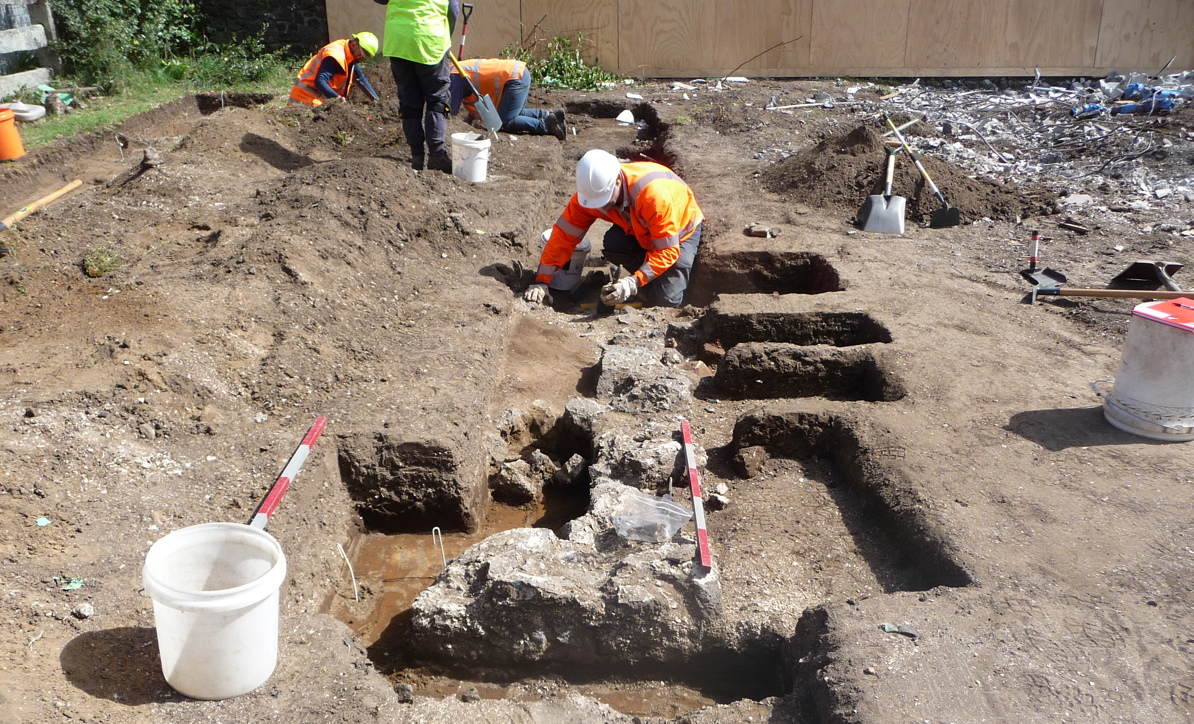
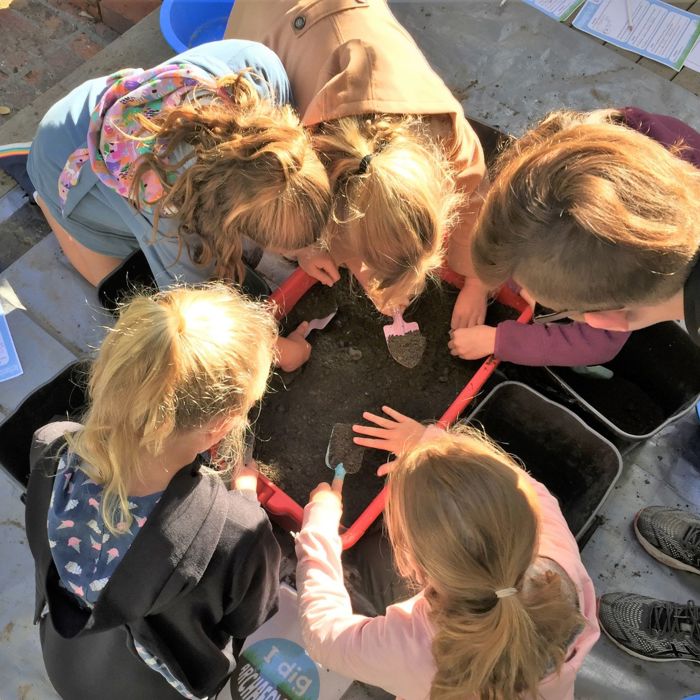
Archaeological excavation of midden at Pauatahanui.
Picture: Kapi Mana News

Shell middens are usually found within 10 km of the sea. If close to mud-flats or estuaries they usually contain mostly pipis or cockles; paua, mussels and oyster are found in middens near rocky shores and tuatua predominate near sandy beaches. Near lakes and rivers small middens of freshwater mussels are sometimes found.

Some shell middens also contain fish, bird and sometimes dog and seal bone mixed in with the shells. Middens that contain bone, mixed with charcoal and cooking material but no shells are very rare. They are mainly found on the east coast of the South Island and in Central Otago where they are made up of mainly moa bones and stone tools used for butchering moa.

Shell midden, Pauahatanui.
Picture: NZHPT

Middens dating from the early European period of New Zealand's history are often very similar to earlier middens. They will also contain glass, crockery, metal or the bones of sheep, cattle and pigs. These historic middens are found wherever there has been a historic settle-ment (Mäori, European or other group), but the largest are often in places where hotels or army barracks once stood.

Further Reading

Davidson, J. 1987. The Prehistory of New Zealand. 2nd Edition. Longman Paul, Auckland.
Anderson, A. 1990. Prodigious Birds: Moas and Moa-hunting in New Zealand. Cambridge University Press, Cambridge.


* Photo: Permission of the Alexander Turnbull Library, National Library of New Zealand / Te Puna Matauranga o Aotearoa, must be obtained before any re-use of this image


Click cover to download a pdf file (1630kb)
 

Protecting archaeological sites

Middens are an irreplaceable part of our heritage. They are archaeological sites and are protected by the Historic Places Act 1993. If you wish to do any work that may affect an archaeological site you must obtain an authority from the New Zealand Historic Places Trust before you begin. It is an offence to modify, damage or destroy an archaeological site without the written authority of the Trust.

Information about archaeological sites

For information about archaeological sites, applying for an archaeological authority or the Historic Places Act 1993 contact:
NZ Historic Places Trust
PO Box 2629, Wellington
Toll free 0800 HERITAGE (0800 437482)
Email: archaeology@historic.org.nz

New Zealand Archaeological Association's website
www.nzarchaeology.org


Contact Us | Helpful Tips

© New Zealand Historic Places Trust Pouhere Taonga
Support the Trust by calling
+64 4 472-4341