|
|
From issue: February 2001Te Puakitanga: The First Place of the Storytellerby Dale WilliamsProfessionals and volunteers have worked together to restore the birthplace of a loved New Zealand author, Katherine Mansfield. "How hard it is to escape from places" wrote Katherine Mansfield in 1922. "However carefully one goes they hold you ... you leave little bits of yourself fluttering on the fences ... little rags and shreds of your very life."
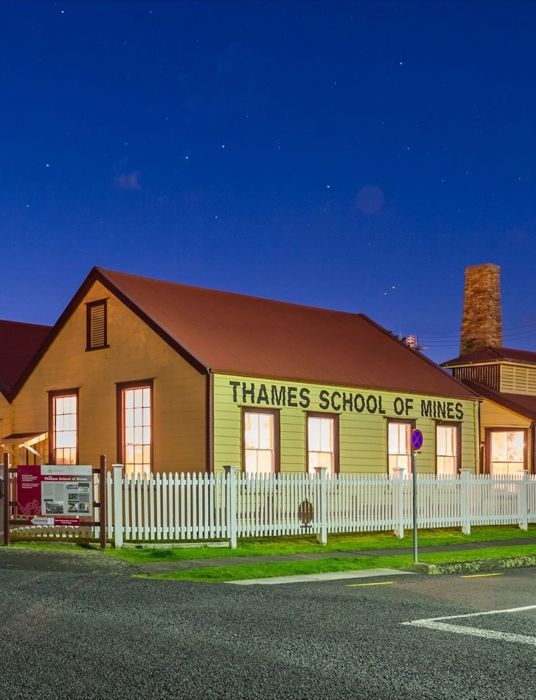
For the past fourteen years an enthusiastic group of volunteer professionals have worked to restore the birthplace and childhood home of New Zealand's renowned writer, Katherine Mansfield. Their determination has seen the "rags and shreds" of Katherine Mansfield's life as a child growing up in Thorndon, Wellington, in the 1880s and 1890s, preserved for posterity. With 2001 marking the Year of the Volunteer, the Katherine Mansfield Birthplace Society celebrates the successful work of skilled volunteers on an all-New Zealand project. Fourteen years of hard work have seen the restoration of the category I heritage site, the first building registered as category I because of its association with a New Zealand woman of international reputation. The Katherine Mansfield Birthplace was a nondescript Thorndon house, long since converted into flats, when the Birthplace Society acquired the property. The Society was formed with a grant of just $500, and had to raise further support and funds to restore the heritage house and garden. From these uncertain beginnings, the Katherine Mansfield Birthplace has become one of New Zealand's most visited heritage sites.
Since its opening in 1988, the centenary of Mansfield's birth, it has been the winner of the inaugural Wellington Regional Tourism Award (Cultural Heritage sector), the New Zealand Tourism Award (Cultural Heritage sector) and, in 1999, the Pacific Asia Travel Association's Grand Award for Heritage Attractions, which represents the Best of the Best of entries from more than eighty countries around the Pacific Basin. To step through its front door today into the hushed, formal atmosphere of the 1880s is to experience instant time travel. The rooms are carefully presented to look as though the Beauchamps are still in residence, and have just stepped out for the afternoon. The Birthplace also includes a permanent exhibition on Mansfield's life, a collection of first editions of her stories, exhibitions outlining the restoration of the house, and an exclusive gift shop.
Harold Beauchamp was rising thirty and advancing socially when he leased the land at no. 11 (now no. 25) Tinakori Road, Thorndon, from Sir Charles Clifford, who stipulated that a substantial house must be built there. Early in 1888 Harold and Annie Beauchamp moved into the new 209-square-metre, five-bedroomed house, with their daughters Vera and Charlotte, Annie's unmarried sisters Belle and Kitty, and her Australian mother Margaret Dyer. Kathleen (1888), Gwendoline (1890) and Jeanne (1892) were all born in the house where the family remained till 1893. Kathleen Beauchamp later became Katherine Mansfield the writer. Mansfield drew directly from her experiences and memories of this house in her stories "Prelude", "The Aloe" and "A Birthday". It is here that she played with her own doll's house, and described arum lilies which can still be seen today. The Society restored the house and garden in four planned stages, in accordance with the international standards of ICOMOS (International Council of Monuments and Sites). "We tried hard not to make the house too grand," says the Society's honorary advisor furnishings, Campbell Moon. "Although Harold Beauchamp was later knighted, this was the first house he owned and he hadn't yet made his fortune. The way we furnished the house had to reflect the circumstances of the family at the time - Annie's taste for Japonaiserie and the latest decorative fashions from England, and her mother's more valuable personal pieces which she brought with her from Australia."
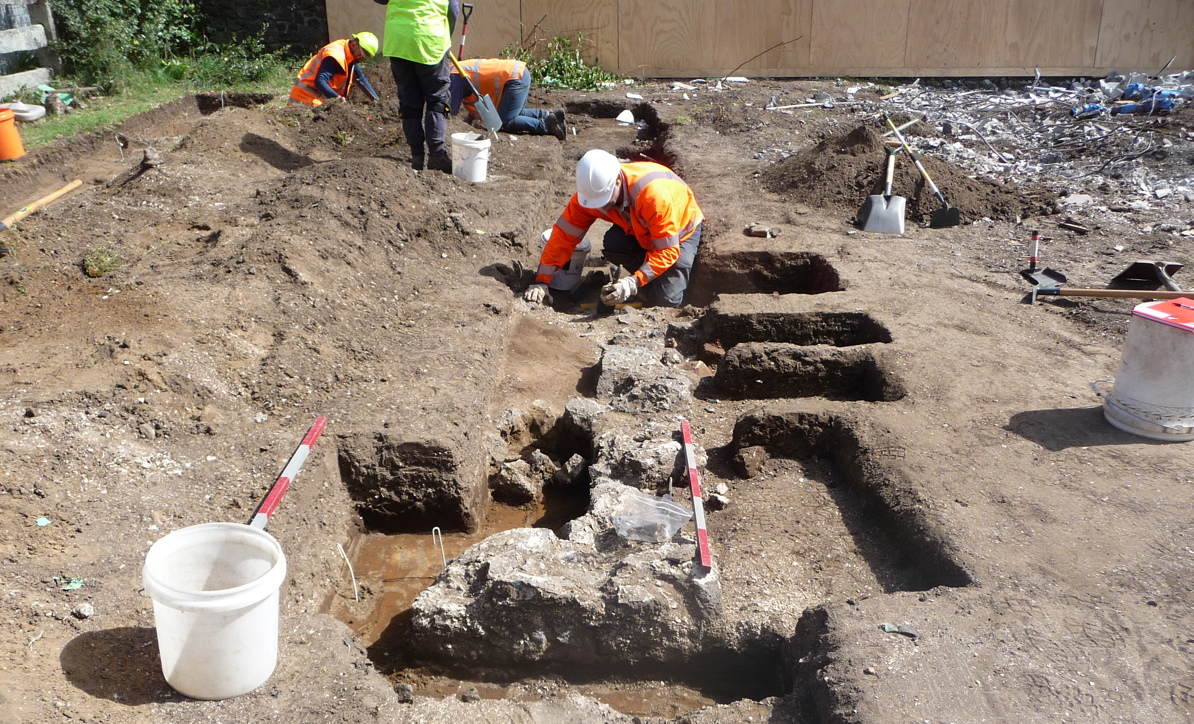
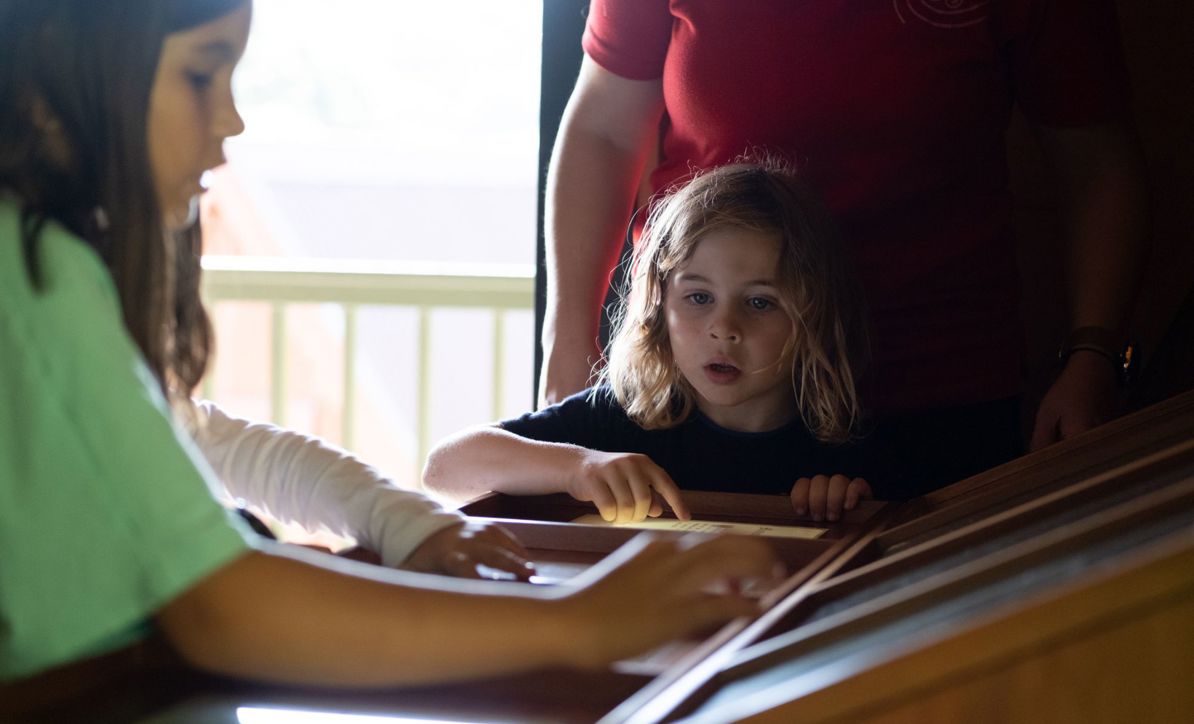
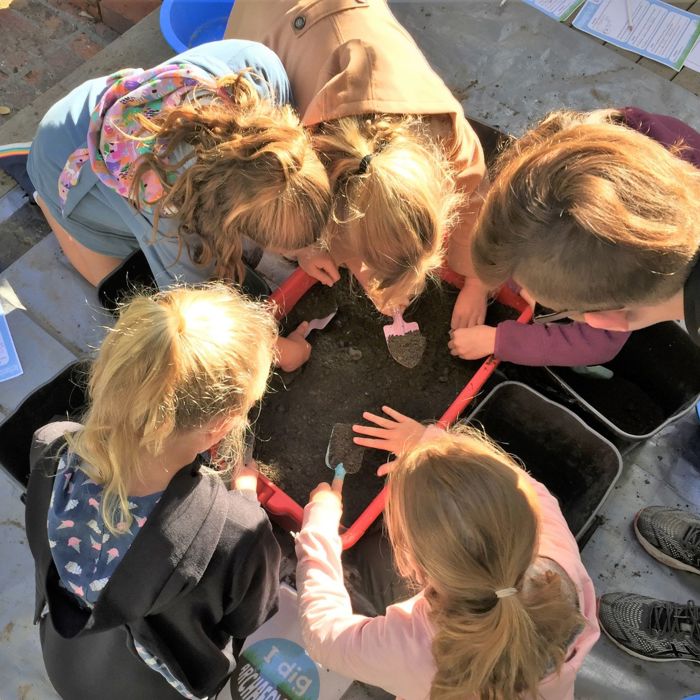
Decoratively, the house is unique in New Zealand as a microcosm of the Aesthetic Movement, the brief flowering of which in the 1880s was influenced by Oscar Wilde. This style, with its emphasis on subdued colours and Oriental design motifs, was probably seen by the Beauchamps when traveling in Britain in the 1880s. At several stages in the development of the Birthplace, the Society has literally dug up the past. Department of Conservation archaeologist Kevin Jones has led a number of excavations on the site. The first helped establish what the Beauchamps ate, what china they used, what they cooked with, and what toys their children may have played with. Further excavations under the house uncovered much that assisted the detective work, including even remnants of original wallpapers swept under the house during later renovations. Other remnants within the house itself, under architraves, helped the Society recreate the original 1880s Aesthetic Movement wallpapers in most rooms - and all the work was done in New Zealand. "Knowing where the pipes originally went, and where the brick foundations were, allowed us to restore precisely the original room layout" says Founder President Oroya Day, "and the garden evidence allowed us to recreate the original 1888 garden layout." The Victorian garden contains only plants available in Wellington of the 1880s. The Board of the Society is advised by a range of honorary advisers and consultants with backgrounds in conservation, period furnishing, antiques and collection management, and publishing. Volunteers also assist the staff, acting as tour guides and hosting visitors. "I can't praise the volunteers too highly," says Oroya Day. "The restoration itself was carried out by professional architects and restorers, but we use the voluntary expertise of other professionals in all sorts of areas. Without their dedication, we would not be open today." The Society published a "Wish List" which brought in many gifts of furniture, and Campbell Moon was able to create the ambience of the 1880s that gives a vital sense of the building's past. It was necessary to create the proper architectural setting against which readers and scholars could re-evaluate her most significant works, the "Do You Remember" stories. "It's just like the story!" is a remark that Birthplace guides are used to hearing as visitors enter the kitchen. Constructed in 1992 by volunteer John Parker, and furnished by miniaturist Rio Cox, the recreation of Mansfield's dolls' house has been a huge hit with visitors of all ages. A substantial educational programme and well developed teaching materials ensure that schools are regular visitors to the Birthplace. At special storytelling days, contemporary New Zealand writers read and perform their works to excited youngsters. Supporting contemporary New Zealand writing is a future focus of the Birthplace. A range of themed merchandise has been developed for the Birthplace's gift shop, each item designed and manufactured in New Zealand. The not-for-profit Society has always been keenly aware of the importance of merchandise sales to its income, and regularly introduces exclusive lines, ranging from porcelain mugs to T shirts bearing Mansfield's pithy sayings. A successful venture was the publication, with Victoria University Press, of Gill Boddy Greer's Katherine Mansfield: A Do You Remember Life, a compilation of four of Mansfield's short stories that relate to her time at the house in Tinakori Road. Funding is nonetheless a nagging headache. The Katherine Mansfield Birthplace does receive some financial support from the Wellington City Council, but finds the majority of its funding itself, through door charges, gift shop sales, special events, donations and membership. Every new project - publishing a brochure or card, getting house information translated into a new language, mounting an exhibition - must be funded by the Society. Writing applications for grants and maintaining relationships with sponsors takes a great deal of the Society's time. The Society's careful restoration of Mansfield's birthplace has earned the confidence of people with artifacts to donate. Nearly all of the house's furnishings have been donated, and a series of donor books meticulously record the donors' generosity. The members' newsletter regularly details items still needed. Best of all, the Birthplace has become a focus for people with Mansfield memorabilia. Several items owned by or connected with the writer have been donated to the Society, and some placed on permanent exhibit. This creates further funding problems, though. Several exhibitions are ready to be mounted, but awaiting funding. Oroya Day explains: "We have a wonderful number of gifted items associated with Mansfield and the Beauchamp family which have never been displayed. And there's a fascinating exhibition on the archaeology of the restoration." Only lack of funds - for publicity, catalogues, and display - is holding these up. At a recent talk to archivists Oroya Day was asked whether she got satisfaction from the project. "Not yet," she said. "The project is not safe until it is endowed. But it has been tremendously satisfying working with the many skilled professionals and volunteers whose work has helped our vision become reality. We have restored the spirit of place." The
Katherine Mansfield Birthplace, Te Puakitanga They are open to the public seven days a week from 10am to 4pm. Admission charged. Group concessions available. Members free. Tel/fax: 04 473 7268, e-mail: kmbirthplace@xtra.co.nz
Dale Williams, a Wellington writer, has long been an active supporter of the Katherine Mansfield Birthplace project. |
|