|
|
From issue: February 2002Understanding Our Pastoral Pastby Chris JacombInvestigations at Birch Hill near Mount Cook, have shown that archaeology can help us interpret New Zealand's early pastoral landscapes.
For better or worse, one of the first things that comes to mind when people think of New Zealand is sheep. Sheep farming has been a dominant land use in New Zealand for most of the period of European settlement and has been one the most important factors determining patterns of settlement, the historical landscape and, indeed, the national identity of this country.
The physical remains of pastoral farming have great potential to contribute to our understanding of what makes New Zealand and its people what they are today. Archaeologists have paid relatively little attention to the topic until now. Perhaps we have taken sheep farming for granted because it is so much a part of our history. But sheep farming is rapidly losing its dominant position in New Zealand farming. Forestry, the planting of vineyards and dairy conversions can seriously threaten the archaeological remains of extensive pastoralism as the sites of homesteads, outbuildings, stockyards, sheep dips and fences make way for the needs of new enterprises. Furthermore, although there are people still living who have knowledge of the old ways, within a few years they, too, will be gone. Now is the time to record whatever is left of this important part of our past.
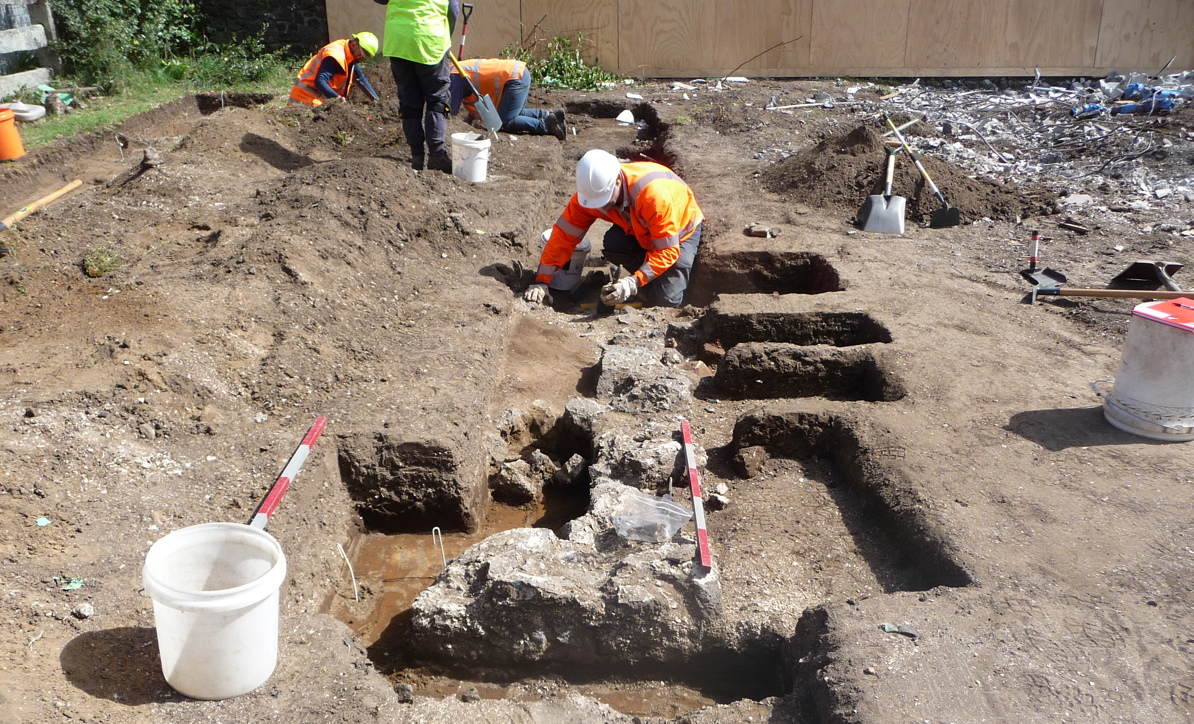
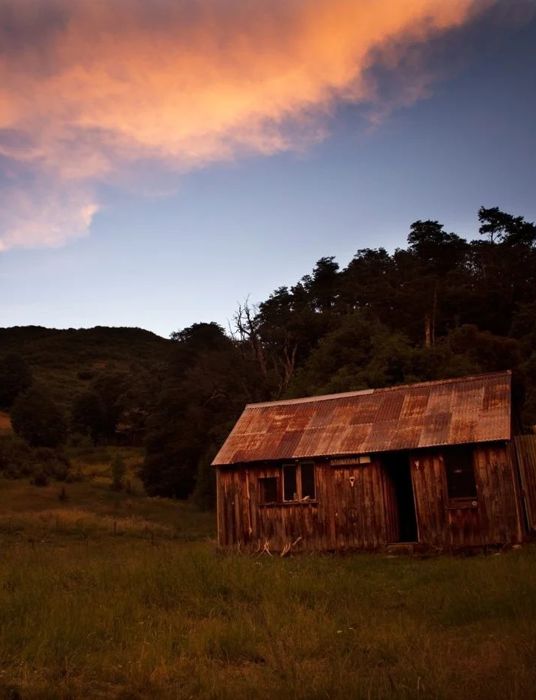
To test the archaeological potential of our early pastoral landscape, a survey of the remains of the Birch Hill high country station, near Mount Cook, was undertaken in January 2000. As well as the sites of three homesteads and a woolshed, there are two ditch-and-bank enclosures, two graves, a sheepyard, a bivvy and a possible forge. A rabbit fence separates Birch Hill from Glentanner, the next station down the Tasman River. The earliest homestead was built of adobe, probably in 1868. Its roof and walls are long gone, but the rectangular outline of the stone foundations and chimney remain. Close by are two ditch-and-bank enclosures, possibly vegetable gardens or for holding sheep. On the hill above the southern enclosure are the two graves, one marked by a headstone and wooden fence.
A bank just below the homestead site has been cut back by a metre or so and faced with stone to form what appears to be a bivvy. A rectangular pile of stones nearby may be the ruins of a forge. At the northern end of the site are the second and third homestead sites, close to the woolshed site and sheepyards. The sheepyards are located on the inside edge of a large holding paddock. A short "wing" fence off the northeast corner would have helped the musterers to funnel the sheep into the yards. The location of the Birch Hill sites, just down the main road from one of New Zealand's tourist meccas - the Hermitage Mount Cook - makes them ideal for public interpretation. Birch Hill was first occupied by Nicolo "Big Mick" Radove, a Sicilian who had been at the siege of Sebastopol, served on clipper ships, and mined gold in Australia. He spent several years in New Zealand working with sheep before realising his dream of owning his own station with the purchase of Birch Hill in 1868. Radove's friend, John Lloyd, lived on the station and helped with the mustering. Lloyd contracted an incurable disease while living at Birch Hill, and spent his remaining days on the station. Every evening Big Mick would carry his friend up to the hilltop behind the homestead, so he could watch the sunset. When Lloyd died, in September 1872, Big Mick followed his wishes and buried him on that spot. The grave is marked by a headstone and wooden fence. Legend has it that when provincial geologist Julius von Haast was exploring the flanks of Aoraki/Mount Cook, he said to his surveyor "We are now higher up the slopes of Mount Cook than any man has ever been." Shortly afterwards a voice rang out from the mist above, "Hey, by crikey, you down there ... you not disturb my sheep." They were on Big Mick's regular mustering run. It is thought locally that the sheepyards are mostly as built by Big Mick Radove, although nothing remains of the woolshed. Big Mick sold Birch Hill in 1875 to buy a place that sounded little better, called The Mistake Country. Birch Hill had never been a great place, even for sheep. Lambs were often claimed by late cold weather. The run changed hands several times over the next century or so. It eventually became part of the Mount Cook National Park. The story of Birch Hill is a story of hardship and struggle, life and death in a difficult, remote environment. Places like Birch Hill can help make real the written and unwritten history of the pastoral achievements of the first hundred years of European settlement in a new colony. The sheep dip and rabbit fence, for example, are testaments to the fight against the dual scourges of scab and rabbits. In a wider
context, places like Birch Hill are parts of a network of linked entities that
make up the pastoral farming landscape that is such a feature of modern-day rural
New Zealand. There is great potential for studying and interpreting how these
entities worked and inter-related, from the invention of meat-freezing technology
to accommodation houses, bullock waggons, shearing equipment, all the way down
to the Taranaki gate and the knots used to join No. 8 wire. It is only through
such research, too, that a representative sample of sites and material culture
can be selected for preservation.
Chris Jacomb is the Historic Places Trust's Regional Archaeologist based in Christchurch.
|
|