|
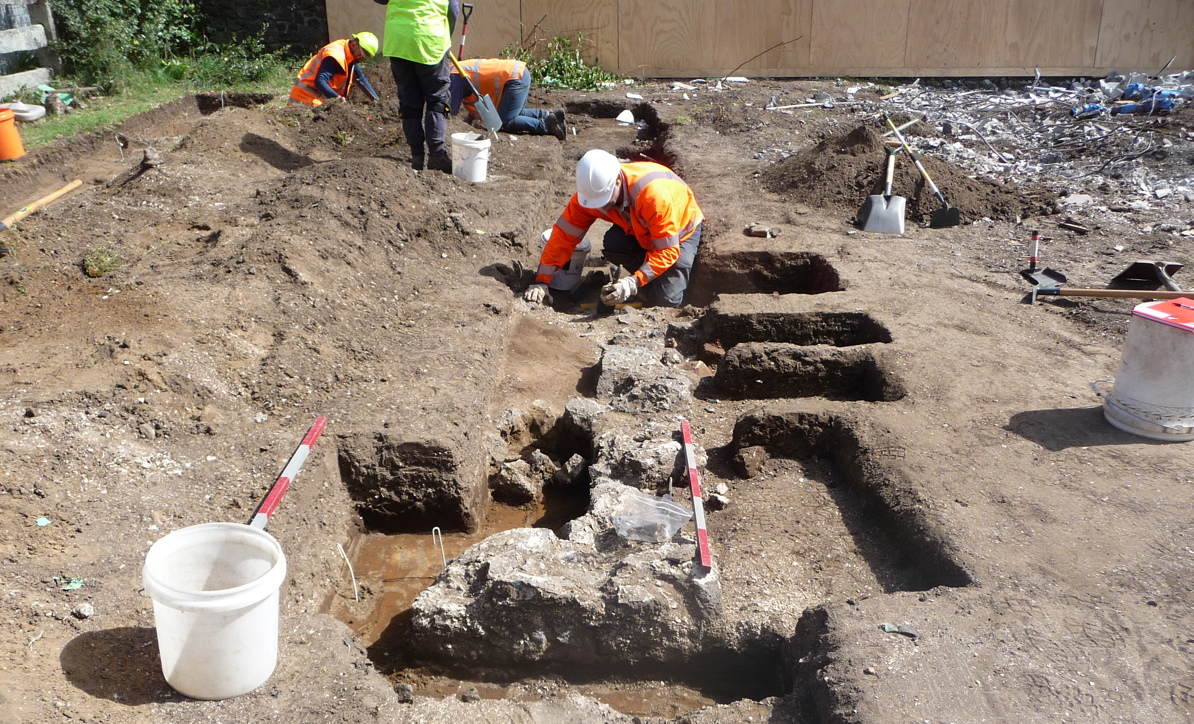
What is a midden?"Midden" is an old English word for household rubbish dump. This is the meaning used by archaeologists. Middens are places where food waste such as shellfish and animal bones, ashes, charcoal, burned stones from fires, broken or worn-out tools, bottles, plates and household items were discarded or buried.Shell middens are found almost anywhere in coastal New Zealand. They can be seen as heaps of shell and bone mixed with charcoal and burned stone in sand dunes or eroding from river banks or road cuttings.Middens are also found wherever there has been a historic settlement,
but the largest are often in places where hotels or Army barracks once
stood. Middens are probably the most common kind of archaeological site
found in New Zealand.
|
From issue: Autumn 2003Coastal Treasures Under Siegeby Paul TitusWith the increased pressure on valuable coastal properties comes a threat to archaeological treasures. Paul Titus explores concerns that the rush to seaside development threatens to destroy a priceless record of national heritage.
The New Zealand coastline is in the midst of a sea change. As property prices skyrocket, farms are subdivided and holiday homes (call some of them mansions) and high-rises replace baches and motor camps, coastal landscapes are being transformed. Think sun and sand within cooee of a city and that will lead to a list
of regions where the pressure is most intense - Northland, the Hibiscus
Coast, the Coromandel, Bay of Plenty, Hawkes Bay, northern Taranaki, Kapiti,
Tasman Bay. But places as far-lung as Mahia Peninsula and the Wairarapa
Coast are feeling the hot breath of development as well. The seaside property bonanza raises curly questions about the balance between public and private interests. What should the scale of development be? Can a landscape be a public asset that embodies New Zealander's cultural values? Is affordable access to the sea a kiwi birthright, a part of the national heritage? Answers to these questions will emerge over time. Of immediate concern to heritage advocates is that the rush to the coast is trampling a precious resource: archaeological sites. Life for early Maori and Pakeha focused on the sea - more so than in the modern day - and the remnants of their lives lie buried in innumerable spots along the coast.
Out of the public eye, archaeological sites are out of the public mind. Even if visible - a shell midden or garden site for example, - they are likely to be dismissed as insignificant, especially when weighed against the money that development promises. For archaeologists such sites harbour invaluable links with the past, and they want to find ways to work with developers to minimize the destruction. The curator of archaeology at the Auckland War Memorial Museum, Dr Nigel Prickett says the fundamental issue is one of changing land use. Intensive dairy farming can have an impact on archaeological sites, as can large -scale projects such as golf courses. But the most serious concern is the spread of lifestyle subdivisions. "A lot of archaeological sites have been protected because they are under pastoral farmland, for 150 years in some districts. It is a very different matter if a historic earthworks ends up in someone's garden rather than the middle of a sheep paddock. And what happens in the future when 10-acre lifestyle blocks are further subdivided into five-acre, two-acre or half-acre blocks?"
Every new subdivision brings houses, roads, driveways, septic tanks or a sewerage scheme, decks, clotheslines and the like. Same when someone replaces an old do-it-yourself bach with a more substantial building. Most archaeological sites in New Zealand are shallow, and construction of this type can easily damage them. The issue is especially acute in relation to Maori settlement sites. Not surprisingly, coastal areas prized today were also of value to Maori. "The places inhabited by the first settlers from East Polynesia were, of course, on the coast. The very beaches that were significant to them are the locations of today's most popular subdivisions. We have already lost a high proportion of sites, sometimes without any knowledge of them at all," Prickett says. The issue cannot be simplified into a scenario of callous Pakeha developers setting out to bulldoze Maori heritage sites. While many do ignore cultural and archaeological history when they push their developments forward, others work closely with affected parties to avoid the destruction of heritage sites. And, in some cases, it is Maori landowners who want to develop costal lands that hold archaeological deposits. Ngai Tahu aims to build a visitors' centre, luxury hotel and golf course on coastal lands near Kaikoura; a group of Maori landowners has sought to subdivide and sell a two-hectare section outside Mt Maunganui; and Northland iwi also have plans to develop coastal property, according to Historic Places Trust kaihautu, or national manager of Maori heritage, Te Kenehi Teira. "There is a clear overlap between archaeological sites and wahi tapu areas that Maori consider heritage taonga. The issue is complicated because often coastal lands are the only lands Maori Land Courts have left in the hands of Maori, and they want to develop them for their economic interests. The issues can be further complicated if some of the Maori owners want to sell off the land and others want to keep it," Teira says. The Historic Places Trust is supporting the establishment of iwi and hapu resource management units that will have the training to work with archaeological and other cultural resources. They will be the local representatives with whom planners, developers and archaeologists can work to address issues that arise around construction projects. Sceptics argue archaeologists have already gathered enough information to establish an accurate understanding of New Zealand's past. What can be learned by excavating one more shell midden? Senior archaeologist with the Trust, Dr Rick McGovern-Wilson says it is true most excavations will not divulge a lot at general level. But each individual excavation can tell us about cultural, environmental and economic practices. "A scruffy little shell midden on the Otago Peninsula is different from shell middens on Banks Peninsula or Golden Bay or Waikanae or Bay of Plenty." And, he continues, archaeological sites are a finite resource that should be protected as much as possible for future use. "It is important to preserve sites in situ because scientific knowledge is changing so fast we don't know what we will be able to learn from them in future. Twenty years ago we were just scratching the edges of our knowledge of isotopes. Now we can look at the isotopes of calcium, nitrogen and sulphur in a human bone and tell if the person's diet was largely terrestrial or marine." In some cases, overseas investors are the driving forces behind big developments that threaten heritage sites. Summerlee Station on Cape Kidnappers is now in the hands of investors with plans for a golf course and resort in area dense with sites from Maori occupation and early European whaling. A lifestyle subdivision at Rangihoua in the Bay of Islands threatens to alter a heritage landscape that includes a major pa site and the site of the first Christian mission in New Zealand. McGovern-Wilson says too many rural councils are willing to rubber stamp
the projects of overseas investors, in part because they add revenues
to council coffers that will fund badly needed roads or public works.
He complains the Overseas Investment Commission does not adequately inform
foreign investors about their obligations under the Resource Management
and Historic Places Acts. "We are not anti-development. We do not want to use archaeology as an excuse to stop development. If we are bought into the planning process at the start we can find ways to protect sites. This could mean creating a reserve within a subdivision. Or it could mean moving a road from one location to another or rejigging subdivision boundaries so individual lots coincide with individual middens." Omaha Beach, 80 kilometres north of Auckland, demonstrates the impact large-scale subdivisions can have on heritage resources and ways that impact can be cushioned. There, 650 houses have been built on a section of a sand spit that held hundreds of shell middens. Before the Omaha development began, the developer placed 50 known middens in a reserve. For two years, a team of archaeologists and iwi monitors recorded, mapped and collected samples from a further 150 middens they identified during the course of construction. Head archaeologist Dr Rod Clough says, though the project had its ups and downs, it is a good example of how developers can work with specialists and iwi to manage archaeological resources. About 55,000 archaeological sites have been recorded by the New Zealand Archaeological Association, and each year, 600 or so are added to the record. A small proportion of these, just 836, are registered with the Historic Places trust. The fate of those archaeological sites - like that of heritage buildings or traditional Maori sites - lie in the hands of district and regional councils. To them, the Government has delegated the role of protecting heritage resources. However, all 55,000 sites, registered or not, are protected by the archaeological authority provisions of the Historic Places Act from any works that will affect them. Archaeologists are concerned the legal mechanisms in place to protect archaeological sites were designed to deal with a slower-paced developmental regime. They fear that the pace of development has increased to such an extent in recent years that, unless steps are taken, many sites will be lost. Prickett says archaeologists and their allies need to fight to get more sites into public ownership. Hard decisions have to made about what to save, what to fight for, and what not to fight for. If heritage advocates are not involved in these decisions, others will make them and those decisions may not protect cultural resources. Paul Titus is the principal in Titus Writes , a network of freelance writers, photographers and graphic artists. |
| |||||||||||||||||||||||||||||||||||||||||||||||||||||||||||||||||