New Zealand Historic Places Trust Pouhere Taonga


Membership of the Historic Places Trust entitles you to a range of unique benefits including a free subscription to Heritage New Zealand magazine.


From issue: Summer 2003

Owners Value Ageing Harbour Icons

by Victoria Bartle

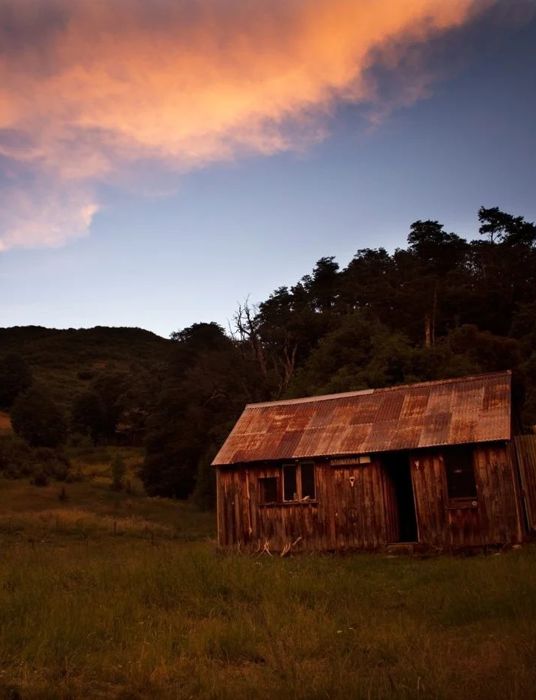
Six small baches have nestled into Nelson's Boulder Bank for as long as anyone can remember. These tough little holiday homes look set to give many more summers of pleasure, despite their questionable heritage value.

One of the tenacious little baches.
Photos: Victoria Bartle

Nelson's Boulder Bank is a natural reef of smooth rocks and stones, stretching parallel with the waterfront and the bustling port and taking the brunt of what stormy seas throw its way.

Accessible only by sea or a long and rugged 13-kilometre walk from one end, the baches remain the holiday destination of families - now into their third generation - or tramping enthusiasts intent on exploring the unique rocky reef's length.

One bach owner, Gilbert Inkster, likes the absence of electricity in the baches. "I don't get out there as much as I used to but, when I do, I just go to bed when it gets dark. I'd like to live out there permanently but I'm not sure my wife would want to join me - it's still a bit too primitive. It's like being at sea - it's a different place all together," the 80-year-old Nelsonian and former seafarer says.

Inkster bought his bach in 1965 for £350. Built by Phil McConchie, a qualified carpenter and Second World War prisoner, the Inkster bach was one of the last constructed on the Boulder Bank and is probably the most sturdy. "Being built by a carpenter, everything is square and it has a nice tongue-and-groove floor," says Inkster's daughter Helen, who has holidayed in the bach "as far back as I can remember." She now often takes her own teenage children there.

A driftwood chair on te Boulder Bank.
Picture: Victoria Bartle

Though most of the baches have been innovatively constructed and added to over the years with everything from timber and corrugated iron to driftwood and a few hefty logs, they are considered locally as true icons of the original kiwi bach. Mention their possible demolition to local folk, and the response is indignant, angry and quite impatient with anyone who does not recognise their worth as heritage buildings.

The Department of Conservation has seriously considered the value of the baches in recent years and debate has included whether the baches should be demolished in order to return the Boulder Bank to its natural state as much as possible. The only other building on the bank is the now-decommissioned lighthouse, brought to Nelson from Bath, England, in 1861 and erected the following year. It is registered as a Category I historic place and is a popular tourist destination with visitors.

If sufficient funding is found by the end of the financial year, the Department of Conservation plans to employ a conservation architect to assess each building, identify and date the materials used and advise on their historic value.

Long-time bach resident Rona Davies pictured in 1923 (centre, back row)

The department's technical support officer for historic resources, Steve Bagley, says the baches are a historic component of the Boulder Bank and, to locals, they are considered "very much an accepted part of the landscape."

Those who believe conserving the environment means returning the Boulder Bank to its natural state feel the baches are "a blot on the landscape" and alien to what they believe the Boulder Bank should be, he says. "We have a responsibility to weigh up their value. And there is the issue of introduced plants and sewage disposal, though chemical toilets are now being used on the bank."

Registering the baches as part of an historic area is an option being considered by the New Zealand Historic Places Trust, which sees the baches as "very much a part of Nelson and a feature of the scenic reserve historic landscape that is the Boulder Bank," according to Central Region area co-ordinator David Watt.

"We will work closely with the Department of Conservation
to identify the importance of the area and the historical
significance of the baches."

The Boulder Bank is Crown land that has been managed by the department since 1992 and since then owners have been issued with five-year renewable licences. Opinions vary over how old the baches are. While some were built in the 1940s and 1950s, others are believed to have grown from overnight accommodation roughly made by local fishermen in the 1880s and 1890s.

Local historian John Mitchell says the Boulder Bank itself and the stretch of water between it and the mainland were first used in pre-European times by local Maori and Maori peoples from nearby regions. They would visit when fish were spawning in the protected waters behind the Boulder Bank.

"In those days, Haulashore Island was part of the Boulder Bank and the Cut (today's man-made shipping channel) did not exist," Mitchell says. "There were certainly temporary camps made on Haulashore Island.

"Nelson Haven was an important food source and the Boulder Bank was home to a whole raft of bird life and their eggs, but it was not a place where the Maori people set up camp - it was too exposed to the weather and also to possible attack."

Another local resident and bach owner, Kim Harris, remembers his father, Jack, having bought a Boulder Bank bach in the early 1950s.

"It was originally made from four-gallon petrol cans filled with pebbles and stacked like bricks. Two or three baches started out small just like that. The fishermen used to boil up their pitch-up or tar out there on the bank and dip their hemp rope nets in it, then spread them out on the bank to dry. Some of those fishermen would stay the night on the bank and they made shelters for themselves, and that's how the baches started.

"There were seven kids in my family.The family would go out there every second weekend in a very small boat with an outboard motor. I think it went about two miles an hour. "My children are 20 and 22 now, but they still go out to the Boulder Bank for a week when they come back to Nelson."

The stories of local fishermen using the Boulder Bank as their own base for maintaining their nets, and staying overnight is a long-accepted explanation, says DoC's Steve Bagley.
"I have seen it written about and, yes, they would have kept some of their equipment over there on the bank," he says."There were also huts on Haulashore Island at the southern end of the Boulder Bank which were used by all sorts of people working in the port area.

"If any vestige of those huts remain, or if they have been built around and added on to with the baches that are on the Boulder Bank today, that is another matter entirely. The assessment by a conservation architect will determine that for us."

A well-thumbed photograph album owned by Nelson resident Rona Davies, now aged 94, contains two photographs taken on the Boulder Bank, and featuring one of the baches.

Taken in 1923, one photo shows Davies as a 14-year-old with two of her sisters, Ada and Ruby, and several unidentified family friends. In the background in a porch area of one of the baches is Rona's grandmother Fanny Clutterbuck with other unidentified adults. In the second photograph, Davies' grandmother is standing in front of the same bach.

"My grandmother raised me from the age of two years and we lived in Harley St in Nelson," Davies says. "I remember her taking me out to the Boulder Bank with my father, Sidney Barnett. "We would go over in a little motorboat. I remember we would go over and walk as far as the lighthouse, but we didn't go to the Boulder Bank very often and I don't remember a lot about going there, except we would only go for the day."


Places to Visit

Learn more about the historic sites located in and around the Nelson & Marlborough region of New Zealand


Contact Us | Helpful Tips

© New Zealand Historic Places Trust Pouhere Taonga
Support the Trust by calling
+64 4 472-4341