New Zealand Historic Places Trust Pouhere Taonga


Membership of the Historic Places Trust entitles you to a range of unique benefits including a free subscription to Heritage New Zealand magazine.


From issue: Autumn 2004

East Coast Buildings Give Life to Supreme Sacrifice

by Richard Pamatatau


Memories of war can be represented in many ways that seek to create footprints on places that allow the past and the present to interface. Richard Pamatatau visits examples that are very much living memorials to a special chapter in New Zealand history.

Members of the Maori Battalion at a transit camp in Egypt (possibly Tahag or Amiryia) after their evacuation from Crete, June 1941. Photographer unidentified.
Image: Alexander Turnball Library* DA-06839

The special place that the 28 Maori Battalion holds in the country's heritage is no more honoured than in the marae dining rooms along the North Island's East Coast. These buildings commemorate the much-honoured New Zealand Army unit formed in the Second World War after Sir Apirana Ngata recognised that the unrest in Europe, created by Adolf Hitler's rise in Germany, would not be short-lived.

Sir Apirana saw that the Allies would need to take to arms and he was the driving force to create a Maori military unit that followed the precedent of the Maori Pioneer Battalion of 1914-18. At the time, he was adamant that "his race not be submerged in a New Zealand at war any more than it had been submerged in a New Zealand at peace." He had also campaigned for a Maori contingent at the start of the First World War.

Members of the Maori Battalion on Alexandria Wharf, Egypt, immediately after their arrival from Crete, exact date unknown. British official photograph.
Image: Alexander Turnball Library* DA-09662;F

The battalion was made up of 3578 volunteers and they fought in some of the fiercest battles of the war in Greece, Crete, Egypt,Tunisia, Libya and Italy.

Massey University scholar Monty Soutar, who has carried out extensive research on the Maori Battalion, is preparing a book on the Maori war effort. He regards it as an area of New Zealand's history that needs more attention. The book looks at stories of the battalion that will be relevant to the "second and third generations."

He said the dining rooms along the coast as well as St Mary's Church at Tikitiki were fine examples of memorials to the battalion. The 28 Maori Battalion may be seen today as a branding exercise that gave Maori-as-warriors full status as citizens because they were prepared to die for their country. Even before the Government had agreed to form an expeditionary force, two Maori members of Parliament, Eruera Tirikatene (Southern Maori) and Paraire Paikea (Northern Maori), made public demands that Maori be represented in any force that might be formed. Other organisations and individuals through Maoridom followed this arrowhead, and the Maori Battalion was spawned, its five companies drawing members from all corners of New Zealand.

Members of the Maori Battalion disembarking a troopship on their return from overseas service during World War II. Photographed by John Dobree Pascoe on 23 January 1946.
Image: Alexander Turnball Library* 1/4-002079;F

Sir Apirana held the view that, by volunteering and showing true valour on the battlefield, Maori would be fulfilling their obligations as New Zealand citizens as outlined in Article Three of the Treaty of Waitangi.

Even today, the memory of the Maori Battalion and its five companies, A, B, C, D and headquarters, is represented by tales of bravery and fearless resolve in the theatre of war.

A Company was known as Nga Kiri Kapia, the Gumdiggers, while those from the Arawa-Mataatua area were given the moniker Nga Rukukapa, the Penny Divers. D Company, from the South Island, was not so easy to label and was landed with Ngati Walkabout. C Company, from the Tairawhiti, was known as Nga Kaupoi, the Cowboys. Headquarters drew its manpower from each of the other companies.

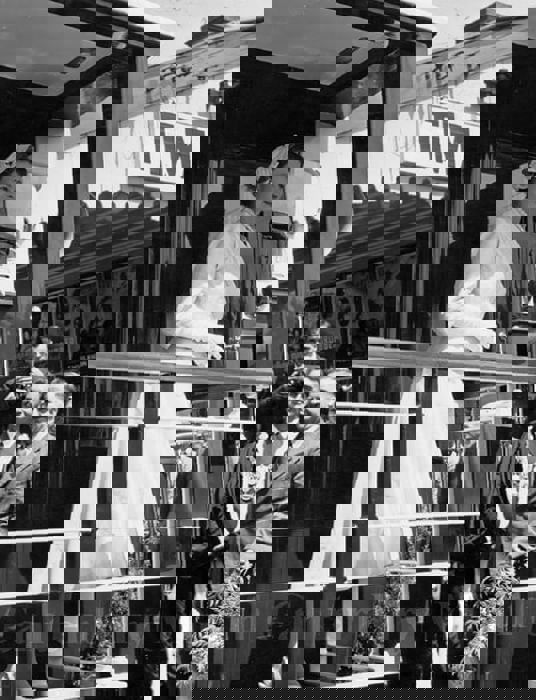
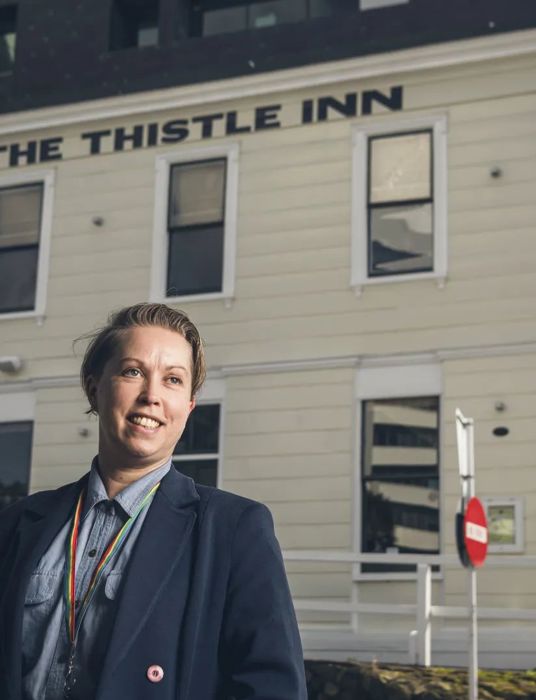
Former Maori Battalion member, Darcy Ria outside the Maori Battalion dining hall at Manutake on the East Coast.
Photo: Paul Rickard

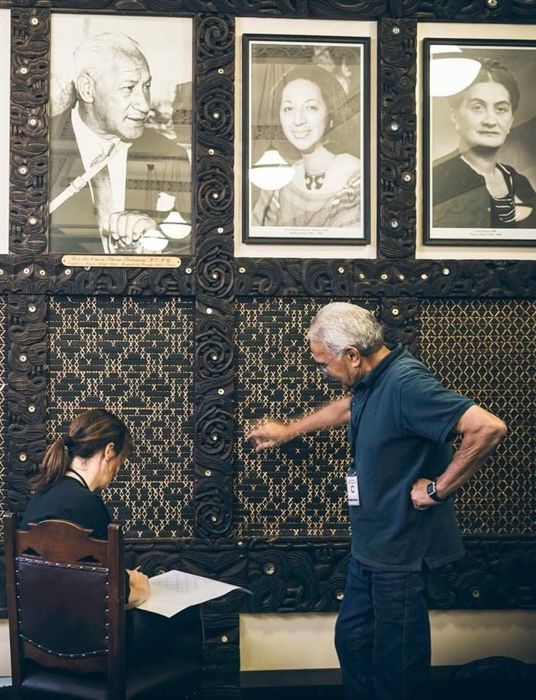
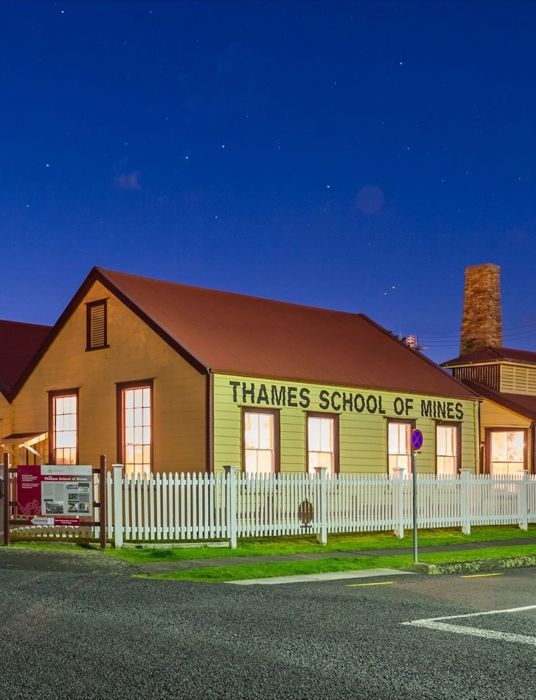
Darcy Ria, a staff sergeant with the battalion's C Company, is very familiar with the Maori Battalion dining hall at Manutuke on the East Coast. He fought in a number of campaigns and sees the dining hall as a special place because it allows the memories of those gone by to be part of today's hall activities, from parties and meetings to weddings and dances.

"Their names are on the wall so they are there for every occasion."

While many marae dining halls, or whare kai, along the coast have honours boards where the names of Maori Battalion members are written, this building is even more special because of the somewhat colourful and controversial path it followed to its physical place and its new name.

Now in his 80s, Ria recalls that the Maori Battalion dining hall was originally known as Te Poho o Hinehou wharenui, and sat with another wharenui, known as To Poho o Rukupo, on land known as the Pakirikiri Block, almost directly opposite the mouth of the Waipaoa River.

"It used to flood all the time, and in the end the elders of the day made a good decision to move it several kilometres up the river and inland."

That was just before the First World War, and it was moved to its present location on the Manutuke Marae.

From that time until the early days of the Second World War, Ria said that it was used as a wharenui but, because the marae lacked dining facilities, the building also served that function. Food was not cooked there; that took place in a kitchen some distance away.

Ria said that people and kaumatua at the time could see just how inconvenient it was to have the kitchen in a separate place so the decision was made to convert the hall into a full dining room. Much planning and fundraising eventually led to the opening and, with it, instigated by the kaumatua, a name change.That opening coincided with the Maori Battalion's action at El Alamein in 1943. Maoridom was justifiably proud of its men and the dining hall was named the Maori Battalion.

However, Ria noted the change was not without some controversy. A namesake of the hall, Hinehou Tureia, thought it should remain as Te Poho o Hinehou. But, when it was pointed out that her husband, Parekura Tureia,was the commanding officer of C Company, she consented to the change.

Nowadays, Ria said, the Maori Battalion dining room was used for dances, weddings and many community activities. Anzac Day celebrations, reunions and Maori functions with a military focus were held there.

The younger people were thinking about their ancestors a lot more, he said, and the Maori Battalion dining room was a functioning place that was not just about memory.

While he has not been back to Europe, Ria said that being in the dining room and seeing the names on the wall was more than enough to evoke memories of that past time."It can be very powerful."

That power is evident in the dining room serving as a place for Maori Battalion members to lie in state, even if they are not strongly connected to the area, because of the building's relevance to the battalion.

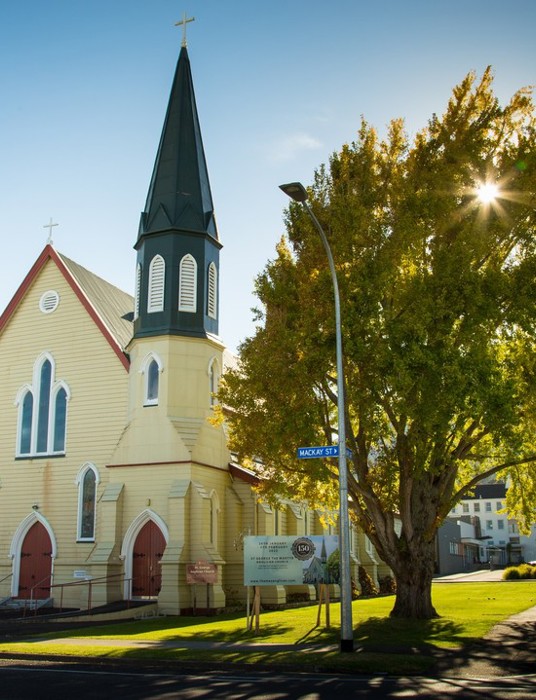
St Mary's Church at Tikitiki is the other great memorial building to the Maori war effort on the East Coast. It was built in the 1920s as a memorial to local Maori who died in the First World War and is located on a prominent spur of land overlooking the Waiapu Valley.

There is also a statue of a First World War soldier wearing the archetypal lemon-squeezer hat on the hill behind St Mary's casting his gaze to the east, the Waiapu River and the Pacific Ocean.

But the church has assumed a bigger role. Sir Apirana saw it not only as a memorial, but also as a chance to showcase Maori arts and crafts that might have been lost. He was a passionate champion of carving and decorative arts, Maori music, dance and haka as well as poetry and linguistic traditions.

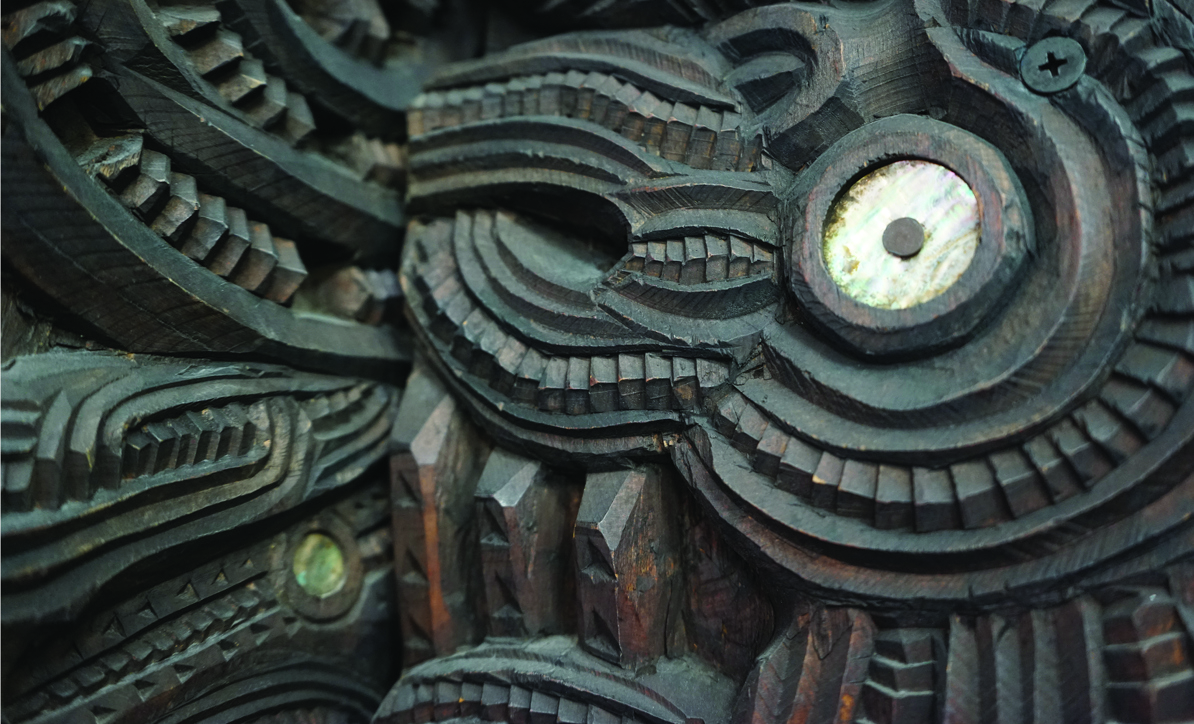
For him, large projects such as meeting houses and churches provided a home for heirlooms. So St Mary's is more than a memorial, originally for the men of the Ngati Porou and extended to represent all New Zealanders who passed on in war. It is a gallery of fine carvings, decorated rafters and beautiful panels.

St Mary's has recently been restored, a mammoth task that saw significant conservation work undertaken on its ornate windows, carvings and decorative patterns. That work was done by Ngati Porou and the Historic Places Trust.

It was also repainted in its original colours, olive and cream, which represent the Mediterranean where the Maori Battalion fought in many battles.

The Reverend Matanuku Kaa, minister at St Mary's, said he hoped all New Zealand would see the church as a place to remember those who had fought in war. "This is a place for all New Zealanders, not just Maori," he said.

Alfred Preece, president of the Maori Battalion Association, said memorials were an important part of any war effort. Like reunions - the Maori Battalion is having one this Easter in Christchurch - they gave the next generation a chance to have a think about things.

As more and more passed on, it would be the memorial like the dining room or the church that started the conversation going that kept people "alive" in someone's heart, he said.

The most significant thing about the battalion, Preece said,was that possibly for the first time Maori were viewed as equal by people."The men who fought by our sides knew they were secure if our boys were on their flank."

If anything, Preece said, there were not enough memorials for the "fine young men" who lost their lives, and the Maori Battalion was still not visible enough.

However, Ria said that sometimes the war was something to forget because it showed that the world had not gone that far in its development.Yet, it could not be forgotten because "the past is why we have our present."

 
* Photo: Permission of the Alexander Turnbull Library, National Library of New Zealand / Te Puna Matauranga o Aotearoa, must be obtained before any re-use of this image


War effort engraved in a paua memory

Tucked away in the Alexander Turnbull Library is a delicate paua shell and gold necklace crafted by New Zealand servicemen for a woman who touched the hearts of thousands during the Second World War.

New Zealand-born actress and broadcaster Nola Luxford's war efforts as the founder and hostess of the Anzac Club in New York City were recognised with the gift from the Government of New Zealand in 1947.

The necklace was presented by Prime Minister Peter Fraser at Parliament Buildings. Fraser told the invited guests he was particularly proud of the workmanship by the disabled servicemen, who had put their hearts and souls into making the necklace.

>> Read more


Contact Us | Helpful Tips

© New Zealand Historic Places Trust Pouhere Taonga
Support the Trust by calling
+64 4 472-4341