|
|
From Heritage New Zealand, Winter 20051955-64: Learning to Walkby Paul ChristoffelFrom the start, the Trust depended on volunteers to maintain momentum.Trust work shifted in emphasis during the 1960s after
he National Historic Places Trust officially came into The Board spent much time in its early meetings on
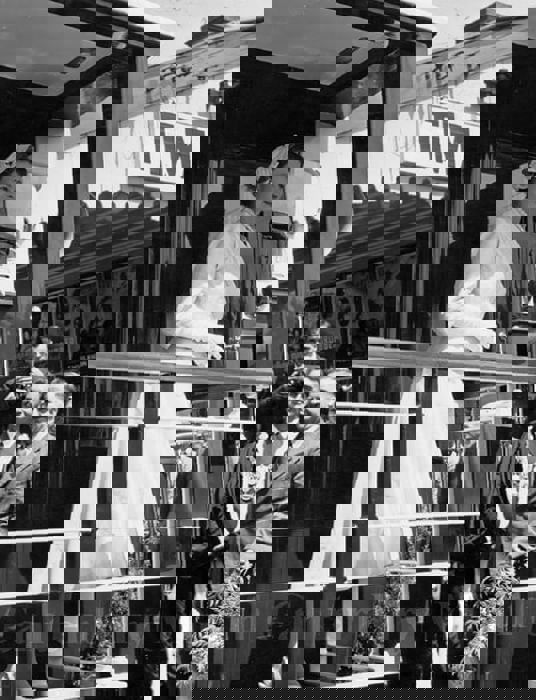
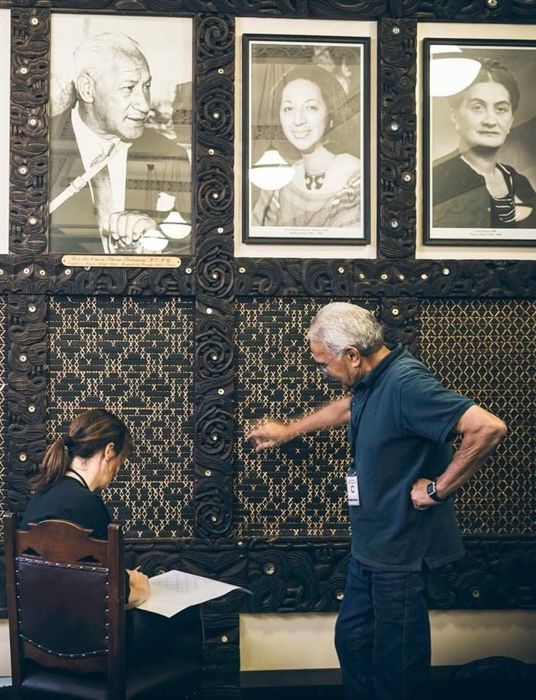
The legacy of one decision the Board took at its first meeting Internal Affairs Minister S.W. Smith attended that first meeting, perhaps symbolising a Government commitment to the new body. However, it was to be some years before that commitment was to be transformed from a symbolic to a financial one. The grant from Government in the Trusts first full year was £8,200 ($325,000 in 2004 dollar values), rising to just double that by the end of the first decade. As a result, the members of regional committees often had to put in a tremendous amount of work without even their expenses being met. The importance to the Trust of the work of these regional committees was shown by the fact that Charles Bowden travelled to the launch of every committee outside of Wellington, and John Pascoe attended all but one. Civic dignitaries commonly attended these official launches. Early Days
Don Wilson, who chaired the original Wanganui branch committee, recalls the effort put in by committee members, which often meant donning gumboots and getting their hands dirty.The district covered a huge area, extending as far north as Taupo and as far south as Foxton.Wilson considers the Trust came into being just in time as a tremendous amount had already been lost. He recalls travelling as a lad on the Wanganui River in the 1920s on the paddle steamer that stopped at pa sites and a boarding house at Pipiriki. By the 1950s, the steamer had been replaced by road transport, the old sites had fallen into disrepair and the boarding house burnt down. The whole district was full of ruined hilltop pa and military redoubts. Little was left of the old flourmills that Governor Grey had ordered to be built for local Maori in the 1850s. Just recording historic sites was a huge amount of work. In other regions, the workload on committee members was The Wanganui committee gave a particular prominence In fact, it was in the Wanganui district that the Historic Places Trust acquired its first site Te Porere pa near Mt Tongariro, the site of Te Kootis defeat in the last major engagement of the wars of the 1860s, was vested in the Trust.The Trust had negotiated with Ngati Tuwharetoa that it would take control of Te Porere in November 1958. The work of clearing the site was undertaken almost entirely by volunteers, including members of the local branch committee and recruits from tramping clubs.Governor General Lord Cobham officially opened Te Porere to the public in February 1961, although restoration work continued for many years after.
Preserving and marking historic Maori heritage was an important focus for the Trust in its early years, including protecting Maori rock drawings from vandalism or destruction by hydro-electric projects and recording drawings that could not be saved or were difficult to access. Reports on rock paintings to be affected by hydro-electric schemes on the Waikato and Waitaki Rivers were included in the Trusts annual reports of 1957 to 1959, effectively making them the Trusts first publications.Grants were provided to protect Maori rock carvings near Waverly and in the Kaingaroa Forest from vandals, and to make replicas of the Kaingaroa canoe carvings. Work was carried out to preserve and protect rock art near Lake Tarawera. The Trust commissioned artist Tony Fomison to record South Island rock drawings. In 1962, the Trust was appointed to manage a private reserve for rock shelter art sites at Frenchmans Gully in South Canterbury. Many of the early plaques erected by the Trust marked WonAlthough protecting Maori heritage remained a significant aspect of the
Trusts work during its first decade, it became increasingly occupied
with importantissues of Pakeha heritage particularly the threat
to St Pauls Cathedral near Parliament Buildings. Ormond Wilson,
who chaired the But, for many years, the survival of the church seemed unlikely. Indeed, at a Board meeting in 1956, the first chairman, Charles Bowden, stated that preservation of the church as a separate building is not a live issue in Wellington today. In the 1950s, the Anglican Church reconfirmed its pre-war decision to demolish St Pauls and build a new cathedral that incorporated part of the old church as a lady chapel in the new building. The issue for the Church came down to money it could not afford to repair and maintain an old cathedral that was no longer needed in addition to building a new one.Those who wanted the church to remain intact on its original site formed a pressure group, the Society for the Preservation of the Cathedral of St Pauls. The Trust initially accepted the Churchs decision as a fait accompli.
After meeting with Church officials, it felt there was little it could
do without the consent of the Church
Without the return of John Beaglehole from overseas, it may well have been. Beaglehole had been appointed to the Board from the start but was unable to attend any meetings until November 1956 because he was overseas. Before he left for England, he had addressed a public meeting in support of preserving St Pauls, and was clearly infuriated at the turn events had taken during his absence.He told the Board that the church might as well lie in ruins as be incorporated into another building. Popular outcry had prevented the destruction of city churches in London and the same could happen in New Zealand, he said. He convinced members to rescind their earlier decision and to pursue all possible avenues to retain the building intact on its original site. The Historic Places Trust was thereafter at the forefront of efforts to save Old St Pauls as it soon became known. Over the next few years the Trust had meetings with Church The Trust lobbied the Bishop of Singapore, who was shortly to become
the new Bishop of Wellington, for support. He appeared willing to compromise
and a breakthrough finally came in 1961.When he took up the new position,
the bishop submitted the issue to church parishioners, who voted to rescind
the lady chapel plan, granting a temporary stay of execution until the
new cathedral was completed and new parish offices had been built. When
this work was finally As the Trust did not have the resources to buy and renovate the building,Ormond
Wilson wrote to Prime Minister Keith Holyoake in December 1964 seeking
Government help, pointing out that a critical stage in the life
of Old St Pauls has been reached. By the end of its first
decade, the Trust ... And lostHowever, the Trust failed in its efforts to save another old Wellington
building the Exchange building in Bond Street that was commonly
called the Bethune and Hunter building, after a long-term tenant. It was
built in the 1840s on the waterfront as a customs house and was later
used for a variety of purposes, including an auction room and public meeting
place. Reclamation had long since changed its The Trust was slow to act, and it was not until March 1958 that the Wellington Regional Committee recommended that the building should be preserved if that should prove to be physically possible. This effectively left the judgment up to the city council, which claimed that the cost of restoring the building was prohibitive. The Early Settlers and Historical Association disputed this claim after commissioning reports from builders, borer treatment specialists and other experts to demonstrate that the Exchange could be salvaged.While this was enough to convince the Trust Board that the building was worth saving, it did not convince the city council, which decided at its June meeting to demolish it. In response, the Trust Board sent a deputation to the mayor to plead
for a reprieve. On 11 August 1958, board members met with mayor Frank
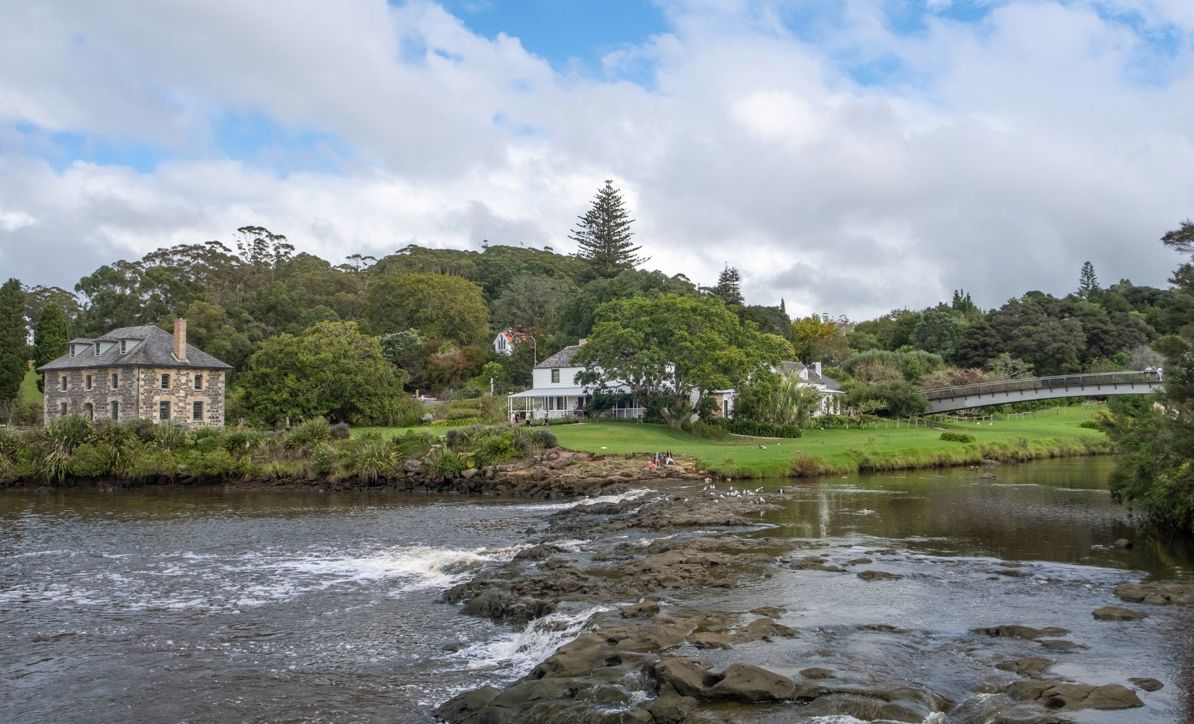
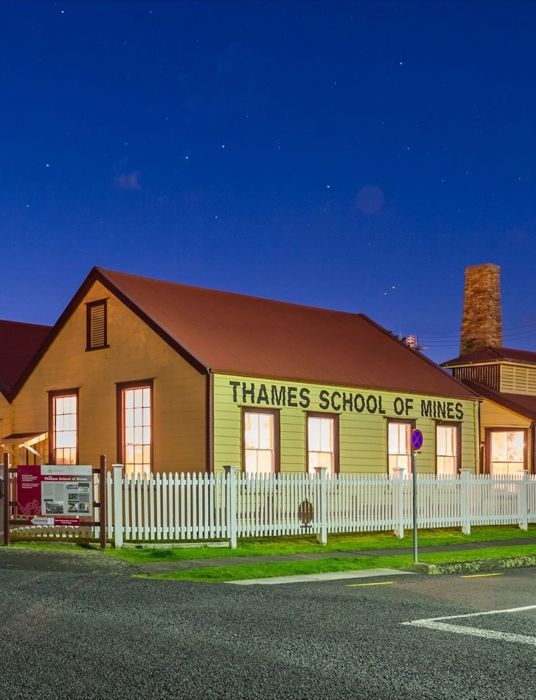
Kitts and two councillors, who gave Waimate WarriorsPerhaps stung by the loss of one of Wellingtons oldest buildings, in 1959, the Trust decided to take firm action to preserve and restore New Zealands second oldest building, the former Church Missionary Society mission house at Waimate North. After lengthy negotiations, the house and surrounding land and buildings
were eventually purchased from the Anglican Church. Professor Cyril Knight,
the former dean of architecture at Auckland University, was appointed
consulting architect on the restoration project, and his initial The revamp of the Waimate Mission House did not always run smoothly in
the early years. As renovation progressed, the increasing array of people
involved in the project began to raise concerns about the direction the
restoration was taking. Among them was Ruth Ross, an historian and member
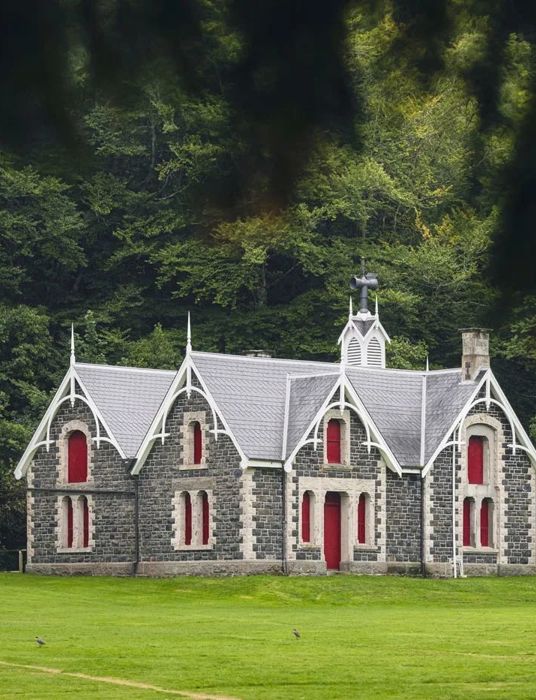
of the Northland Regional Committee. By mid 1964, So, what was the house to be restored as? A mission station? A bishops palace? Or as a church vicarage, as it had been for most of its lifetime? Two Trust working parties visited the site in 1964 to assess progress and address the questions that Ross had raised.The second working party agreed that the restoration should aim to return the building, as far as practicable, to the way it had been in the early missionary period and recommended a number of changes to the original restoration plans. Ruth Ross and Trust Secretary Bob Burnett, also an historian, continued to criticise aspects of the renovations.Not surprisingly, Cyril Knight resigned from the project early in 1965. John Stacpoole, who took over the project as architect for the Ministry of Works, agrees with some of the criticisms of the earlier restoration. In his view, the building had been made to look like a rather superior state house, and not enough research had been done to ensure the buildings original features were accurately reproduced whenever possible. The situation was even worse at Pompallier, which had been Reaching out
|
||||||||||||||||||||||||||||||||||||||||||||||||||||||||||||||||||||||||||||
![]() |
| Endeavour
replica at Anaura Bay, the site of Cooks landing. Photo: PhotoNew Zealand.com/Geoff Mason |
The first of these, marking Cooks landing site at Anaura Bay, was unveiled at a ceremony in June 1958.Within five years, the Trust had erected more than 50 plaques and noticeboards.
Scrupulous attention was always paid to ensure accuracy in the wording
of these historical pointers to avoid the errors that some MPs had drawn
attention to in Parliament in 1954.However, there was the occasional slip-up
in 1961, a plaque on the Mahia peninsula had to be replaced because
it gave an inaccurate date for missionary William Williams first
visit there. The annual report noted that the incident confirms
the Trusts conviction that intensive research must precede any positive
action.
The Trusts activities were not solely confined to mainland
New Zealand. In 1957, three plaques were erected at Scott and Shackletons
Antarctic huts once it had been confirmed that the Ross Dependency did
indeed come within the Trusts marking of places of historic importance
within the purpose of the Historic Places Act at that time.The Navy and
the DSIR carried out ongoing restoration work on the huts at the Trusts
request. On the Chatham Islands, the Trust funded work to protect and
record Moriori tree carvings.
Nor did the Trust confine itself to marking, maintaining and preserving
sites and buildings. In February 1960, the Board agreed to publish appropriate
historical studies in recognition of the importance of historical
scholarship for the Trusts work.
The first such publication was issued eight months later P.B.
Malings booklet Samuel Butler at Mesopotamia. Booklets shortly
followed on Te Porere pa, the Waimate Mission House and on the Paremata
Barracks near
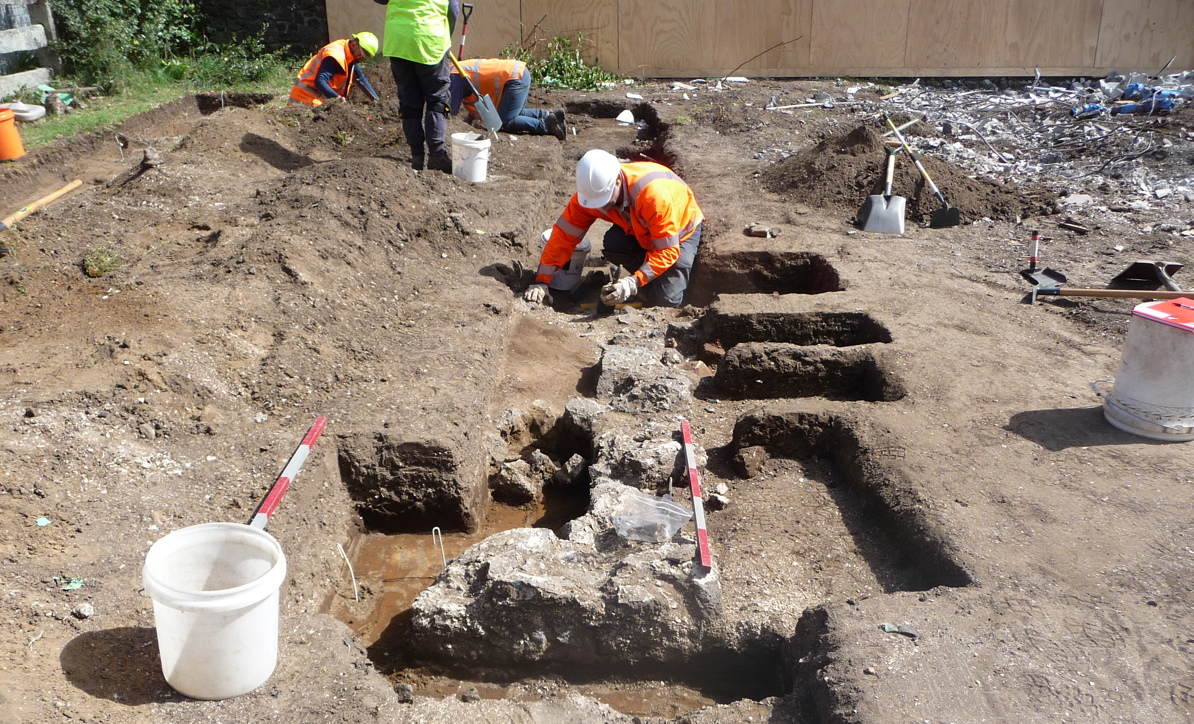
Wellington, the ruins of which were being restored by an
archaeological team.
![]() |
| Mansion
House Kawau Island, circa 1910s. Photo: Alexander Turnball Library C-23299-1/2* |
As in later years, the Trust regularly intervened to try to protect historic sites. It made representations to the Minister of Lands regarding the possible threat to the Mt Roskill volcanic cone from proposed railway works. In 1957, the Trust successfully supported preservation of the Otawhiao Mission site at Te Awamutu, which was threatened by a subdivision. In 1959 and again in 1962, it made representations opposing a proposed aerial cableway and restaurant on Mt Maunganui.
The Trust combined with the New Plymouth City Council to save the Richmond stone cottage from destruction by having it moved to a new site near the Taranaki Museum. The project was funded jointly by the Trust, the Council and private donations, and the work was completed in 1963. In other cases, the Trust had to settle for providing funds to assist archaeological work, for example, when reservoir work threatened historic Maori sites on Mt Wellington.
In 1963, the Trusts name was changed to the New Zealand
Historic Places Trust to avoid confusion with National Trusts in other
countries. By the end of its first decade, 17 regional
committees had been established and 641 members recruited.The demolition
of St Pauls had been postponed and restoration work was underway
on the countrys second-oldest building.
The Trusts annual report to March 1965 contained some philosophical
reflections on the organisations role and its progress to date.
The report noted that restoration tended to freeze the history of a once
inhabited or used building at a possibly arbitrary date, and quoted Ruskin,
who wrote in 1849,take proper care of your monuments, and you will
not need to restore them. It reflected, perhaps with excessive pessimism,
on the delays and failures that mount up over the years, the magnitude
of our responsibilities, and the smallness of our resources. However,
the Trust also saw encouragement from the evidence of a community
slowly but perceptibly emerging from its indifference to the value
of its national inheritance. A solid foundation had been laid for
the future.
| * Photo: Permission of the Alexander Turnbull Library, National Library of New Zealand / Te Puna Matauranga o Aotearoa, must be obtained before any re-use of this image |
![]() |
||||||||||||||||||||||||
![]() |
||||||||||||||||||||||||