New Zealand Historic Places Trust Pouhere Taonga


Membership of the Historic Places Trust entitles you to a range of unique benefits including a free subscription to Heritage New Zealand magazine.


From Heritage New Zealand, Winter 2005

1985-94: Years of Turmoil

by Helen Robinson

Public support for the Trust's work reached a new level... as did destruction of landmark buildings.

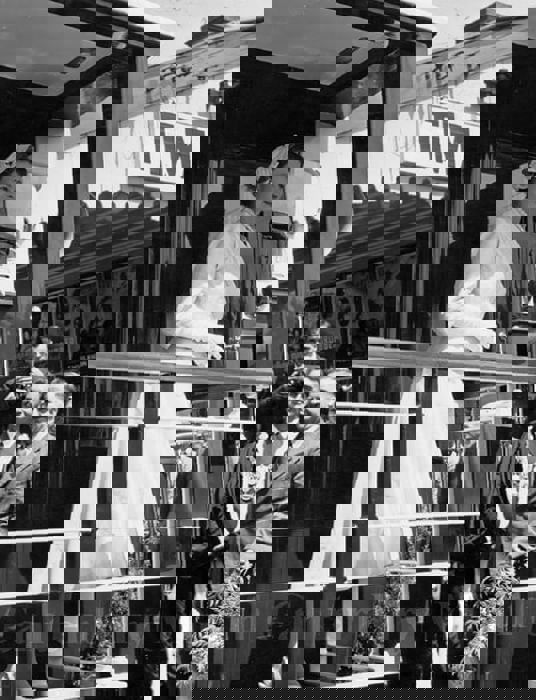
In June 1986, a 1900s Wellington building was covered in graffiti by up to 2000 people. Rather than be appalled at the building’s desecration, the New Zealand Historic Places
Trust encouraged the graffiti, with many of its members
adding to it and encouraging others to do the same.The graffiti included such messages as “don’t leave us with no yesterday” and “save me”. It was no act of vandalism, but rather a desperate attempt to save the building with a display of overwhelming public support.

People power fights for the Missions to Seamen building.
Photo: DominionPost

The structure was the Missions to Seamen building, and the
graffiti was the “Sign It to Save It” campaign. The ultimately
successful campaign to save the building illustrates a number of issues in heritage protection in the 1985 to 1994 period.
Regrettably, it was not a clean save – the magnificent interior spaces were destroyed.

Perhaps the most important of these was the public attitude
towards the demolition of historic buildings. Not previously seen as a landmark of major significance, the Missions building became the focus of the public’s rejection of the idea that progress must cost us our heritage. Between 1981 and 1989, New Zealand lost classified buildings at the rate of 1.4 per month, and doubtless lost many other unclassified but nonetheless historic places.Opposition to the demolition of His Majesty’s Theatre in Auckland a year and a half later was equally vocal, although ultimately unsuccessful.

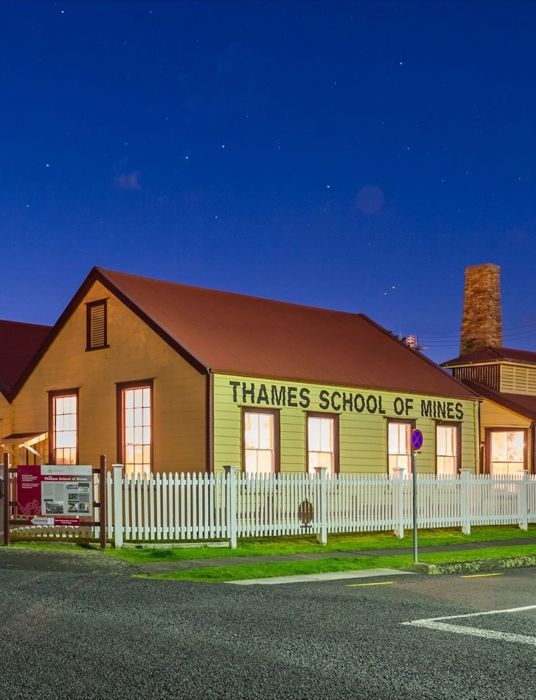
Dunedin Railway Station was saved
with Council help.
Photo: PhotoNewZealand.com/Colin Monteith

There were two key differences between the Missions to Seamen and His Majesty’s Theatre cases: ownership and council attitudes. The Missions building was Government-owned, whereas His Majesty’s was the property of Pacer Kerridge.Corporations such as Pacer Kerridge could ignore public rancour, but politicians were less likely to, as was further demonstrated by Brierley’s when it bulldozed the iconic Edmonds “Sure to Rise” factory building in 1990.

The Missions to Seamen campaign was helped by Wellington
City Council, which made the legally dubious decision to deny a demolition permit, and eventually approved the scheme that allowed the rest of the site to be developed while saving the building. Aucklanders were not so lucky. One councillor described His Majesty’s Theatre as “not worth saving”, while another called it “a rat-infested dump, aesthetically of no value”.

Council Chaos

Fortunately, not all councils had this attitude; many did what they could to preserve their heritage. Some spent considerable amounts of money purchasing and restoring historic buildings in their areas. The roll of honour includes the Arrowtown Borough Council, which donated $20,000 to the Arrowtown Heritage Fund established by the Trust; the Port Chalmers Borough Council, which bought and restored the local post office; and the DunedinCity Council, which did the same for the Dunedin Railway Station. The Oamaru Whitestone Civic Trust and Oamaru District Council purchases in the 1980s probably exceeded the spending of
all those Councils put together.

While many had good intentions, there was often little
councils could do in the face of a determined developer. They could list historic buildings in district schemes and regulate any alterations, but in practical terms neither councils nor the Trust had any real ability to save buildings from owners intent on demolition.

People power failed to save Auckland’s His Majesty’s Theatre.
Photo: NZ Herald

The Trust could, with the consent of the Minister of Internal Affairs (from 1987, the Minister of Conservation), place a protection notice over any A or B classified building but, from 1981 to 1989, only 20 notices were submitted to the Minister, and, of these, four were not approved. Perhaps the most serious problem with protection notices was that owners could appeal to the Planning Tribunal, arguing that the Trust had interfered with their property rights and was causing hardship.

The Tribunal often ruled that the Trust must either purchase the building or withdraw the notice. Since the Trust lacked the funds to purchase property – particularly prime property in downtown Auckland or Wellington – this removed the teeth from protection notices. It also deterred councils from protecting buildings through district schemes, since they could also be required to purchase or cease protecting.

It was this quandary that led the Trust to make perhaps its most controversial decision of the period: to withdraw a protection notice from the State Insurance building in Wellington. The stunning and almost unique art deco office building had been under threat since at least the early 1980s, when its companion building was bulldozed to make way for a charmless glass monolith.

A protection notice was put in place in 1987, but two years later State told the Trust it might apply to the Planning Tribunal to make the Trust buy the building or withdraw the notice. Lacking the funds to buy the building or even fund a major legal battle, the Trust withdrew the notice.

Fortunately,Wellington City Council then declined to renew State’s demolition permit, and in 1993 a judge ruled that the withdrawal of the notice was invalid; the Trust could only withdraw notices if they were no longer necessary. The building was eventually upgraded and now houses Te Puni Kokiri.

Dead ends

Other buildings were lost because the Trust and councils had
few real preservation options other than purchase: the 19th century Perano cottage in Picton is just one example, and what little remained of the South Auckland stonefields was also unprotected partially because state agencies could not find the funds to buy them.

The much-contested protection notice played a vital part in the State Insurance building campaign. However, protection notices were available only to buildings classed A or B, and even then only with ministerial approval. Both the Missions to Seamen building and His Majesty’s Theatre were originally classified C, as was another battled-over
building, the Nurses’ Memorial Chapel in Christchurch. In all three cases, the fact that these were “only” C buildings
was used to bolster the case for demolition.

In all three cases, the threat of demolition alerted the Trust to
shortcomings in the original classifications and recommended an upgrade to a B classification, which would allow the
placing of protection notices.This played an important part in the saving of the Nurses’ Chapel, but for His Majesty’s
Theatre the upgrade came too late; it was knocked down with the reclassification process still in progress.

Further weaknesses in the classification process were exposed when the list of classified buildings was updated in the early 1990s, in preparation for legislative change. A number of duplicate entries were found; some building information was clearly inadequate, particularly in the
case of C and D classifications; and it was found that an alarming number of registered buildings had been demolished
without the Trust’s becoming aware of this fact.

In total, 558 items were dropped from the list of classified buildings, of which 440 were demolished buildings. The Trust’s ignorance of some of this demolition can be blamed partially on lack of resources, but the main culprit was legislation that did not require anyone to inform the Trust before (or even after) demolishing a registered building.

Archaeological sites had protection under the 1980 Act, in the sense that it was not lawful to destroy, damage or modify an archaeological site without authority from the Trust.
In practice, this generally did nothing more than enable sites to be recorded before destruction.

Wellington’s State Insurance Building - at risk for years, it now houses Te Puni Kokiri.
Photo: Grant Sheehan

The Trust was also able to require sites to be listed in district schemes or registered on land titles. However, the expense
involved meant that by 1989 the Trust had never required a site to be listed in a district scheme and had listed only a handful of sites against land titles.There was no protection for traditional Maori sites except as archaeological sites. This meant that archaeological values legally took precedence over Maori values and so Maori were often reluctant to use the Act to protect sites. Historic areas and traditional sites could be recognised as such but had no protection, while particular kinds of historic places such as trees and landing sites were not even recognised.

The RMA

The obvious problems with management of historic and other
resources led to the passage of the Resource Management Act (RMA) in 1991 and the Historic Places Act in 1993. Both Acts improved heritage protection, although not as much as the Trust and its supporters would have liked.

One of the key changes that occurred under the RMA was
that responsibility for heritage protection shifted from central to local government. Under the RMA, councils had to “have
particular regard to … recognition of the protection of the
heritage values of sites, buildings, places and areas”. In practice, this meant that councils merely had to consider heritage issues; but the approaches which Councils adopted were variable, many having no provision in their District Plans for the protection of Maori sites. That archaeological sites were specifically dealt with under the Historic Places Act but not the RMA meant they usually missed out on protection offered by the latter.

Most councils did have particular regard to protection of
heritage values, and in the early 1990s generally encouraged the preservation of historic buildings and areas. Most listed heritage buildings and areas in district plans, which could provide some degree of protection. Several even spent large sums of money preserving and restoring historic buildings. For example, the Manawatu District Council established the Feilding Edwardian Project with a grant, the Horowhenua District Council acquired and preserved the Shannon Railway Station, the Palmerston North City Council purchased the threatened Regent Theatre after a local and Trust campaign, and the Queenstown-Lakes District Council
bought the 19th-century Williams Cottage,which had been under threat for some years. Other councils established heritage committees that in some cases included Trust staff or members.

The RMA replaced protection notices with heritage orders,
which had three major advantages over the old system. Perhaps most importantly, heritage orders could be applied to any historic place, rather than just A and B buildings as under the old system.

Crucially, heritage orders did not require the consent of politicians. Under the RMA, the Trust could simply require a council to list a heritage order in its district plan, thus protecting the place to which the order applied. The other key improvement was that the property had interim protection while the order was being confirmed.

However, one of the most serious problems with the protection notice system was carried over into heritage orders. An appeal could result in the Trust being forced to
purchase the property or withdraw the heritage order. Since the Trust was chronically underfunded, purchase was not a realistic option, and it continued to be wary of using its strongest method of protection.

Despite these problems, the RMA had some real teeth, as was shown by the Benhar Hoffman kiln case. The Hoffman kiln in Benhar, Otago, is the only kiln of its kind in New Zealand that retains its chimney and original appearance. Unauthorised attempts to demolish it in 1992 were stopped by concerned locals, and shortly afterwards the Trust placed the country’s first heritage order over it. The Clutha District Council then brought proceedings against the developer and the contracting company for acting without a demolition permit or resource consent. They were fined a total of $56,500 and ordered to repair the damage.

The kind of arrogant vandalism visited upon the kiln had perhaps always occurred. For example, the Governor House at the Dunedin Gasworks site was “accidentally” demolished at 2 o’clock one morning in 1991, although the rest of the complex was saved. The Hoffman Kiln case sent a message that such behaviour would no longer go unpunished.

Act two

The second major piece of heritage legislation passed in the early 1990s was the Historic Places Act 1993.The legislation established a new Register encompassing wahi tapu and wahi tapu areas, historic areas and historic places.All kinds of historic places could now be registered, whereas under the 1980 Act classification was available only for buildings.

Effectively, the criteria for recognising/determining heritage
significance was widened, reflecting the importance of intangible values - such as cultural, religious or spiritual - for pretty much the first time.The types of classification also changed, from A, B, C or D to I or II. Category I status is given to places of “special or outstanding historical or cultural heritage significance or value”.Category II status is given to places or “historical or cultural significance or value”.

The 1993 Act also introduced the concept of interim registration, which lasted up to eight months and had the same effect as a heritage order; it was illegal to demolish or modify a place under interim registration. Interim registration provided a useful tool for heritage protection, but did not apply to historic or wahi tapu areas, and created the ironic situation that a building would be protected while undergoing the registration process, but could be demolished once registration had been finalised. This in fact happened to Auckland’s Westfield chimney; its brief period as a Category I structure was ended by its demolition shortly after the
registration was finalised.

Throughout the 1985 to 1994 period, the Trust increased its
emphasis on partnership with developers, councils and
communities, and on advocacy rather than legal confrontation.

This was partially a pragmatic response to the underfunding that made a combative and legalistic approach unaffordable, partially a result of law changes that encouraged advocacy and partnership and gave local government more responsibility for heritage, and partially because the public’s heightened appreciation for heritage meant that the Trust was likely to get co-operation rather than opposition when trying to save heritage places. Buildings included the Landing Services building in Timaru, the former Government buildings in Wellington, and the Auckland War Memorial Museum, as well as countless less well-known houses, churches, commercial and public buildings.

There was an increasing use of heritage covenants for buildings and sites as diverse as Maori rock art sites in South Canterbury, various former post offices and cottages all over the country.These covenants allowed people to protect their buildings from the depredations of future owners.

Heritage-minded developers were assisted by a number of financial incentives. These included the Land Tax Amendment Act 1988, which exempted A and B classified buildings from land tax, the Rating Powers Amendment Act 1992, which provided some rates relief, and various rates exemptions, loans and other tools provided by sympathetic councils. Many councils also became more flexible in their regulation of building codes, particularly those regarding
earthquake strengthening. The Wellington City Council
earthquake safety policies, which had encouraged the destruction of numerous older buildings, were replaced with a policy of support for the strengthening and retention of these buildings.

A strong partnership

Nowhere was the Trust’s ethos of partnership stronger than in its relationships with Maori. Since its foundation, the Trust had taken an interest in Maori as well as Pakeha heritage, but from 1985 to1994 Maori became much more involved and empowered within the Trust. From being essentially one of many “special interest” groups,Maori became better represented and were able to convey a Maori perspective within the Trust.

Originally the Maori Advisory Committee, the Maori Heritage Council was just one of many standing committees
within the Trust.However, a reorganisation in 1990 saw all of these committees abolished except the Maori Advisory Committee, which became the Maori Heritage Committee. In 1993, under the Historic Places Act, it became the Maori Heritage Council and occupied a unique position within the Trust. The council had responsibility for considering and determining proposals for wahi tapu registration, ensuring that the Trust fulfilled its commitments to biculturalism, and generally providing a Maori perspective within the Trust.

Under the 1993 Act, Maori membership of the Board of Trustees rose from a minimum of one out of 15 members
to two out of 11. The number of staff with specific Maori responsibilities grew to include a full-time Maori buildings conservator, a full-time Maori sites officer, and eventually an entire Maori Heritage Unit.

The presence of these staff members allowed the Trust to work in partnership with Maori communities to preserve historic marae buildings.There was an emphasis on giving these communities the skills to preserve their heritage, and pamphlets and videos were produced to aid in this process. It was Trust policy that preservation teams be guided by marae trustees, and this helped win the support of many Maori. As a result, the programme was highly successful and led to the restoration of numerous wharenui all over the country.

Restoration work was also carried out on marae artwork,
and grants were made for building materials. The Trust was also involved in other Maori heritage projects, such as the restoration of the Rewi Maniapoto memorial at Kihikihi, and the erection of a series of pouwhenua in the Manawatu.The pouwhenua marked former settlement sites of Rangitane Maori, whose committee had initiated the idea.

Throughout the Trust, there was a commitment to the spirit of the Treaty of Waitangi.Te Reo Maori was promoted in a number of ways, including the Trust’s first bilingual leaflet, Nga Kainga Nga Papa Tapu/Maori Buildings and Sites, published in 1988. Several bilingual noticeboards were also erected, and in 1989 the Board approved the adoption of a Maori name for the Trust. This was Pouhere Taonga, meaning “the pillar that binds all treasures”.

The Trust’s Historic Places magazine published numerous articles on restoration of Maori heritage, and dedicated all of its 1990 issues to the relationships between Maori and Pakeha. Original cover art was commissioned from Cliff Whiting, an acclaimed Maori artist with long-term involvement in the Trust.

Legislative change assisted the Trust in preserving Maori
heritage. The Historic Places Act 1980, while giving some
recognition to Maori values, was generally seen as monocultural and inadequate in serving Maori needs.The Trust was responsible for controlling the destruction and modification of archaeological sites, and was expected to consult Maori in this. However, the legislation gave priority to archaeological values over Maori values and was geared towards salvaging information and artefacts rather than preserving sites. As a result, Maori had little use for the Act
and sometimes clashed with the Trust over archaeological sites.

The Resource Management Act gave some degree of protection to traditional sites. It compelled councils to consider Maori connections to land and wahi tapu (sacred sites) as “matters of national importance”. The Trust was enabled to request meaning that they could not be altered or destroyed without permission of the Trust.

The Historic Places Act 1993 made it compulsory for the Trust to take Maori values into account when deciding whether to allow the destruction of an archaeological site, but it was unclear whether Maori or archaeological values
should take precedence.Protection of archaeological
sites continued to centre on getting information and artefacts from the sites rather than preserving them, and some Maori groups were annoyed that iwi boards had no standing to appeal Trust decisions.

New homes

For the Trust in general, the 1985 to 1994 period was one of almost perpetual change. On 1 April 1987, the Trust left the Department of Internal Affairs to become part of the newly created Department of Conservation. The move was
welcomed by the Trust, which believed that, as DoC shared a similar vision and objectives of preservation and conservation, it would be a more natural home.

However, the relationship between DoC and the Trust did not run smoothly. DoC initially sought to incorporate the Trust within itself, creating a fully integrated heritage protection authority.However, the Trust wanted to preserve its own identity and autonomy, and Board members were concerned about what they saw as DoC’s autocratic attitude.The archaeological section had been removed from the Trust, and the boundaries between the Trust and DoC had become blurred.

Staff found themselves doing DoC work on top of Trust work,whereas the reverse did not seem to be the case. There was a general lack of communication between the Board and DoC, and it was felt that DoC had little confidence in the Trust’s ability to manage its own resources.

DoC’s attempts to absorb the Trust were halted when a series of budget cuts and restructuring moves in the late 1980s forced DoC to focus on its core functions.The relationship became smoother, and in 1991 the Trust declined the opportunity to join a proposed Ministry for Cultural Affairs, primarily because of fears that the tiny new Ministry would lack adequate funding.

Turf wars with DoC erupted again when, under the Historic Places Act 1993, the Trust became a non Crown entity – a quango at arms-length from DoC. The Department retained primary responsibility for administering the Historic Places Act and providing heritage advice to the Minister of Conservation, although it was clear that these were not amongst its priorities.The archaeological team that had been a part of the Trust remained with DoC, as did the New Zealand Archaeological Association file in which archaeological site records were held.

DoC then announced that it was unable to supply archaeological services to a non-Crown entity such as the Trust, partly because of a conflict between administering archaeological authorities for sites on public or private land, and DoC staff not being able to work off the Estate under the requirements of their own Act. The suddenness of the decision seriously hampered the Trust’s work with archaeological sites and was not resolved by the end of the period.

Although the implementation of the 1993 Act required much
extra work, the Trust, along with the rest of the public sector,
underwent a series of budget cuts in the 1990s. At times, it was unable to fulfil all of its duties under law. Prosecutions for damage to protected places were difficult to finance, at times creating the effect of a guard dog with no teeth.

The Trust became less centralised. In 1986, Lois Galer was appointed the Trust’s first Regional Officer, for Dunedin. Later that year, an Auckland officer, Di Stewart, was
appointed and by 1991 there were five Regional Officers. New Branch Committees continued to be formed, with a North Otago Regional Committee formed in 1984, a Bay of Plenty Committee established in 1987, an Ashburton Committee in 1993 and a Tararua Committee around the same time.

Committees took on greater workloads as the Trust decentralised and emphasis for heritage protection was put on local government. Some committees found it difficult to attract volunteers to some of the more labour-intensive positions.

Nevertheless, regional committees had a number of impressive achievements in this period. For example, the Wanganui committee restored the Category I Cameron Blockhouse, and several committees published or funded guides to local historic places. The old Oamaru Post Office was saved when it was purchased by North Otago Committee chair George Berry, who on-sold it to the Waitaki District Council for use as their council chambers. Auckland Branch Committee saved Dacre Cottage.

In general, the Trust continued to owe a huge debt to the numerous volunteers who ran committees, campaigned for local issues, organised walking tours, gave talks, erected signs and generally helped restore and preserve historic places in their areas.

Examples of regional committees carrying out essential but often unheralded preservation tasks were the Wairarapa committee’s painting and restoration of several historic buildings, including the Category I Lars Anderson Schous Barn in Mauriceville; and the Canterbury, Ashburton and Marlborough committees’ repair and maintenance of a number of 19th-century cob houses.

With regard to particularly pressing local issues, the Trust often worked with and through local organisations dedicated to the preservation of a particular building or area.These included the Art Deco Trust in Napier, the Riccarton Trust and Friends of the Chapel groups in Christchurch, and the Oamaru Whitestone Trust.

Some groups, for example the Katherine Mansfield Birthplace Trust, were established by decision of the Board, while others worked closely with the Trust and shared many members with it.

The Trust reaffirmed its policy of not acquiring properties, and continued to rent out or lease several of its existing properties, including the Melanesian Mission building in Auckland, which became a restaurant. The management of the Lyttelton Timeball Station was handed over to the local council, although the property remained in Trust ownership, as did Mangungu Mission Station, which was run by a local management committee from 1985. More than $1 million was spent on an extensive conservation programme at Pompallier [House] in Russell, at last reversing the ill-informed work of 1943 and returning it to its 1841 origin as a Marist printery. It was reopened to the public in December 1993. In 1996-98, a similar sum was spent on the Stone Store at Kerikeri. Togther, these were one of the finest conservation projects in the country and a tribute to Fergus
Clunie’s skill.

There were a few minor exceptions to the nopurchase
policy: a paddock next to the Trust-owned Waimate Mission House was acquired, as was the former Bank of New South Wales in Invercargill. This last purchase did not blow the
Trust’s budget, however – it cost one dollar and was later sold.

The New Zealand Historic Places Trust entered its fifth decade with some degree of optimism; knowing that the mood for knocking down anything old had generally passed, and that New Zealanders were becoming more aware of their heritage.There was hope that the new legislation would provide more protection than the old; but there was also the knowledge that the Trust would continue to battle well-funded developers and often indifferent Government armed only with meagre funding, weak legislation and the steadfast belief in the value of heritage.

 
HERITAGE PROFILE
 

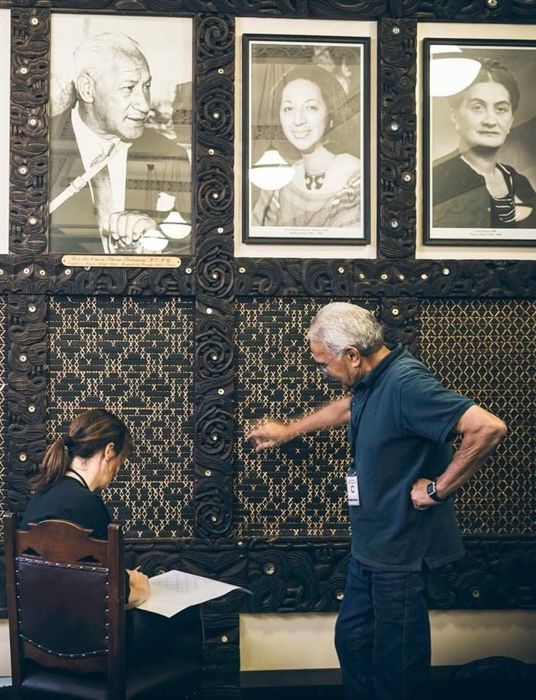
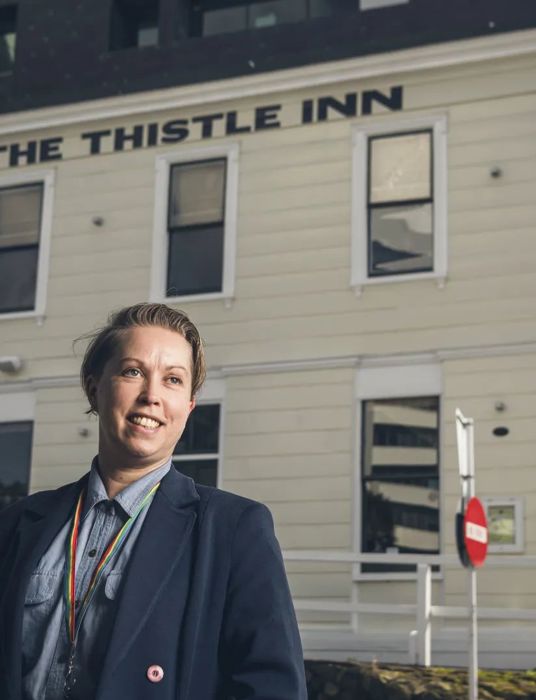
Cliff and Dean Whiting

CLIFF (above)– joined Maori Heritage Advisory Committee, 1974
Participated in first marae conservation project at Manutuke in 1977-83
Honorary Life Member, 2004
DEAN (below) – Conservator of Maori Buildings, 1990-1995
Rejoined in February 2001 as Pou Arahi (Adviser Maori Built Heritage)

Reviving restoration

One of the purposes of a carved meeting house is to depict the whakapapa and stories of its people. As such, it is appropriate
that the leaders in meeting house restoration should have a whakapapa – literal and metaphorical – that connects them to the
pioneers of this kind of restoration.

The Trust’s Maori Built Heritage Conservator is Dean Whiting, son of C liff Whiting, an acclaimed artist and perhaps the most prolific wharenui restorer of the past century. Cliff
took on this responsibility at the behest of Pineamine Taiapa, another acclaimed artist who also did restoration work. Taiapa is related to the Whitings through his mother, who, like the Whitings, was of Whanau a Apanui.

Taiapa was chosen to be one of the first students of the School of Maori Arts in
Rotorua partly because of his relationship to carvers on his Whanau-a-Apanui and his Ngati Porou sides. Many decades later, he told Cliff Whiting that he would be responsible for the restoration of the wharenui of the East Coast. Taiapa had faith in Cliff in part because of his whakapapa.
Cliff became a member of the Maori Advisory Committee of the Trust in 1974.

In this capacity, and his later role as Maori Buildings Adviser, he travelled around New Zealand helping hapu to conserve their taonga. Often he brought his family, including his son Dean.


In the mid-1980s, Dean took part in a summer conservation workshop, which led to his becoming a conservation trainee. This
involved working for the Trust and the National Museum, and travelling to Canberra to gain a degree in conservation studies. In
1990, he became the Trust’s first full-time Maori Buildings Conservator.
At the first conservation workshop, a professional conservator was called in from Dunedin. “He laid the foundations of professional conservation ethic,” Cliff
explains. “My position [became] just to maintain that connection between the Trust and iwi and to
sell the idea of the Trust.”
It has always been the Trust’s policy to work in a partnership with iwi and hapu when restoring
their marae. “Essentially, we are advisers, giving them advice on how to do their projects,” says Dean.
“We give specialist conservation advice but essentially it’s their
initiative and their work.”

An essential part of marae
conservation is teaching locals how to conserve their own heritage. “We’re trying to work towards a
stage where these places can be sustained on their own,” says Dean.

The Trust Board and the Maori Heritage Council have provided vital support. Dean says the Council has been “really helpful in terms of marae, hapu knowing that we have
them behind us almost like our kaumatua, in as much as the [Maori Heritage] Council is there guiding us.”

Cliff has gained support and
recognition from other sources as well. In fact, he is much better known for his original artwork, which
includes the contemporary marae at Te Papa, than for his restoration work. Both have been recognised in numerous honours, including Cliff ’s Order of New Zealand (held by only 27 living people at any one time), his Doctorate of Literature from Massey
University and his Honorary Life Membership
of the Trust.

Cliff ’s mentor, Pine Taiapa, owed his carving career in part to Maori statesman
Apirana Ngata (of Ngati Porou, like Taiapa), who established the School of Maori Arts. Ngata was also involved in restoration work, and both he and Dean worked on the Rangiatea church in Otaki, several decades apart.

So, although there have been countless changes in Maori art and conservation since Ngata’s time, the links are still strong between those who first saw that restoration was necessary and those who now have the
qualifications and expertise to carry it out in
an effective and scientific manner.

Helen Robinson


HERITAGE PROFILE
 

David Studholme

Feat of Clay

In an era of stress and self-involvement, David
Studholme has found a way to unwind, meet people and
preserve heritage all at the same time: restoring historic cob buildings.

“We have lawyers and doctors and all sorts come with us,” he says. “Working with clay or cob is very
good for you, it’s very soothing.”

Most of the South Island’s earliest Pakeha dwellings
were made of earth in the form of cob, clay, adobe or
wattle and daub. Surviving examples include The Cuddy, an 1854 wattle and daub cottage in Studholme’s garden. “It needed doing up,” he explains. “And there was no one to show me how to do it, so I did it myself. From there, people said, ‘We’ve got a cottage that needs doing up, can you help?’ So I said that I’d see what I could do.”

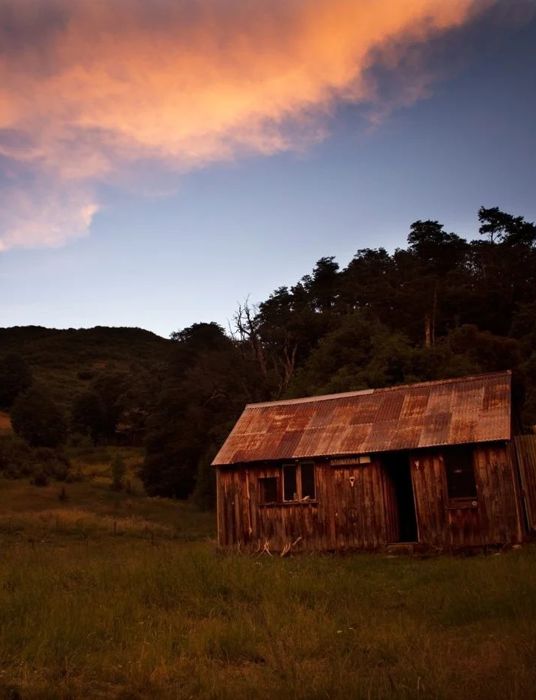
The Cuddy is now a Category I registered building, showing both the significance of the dwelling and the integrity of Studholme’s restoration work. As more and more people sought his expertise, his restoration teams grew in size and the Historic Places Trust became involved. His projects include the Acheron accommodation house in the Molesworth, the Te Waimate station, where
his family once lived, numerous cottages and homesteads all over the South Island, and even new houses.

For his efforts, he has been awarded a Queen’s Service Medal, an Honorary Life Membership of the Trust, and a Certificate of Meritorious Service, also from the Trust. However, Studholme says the work was done “just for the joy of it”.

These days, most surviving cob buildings in New Zealand have been restored, although Studholme says they require regular inspection. Broken or leaky guttering can be a particular problem, as water can do serious damage
to earthen buildings. Weather and natural deterioration mean his advice will continue to be sought after.

Studholme claims to have retired from restoration,
but it is clear that he still regularly supervises and gives advice on restoration work. “I am 92 and I’m not as fit as I used to be,” he says. “You’ve got to be very
efficient, very strong to do this kind of work. You’re
handling weights all the time, going up and down
ladders. But you make some good friends. I’ve always had good people around me; there’s never been any
shortage of helpers.

Helen Robinson


Contact Us | Helpful Tips

© New Zealand Historic Places Trust Pouhere Taonga
Support the Trust by calling
+64 4 472-4341