The epitome of the self-made immigrant, Charles Ford was
a prophet of earthquake-safe construction.
One
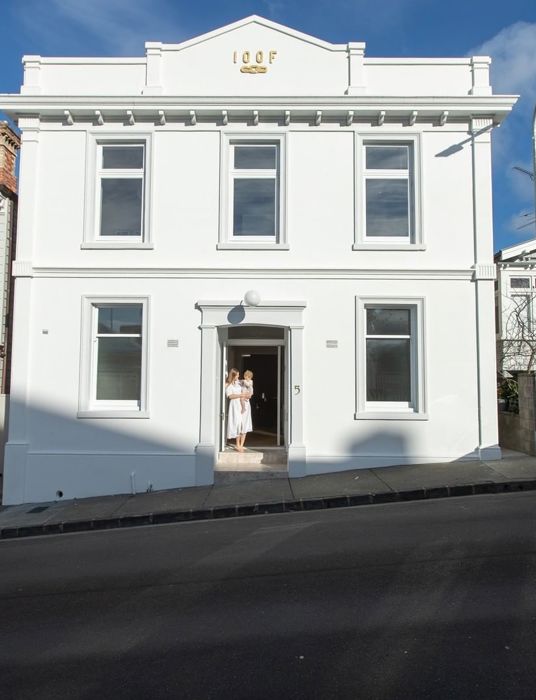
of Charles Ford's distinctive houses. Photo: Courtesty
of Architecture, Property and Planning Library
The
Architectural firm of Gummer and Ford was a thriving practice in the interwar
period, building landmark houses, memorials and offices. In all its built work,
the firm was continually reinventing styles and updating plans by adapting European
and American contemporary idiom to the New Zealand climate and lifestyle.
W. H. Gummer was a designer of incredible talent. Presentation drawings and
plans from the firm, donated to the Auckland University Architecture Library Archive
by the Gummer family, show that he had a fluid technique for creating evocative
images.
But it is more difficult to identify the achievement of the other
half of the firm's name, Charles Reginald Ford. His Christchurch, Wanganui and
Auckland homes have all passed to other families and very few of his papers were
left to any institution. Previous research on the firm concentrated on Gummer,
and there was very little detail on Ford's work before he joined the partnership.
We do, however, have a substantial written record of one of Ford's most significant
and farsighted achievements.
In 1926, Ford wrote Earthquakes and Building
Construction, the first book on the subject in New Zealand. In it,he recognises
the importance of seismic activity in relation to building construction and the
danger of traditional English methods of construction in an earthquake-prone country.
This was a groundbreaking book, as few construction or architectural textbooks
of any sort were produced in New Zealand until the advent of cheaper publishing
following World War II. Also, the subject matter was specifically pertinent to
New Zealand building conditions, rather thanbeing a general treatise.
Detail
of a Ford House. Photo: Courtesty of Architecture, Property
and Planning Library
Ford was inspired to
this research very early in his life when he saw earthquake damage around the
Mediterranean while he was in the Royal Navy. He would also have come across buildings
on a Californian tour in the early 1920s that featured preventative measures against
earthquakes.
In the book, Ford recommended the creation of a seismic
code of building practice for New Zealand. Although no legislation followed the
publication of his book, it did lead to the Government commissioning a damage
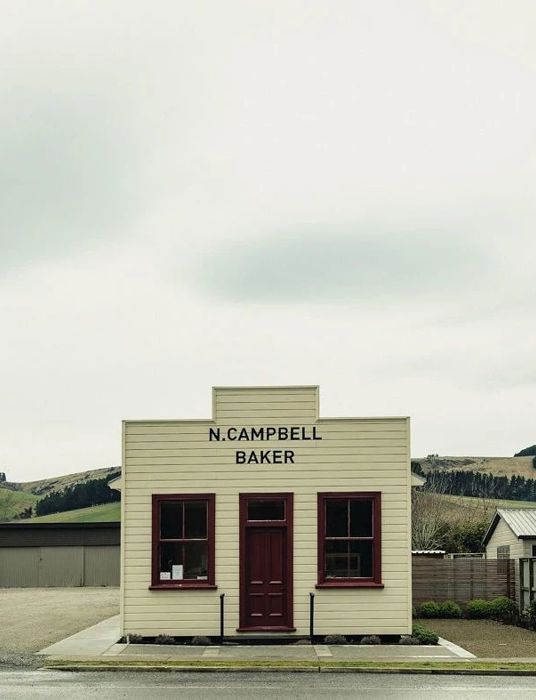
report from the firm of Gummer & Ford after the 1931 Napier earthquake. Both
Ford and Gummer were on the first relief train into the area.
The Napier
devastation led to the first national recommendations for seismic engineering
practice, prepared by a Buildings Regulations Committee. Although Ford was not
asked to serve in this first working group, he made a submission to the group
and later served on the Model Building Code Committee of 1934. It was this later
team that actually initiated legislation that became law.
While such detailed
records of Ford's career are slight, such traces as there are detail a fascinating
life of transformation. Unlike Gummer, who came from an affluent, upper middle
class New Zealand background with very good landed connections, Ford's history
was that of a poor immigrant making good by his hard work and self-education.
He was born in Britain in 1880 to a family in service, joined the Royal Navy
at 14, becoming an orphan shortly afterwards, and went to sea for six years.
In 1901, he volunteered for Scott's first expedition to the Antarctic. Ford
spent three years on this voyage, the ship being iced in for more than two years.
He became ship's steward and, later, Captain Scott's private secretary. Ford Spur,
a hill near the Keltie Glacier in the Antarctic, bears his name. After moving
to Canada and Australia, he came to Christchurch in 1906, where he was a land
agent, becoming a partner in Ford and Hadfield, and a farmer, with a property
near Ashhurst.
He was an enthusiastic writer of articles in his early
years and always said that he chose New Zealand over Canada as the opportunities
for Englishmen in Canada were extremely limited due to the prejudice against them
but that "New Zealand has been a wonderful country to me."
In December 1913, Ford advertised that he would commence his architectural practice
in Wanganui, and he became a member of the New Zealand Institute of Architects
the next year. His first known house, illustrated in Modern Homes of New Zealand
1917, shows an accomplished Californian Craftsman-style wooden house in Christchurch,
pre-empting a type that was to mature into the developers bungalows of the 1920s.
His Wanganui houses from this time are mostly weatherboard residences, featuring
the same overhanging eaves and exposed rafters but with a great deal of variety.
Some show the influence of the English Garden Suburb movement, and other, later
works, such as the second Wanganui house that he designed for himself, show an
American Colonial influence.
Ford entered into practice with Robert Talboys
in November 1919, and the Wanganui firm of Ford and Talboys lasted until September
1922, leaving an indelible impression on that city by designing many domestic
and commercial buildings.
Contemporary magazines show that in 1921 Ford
became president of the NZIA and visited California in 1922, afterwards publishing
an article on American architecture. Then, in 1923, after taking a four-month
trip to San Francisco via Vancouver, Rarotonga and Tahiti, he moved to Auckland
to set up practice with William Gummer. This practice lasted until their retirements.
The demarcation lines of who designed which building within the firm of
Gummer & Ford were blurred and have become more so with the passing of time.
However, according to Ford's obituary, several houses are directly attributable
to him, and these show a consistent style that differs from work that we know
to be by Gummer. Whereas Gummer was more radical in his designs, Ford continued
to develop the American Georgian and Spanish Colonial Revival idiom for domestic
work.
Ford had become president of the NZIA in 1921-22. Under his presidency,
pressure was applied to create a Chair of Architecture at Auckland University
College, which was established in 1926.
Outside of the practice, he was
known as an authority on fine arts, antique furniture and rare china, with his
own collections being donated to the Auckland War Memorial Museum on his death.
Charles Reginald Ford came halfway around the world to create this new life
for himself and, in the end, it was not only he who benefited from his own hard
work. His lasting legacy was left to New Zealand. We owe our first architectural
school to his vision, and his collector's eye is behind some of our finest museum
and art gallery collections.
The writer has written the catalogue
for, and co-curated, the exhibition In the Beaux-Arts Tradition, William Gummer
Architect, which is being held at the Hawke's Bay Museum in Napier until 26
February 2006.
Places to Visit
Learn
more about the historic sites located in and around
the regions of New Zealand