New Zealand Historic Places Trust Pouhere Taonga


Membership of the Historic Places Trust entitles you to a range of unique benefits including a free subscription to Heritage New Zealand magazine.


From Heritage New Zealand, Summer 2005

Gold New World

by Chris Jacomb, Rick McGovern-Wilson and Richard Walter

The remains of a once thriving Otago Chinese settlement are the site of a major heritage development .

The dig at Lawrence will provide an invaluable insight into a unique piece of Chinese-New Zealand history.
Photo: Provided by Dr Richard Walter

An innovative heritage development kicked off this year in Central Otago with the commencement of archaeological excavations on the site of the 19th-century Lawrence Chinese Camp. A team of archaeologists is working with the Lawrence Chinese Camp Charitable Trust on a project that will contribute towards a heritage tourism venture and increase our knowledge of New Zealand's Chinese past.

The Otago gold rush of the early 1860s brought thousands of hopeful prospectors into the province, where some made their fortune. However, gold rushes are, by definition, brief, and within a few short years it was time to move on to the next big rush, this time in the Victorian goldfields.

Alarmed by this exodus of valued labour, the Dunedin Chamber of Commerce decided to encourage Chinese immigration. Invitations were sent, backed by the Otago Provincial Council, encouraging Chinese working in the Victorian goldfields to relocate to New Zealand. The first party arrived in December of that year, and between 1869 and 1871 several thousand Chinese sojourners migrated directly from China in specially chartered ships. Meanwhile, concern at the growing number of Chinese in the Tuapeka District led to a by-law banning them from residing and doing business within the confines of the township of Lawrence.

To provide a place for the Chinese to live, the Lawrence Chinese Camp was established, about a kilometre from the outskirts of Lawrence, on the main route inland to the goldfields By the 1870s the Chinese formed nearly half the population of gold miners in Otago and within a few years the camp had grown to a small township in its own right. When surveyed in 1882, it had between 30 and 40 buildings. The 1882 survey was the first made of a Chinese settlement in New Zealand and was fortuitous for two reasons. First, the survey facilitated property ownership and indeed, some of the surveyed properties have remained in descendant hands until recently. Second, the survey plans provide historians and archaeologists with a remarkable document of the physical organisation of a New Zealand-Chinese goldfield settlement, along with the residents’ names and, in some cases, property uses.

The main joss house today, at Maryport St, Lawrence.
Photo: Provided by Dr Richard Walter

By the early 1890s the Lawrence Chinese Camp had grown to a resident population of more than 120 persons and had become relatively prosperous – one of the centres of the growing Chinese population of Otago. Most of the occupants made a living servicing the goldfields, few being miners themselves.

There were several shops at the Lawrence Chinese Camp as well as at least two joss houses, one each for the Poon Fah and Naan Shum associations. Newly arrived residents, coming either direct from South China or making their way from the goldfields of Australia, were housed in the Chinese Company immigration barracks, one of the largest buildings recorded in the Camp. The community supported a range of tradesmen, including the most highly regarded traditional Chinese doctors in Otago. There were also eating places, gambling and opium dens, drinking shops and boarding houses. By the late 1870s the Lawrence Chinese Camp had a reputation for its colour – and occasionally for the more seamy side of its character. Goings on at Lawrence were frequently the subject of newspaper articles of the day. In fact, the camp rapidly became one of the major sights for visitors to Otago, and the Chinese New Year celebrations were legendary, attracting many European visitors as well as the Otago Chinese. With its Imperial Dragon flags flying along the highway, the Lawrence Chinese Camp was a vibrant settlement with a special character, and it played an important role in the emerging identity of Otago.

During the 1880s the fortunes of the Lawrence Chinese Camp fluctuated. Some individuals managed to set up successful businesses, but this was also a period of intense persecution by the European establishment, encouraged by the Tuapeka Times which, at a low point in 1888, described the Camp residents as a “filth-begrimed, opium-besotted horde of Mongolian monstrosities”.

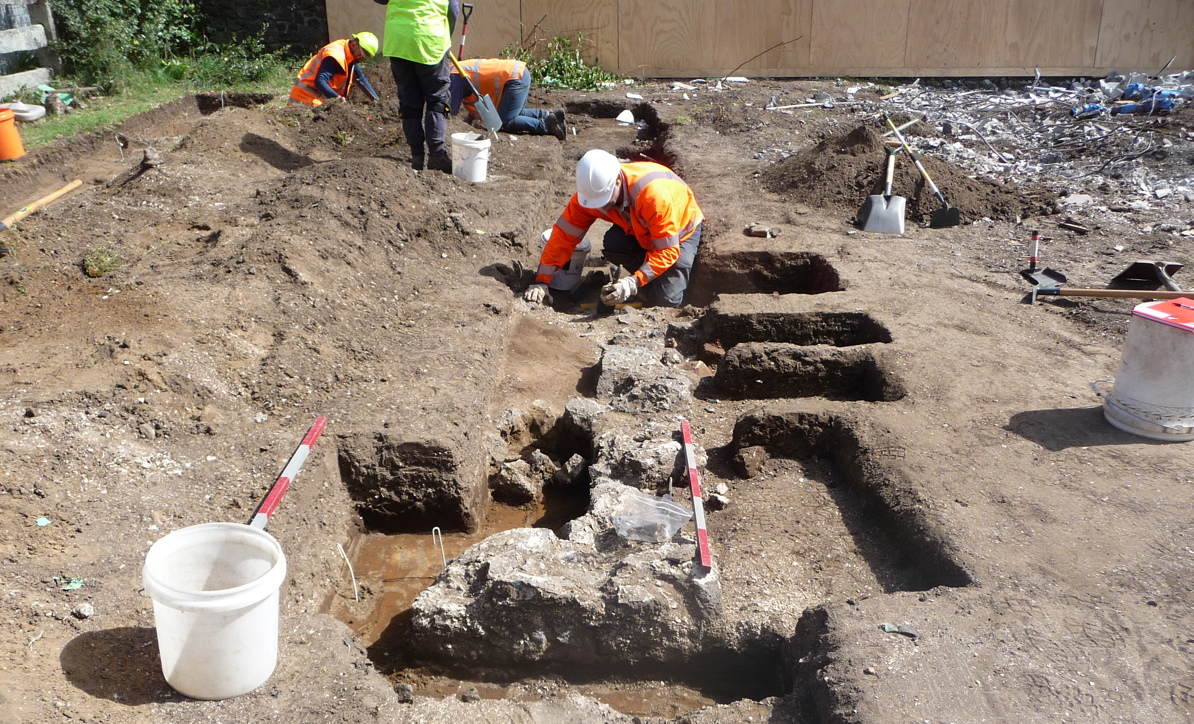
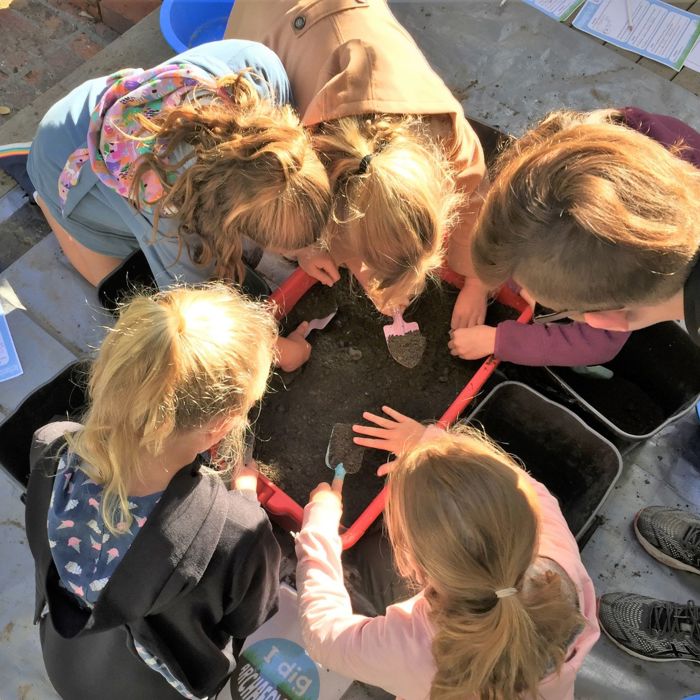
Archaeology is painstaking work.
Photo: Provided by Dr Richard Walter

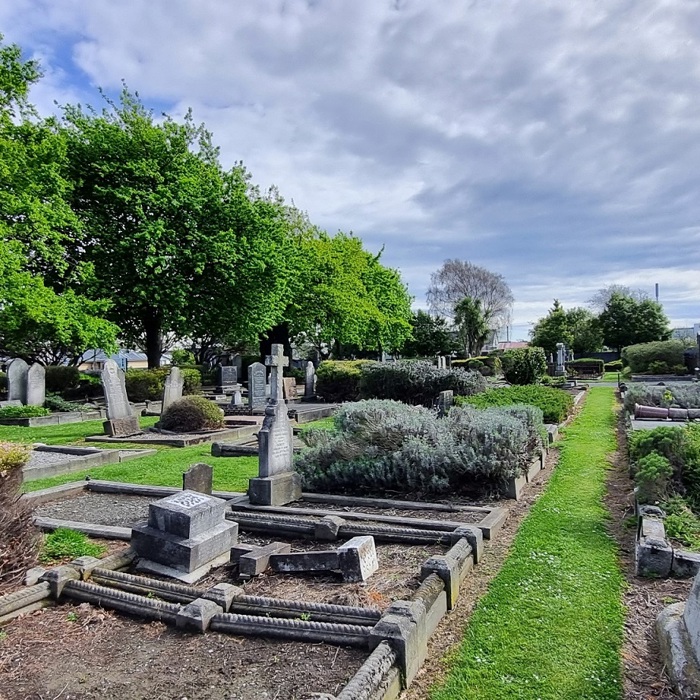
Nevertheless, the Camp lived on, although declining in prosperity from the mid-1890s. In 1903 Sam Chew Lain, a Hakka Cantonese man who had become a leader within the community, died. His tomb, erected by his fellow masons of the Lodge St George, and the most elaborate memorial in the Lawrence cemetery, testifies to the ironies and contradictions of early Otago society. Sam Chew Lain was most famous for being the owner of the Chinese Empire Hotel. Established in the early 1870s, the hotel was rebuilt in brick in 1884 and became one of the best known and highest quality hostelries in Central Otago. After Sam Chew Lain’s death, the hotel passed into European hands and was later converted into a three-bedroom house. Along with the stables, the hotel is the only remaining structure from this once thriving Chinese township of the Otago goldfields. The last resident of the camp, a Mr Chow Shim, died in 1945, and from this time the camp was essentially abandoned.

Photographs of the Lawrence Chinese Camp taken in the late 1940s show decaying wooden structures rising out of scrub and long grass. Today the site is a bare paddock where sheep graze. Nothing remains to remind visitors of the Chinese settlement except the hotel site on the edge of the Beaumont highway, and a faint ridge running down the middle of the field, marking the roadway along which the wooden houses, shops, boarding houses and places of entertainment were once lined. But beneath the grass there is still a rich and well-preserved record of this lost community awaiting the archaeologist’s trowel.

Haaka Cantonese grave.
Photo: Provided by Dr Richard Walter

In 2003 the Lawrence Chinese Camp Charitable Trust was formed to administer, and raise funds for, a major heritage development at the site. Brainchild of leading Chinese historian and retired GP Dr James Ng, of Dunedin, the project has four main components. Predominant will be the reconstructed 19th-century Chinese goldfields township itself. This will involve reconstruction of many of the buildings that once stood on the site, as well as restoration of the only two buildings that remain – the Chinese Empire Hotel and its stables. A museum of Chinese history is also planned for the site, where artefacts from the Otago goldfields will be displayed along with the stories of the miners themselves. The museum will have a strong research focus as well, and will be a centre for the study of the history and archaeology of the Chinese in New Zealand.The Lawrence Chinese Camp heritage will celebrate the strong connections of the New Zealand Chinese to their homeland with a Chinese garden and possibly a replica Cantonese village. Finally, there may be scope for an international tourist facility including a restaurant and hotel.

The plans for the Lawrence Chinese Camp formulated by the Trust provide a unique opportunity for archaeologists. Recognising the potential for the project to support basic archaeological and historical research the Trust Chair,
Dr James Ng, consulted archaeologists from the Trust and the University of Otago to put together a research team. The team was given the brief of undertaking archaeological investigations which will meet statutory heritage requirements, generate information that will guide the reconstruction project and guarantee authenticity, and which will contribute new knowledge about New Zealand's Chinese heritage. The archaeological research is being undertaken as a partnership between Southern Pacific Archaeological Research (SPAR), a research unit within the Anthropology Department of the University of Otago, and the Historic Places Trust. The three project directors are the writers of this article, Richard Walter (SPAR, University of Otago), Rick McGovern-Wilson (Historic Places Trust), and Chris Jacomb (SPAR, Historic Places Trust). Operational funding has been provided by the Community Trust of Otago and the McMillan Trust.

Excavations of selected areas of the Lawrence Chinese Camp are critical to the unfolding of the larger project. For the first season of work in March-April 2005 three areas were chosen for excavation. All were located on the land parcels marked on the 1882 plan as being parts of Sam Chew Lain's residential and commercial property. An area adjacent to the Empire Hotel was exposed in order to identify traces of the earlier structure.

Miners and Rev Don c. 1904 Tuapeka Flat.
Photo: Provided by Dr Richard Walter

This was required because the development plans set the reconstruction of the hotel as an early priority. Excavation was necessary also to look for any evidence of the earlier hotel that would be threatened by construction activities. Additionally the excavation was designed to identify the foundations of the demolished portions of the 1884 hotel in order to inform the reconstruction and interpretation.

The second area targeted lay just behind the hotel site, where the first joss house was indicated on the old plans. Unlike the hotel excavation, which was successful in identifying the layout of both structures, the joss house excavations were more equivocal. While some traces a building, as well as a rich assortment of Chinese and European artefacts, were recovered, it appears that this part of the site had been heavily modified by late 20th-century gardening and it was not possible to determine the exact location, much less the size and shape of the joss house with any certainty.

The third area identified for excavation in the March-April excavations, and the largest exposure undertaken to date, was on the residence of Sam Chew Lain itself. As a prosperous member of the community, indeed of the wider Tuapeka district, the excavation of the house was prioritised for reasons that were more to do with pure research than with facilitating construction activity. The archaeology team, together with the LCCCT, agreed that a detailed examination of Sam Chew Lain's house site would provide information that could be used to build up a detailed picture of social life within the community. Furthermore, exposing an entire house site in this way would test the potential of the subsurface remains for future display and interpretation projects. In particular,
the team was interested in gaining a good understanding of the quality of preservation as it has been considering the idea of leaving some excavated areas of the site open, with appropriate protection measures, for permanent public display.

The excavation of Sam Chew Lain's house site uncovered an excellent and well-preserved record of the living structure, its internal layout and dimensions, and its relationship to other dwellings and ancillary structures. A well was located adjacent to what would have been the kitchen area, and this was excavated to the water table. It was a carefully made brick-lined structure which had been infilled with material dating from the 1800s right through to the 1960s. Along the street frontage of the house was an intact brick-lined drain. The distribution of artefacts within the house site provides
a record of the way in which the house was used, and the team is now confident that the site has an excellent and easily accessed record that is fully amenable to most of the development plans of the LCCCT.

At the time of writing, the second excavation season has just begun. A field crew of 10 archaeologists arrived on October 23 to set up camp and begin gridding up the site and removing turf from the selected excavation units. This season's work will focus on the "immigration barracks" where new arrivals stayed temporarily, Sam Yick Mong's store, and several smaller buildings. Many of these buildings were affected by a devastating fire that swept through the camp in 1898.

There is increasing interest in the histories of New Zealand's non-British settlers. The Chinese were the largest non-European and non-Polynesian immigrant group to arrive in the second half of the 19th century. Understanding the role the Chinese miners played in the development of New Zealand society is one of the key areas of current research, and the Lawrence site will provide vital archaeological evidence for this.

Post-hole patterns, for example, can tell us about the size and shape of houses, while midden dumps can provide an indication of what was eaten, and the distribution of artefacts can tell us what activities took place in the various parts of the site. This type of information can be used to generate a rich social and cultural history of the community. The Lawrence Chinese Camp has so far proved to be particularly rich in all of these lines of evidence and will provide fascinating new insights into Chinese life in this part of Otago.


Places to Visit

Learn more about the historic sites located in and around the Otago region of New Zealand


Contact Us | Helpful Tips

© New Zealand Historic Places Trust Pouhere Taonga
Support the Trust by calling
+64 4 472-4341