The
Polynesian explorer Kupe is credited with the initial discovery of Wellington
Harbour. From Maori tradition it is estimated he arrived with his followers around
the 10th century.
Evidence of early Maori settlement and cultivation can
be found at sites all around the Wellington peninsula.
The capital city
of New Zealand since 1865, Wellington has been a focus of European settlement
from 1840. It borders a magnificent harbour and boasts a varied range of architectural
styles. Fire and earthquakes destroyed many early buildings, so only a few survive
from the 1850s and 60s.
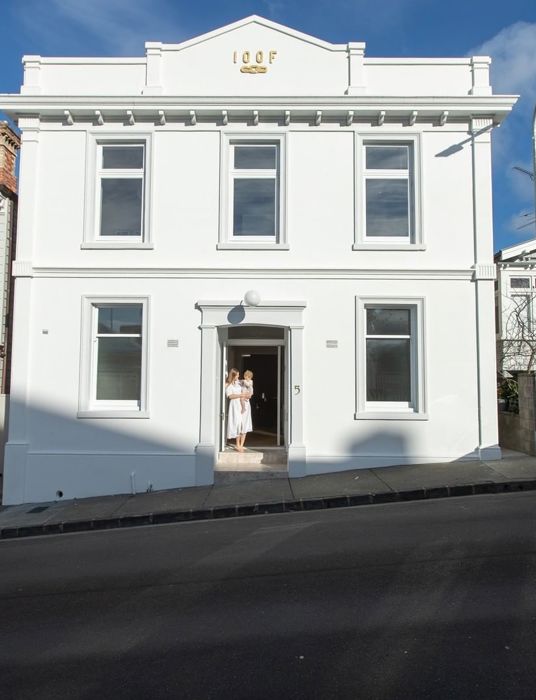
Antrim House
63 Boulcott Street, Wellington
Antrim House was built in 1904-05 for Robert Hannah,
founder of Hannah's footwear company and one of the most successful businessmen
of his time.
Antrim House (named after the county of his birth) was his
last home, and had all the latest conveniences including gas, electric light and
bathrooms. It was designed in Italianate style by the firm of Thomas Turnbull
& Son, which designed many other notable Wellington buildings. It has kauri
panelling and staircase, stained glass windows (all different) and ornate ceilings
by Wunderlich of Sydney. In the grounds are a stable block and conservatory.
In
1979 Antrim House was given to the New Zealand Historic Places Trust, who use
it as their headquarters.
Though surrounded by high rise buildings, Antrim
House still has its lawns and trees, an oasis of green in the city.
The
Hannah Room is available for hire for business meetings.
Antrim
House is open weekdays during normal office hours. Access is generally limited
to the hallway and Hannah Room.
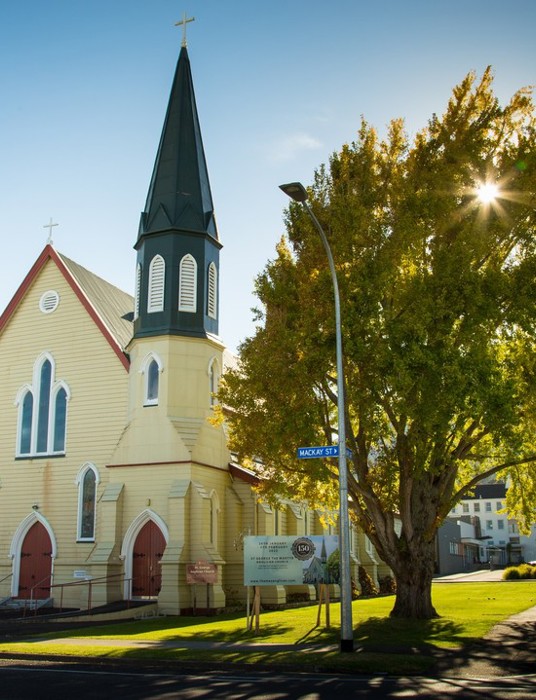
The Cathedral Church of St Paul built also to serve
as the parish church of Thorndon, was consecrated in 1866. It was designed in
late Early English Gothic style by the Rev. Frederick Thatcher, noted for the
churches he built in the North Island for Bishop Selwyn. This, his finest work,
was built in native timbers: totara, matai, rimu and kauri. It was altered and
enlarged several times over the years by several architects including Christian
Julius Toxward and Frederick de Jersey Clere, Diocesan Architect from 1883.
In 1954 a new Cathedral was begun, with the intention of demolishing the
old one. After much protest the decision was finally reversed in 1966 and Old
St Pauls, as it is now known, was taken over by the government.
The church
has a superb timber interior, stained glass windows and memorial brasses, with
a carved oak pulpit in memory of popular Premier Richard ("King Dick") Seddon.
Old St. Paul's attracts thousands of visitors each year and is a popular
venue for weddings and otherservices.
Open daily 10.00am - 5.00pm
Closed Good Friday and Christmas Day
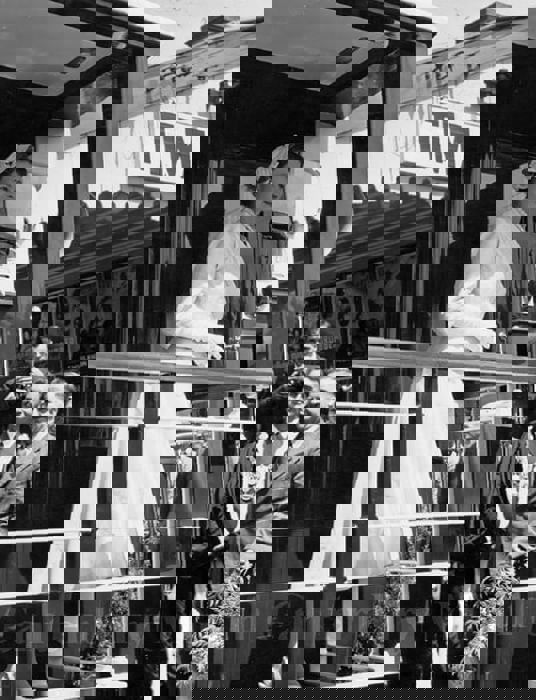
A special exhibition to celebrate
the lives of Americans and New Zealanders who came together in a time of need
to support a friend and ally. On now, until 2009.
New Zealand's first permanent lighthouse, Pencarrow
is a cast iron building first lit on 1 January 1859. Its first keeper was Mary
Jane Bennett, New Zealand's only female lighthouse keeper. The light, at first
colza oil, and then kerosene, was discontinued in 1935.
The tower is preserved by the New Zealand Historic Places
Trust and can be reached by an easy 8 kilometre walk from
Eastbourne.
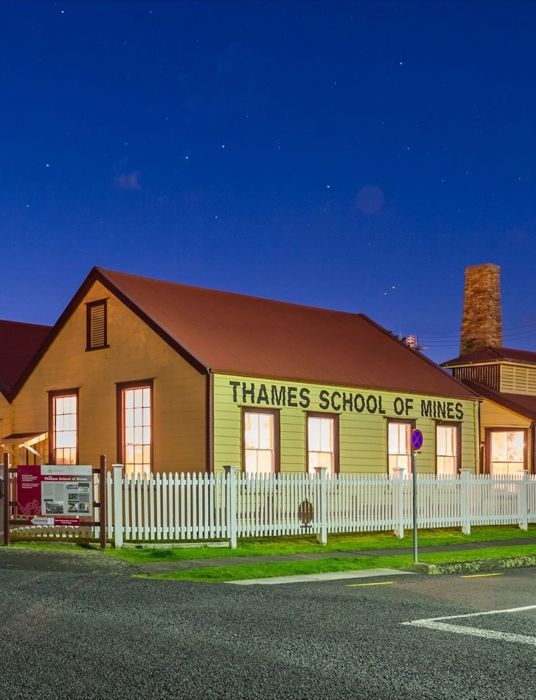
The only surviving wooden blockhouse, Wallaceville
was built and occupied from 1860 to 1861 but was never involved in hostilities.
It was used as a Police Station from 1867-1880, and was declared an historic
reserve in 1916. Today, the Blockhouse serves as the headquarters for a service
club.
For
more information on what to see and do in Wellington, visit the official tourism
website www.WellingtonNZ.com
Without
these Old Theatres
The
baroque splendour of Wellingtons St James Theatre is wonderfully expressed
in its triple tiered boxes. The grand Edwardian theatre with its rococo auditorium
was refurbished three years ago. Now, with its enlarged proscenium arch improving
sight lines, the new foyers and backstage area, the St James is a preferred venue
for many of the performing arts.
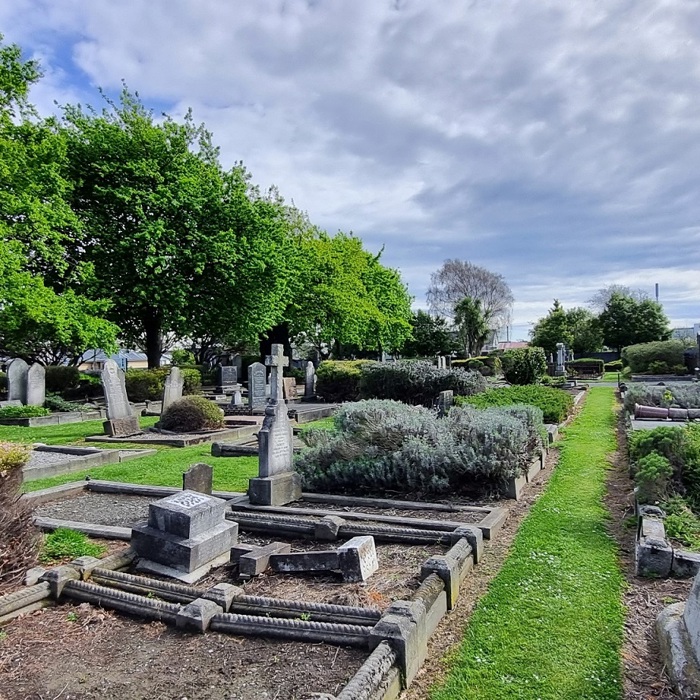
Bolton Street Memorial Park in central Wellington, contains the city's
original burial ground commonly known previously as Bolton Street Cemetery.
It commemorates many early pioneers and important historical figures from
the 19th Century.
Bolton Street Memorial Park, newly named in 1978, is an excellent example
of a colonial cemetery, using imported and local stone, iron and wood.
Its iron memorials, wooden tablets, picket fences and wrought iron surrounds
are particularly significant and comparatively rare in New Zealand.
The Chapel information centre on Bolton Street, is open from 10 am to
4 pm daily
Christ Church~Taita is the oldest church in the Wellington region. Built
by pioneer families, the Church and graveyard are frequently visited by
their descendants and by visitors from all over the world.
It is registered as a Category
I historic place.
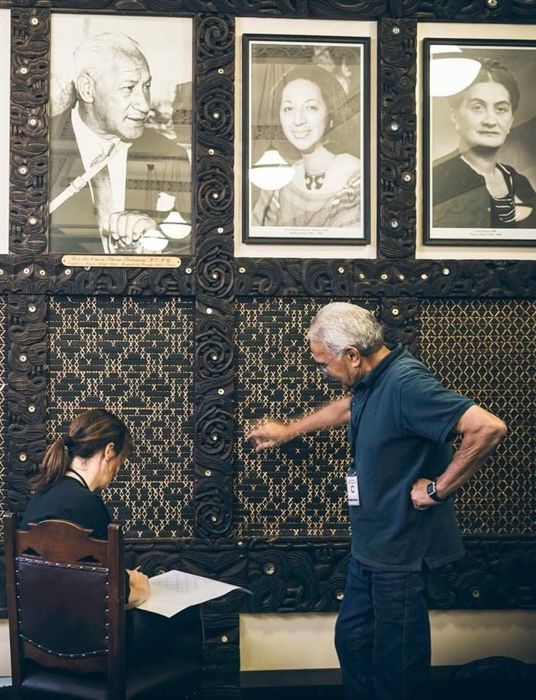
This museum tells the stories of Wellington, the events people and cultures
that have defined our capital city.The former Bond Store, a significant
heritage building on Queen's Wharf is the home for these stores of land
and sea.