Skip to content.

Historic New Zealand - Pouhere Taonga

Frankton Junction Railway House Factory

print page

2, 8, 8A, 8B, 8C, 8D, 8E Railside Place, Dinsdale, HAMILTON

Tell us what you think about the Register Online.

We're looking for ways to improve the Register Online and people's experiences when using it. Please help us by completing this brief survey.

Frankton Junction Railway House Factory
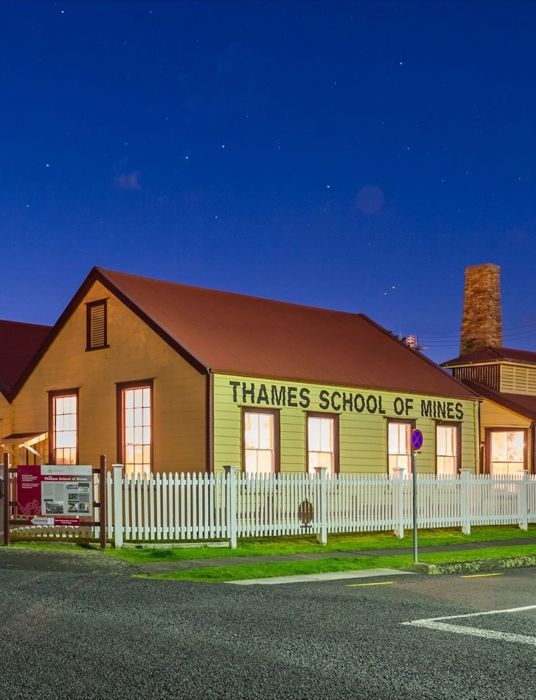
Frankton Junction Railway House Factory. Photographed by Stuart Park. Copyright NZ Historic Places Trust

Enlarge image

Registration Type
Historic Place Category 1
 
Register Number
4946
 
Date Registered
22-Aug-1991
 
Location Description
Railside Place, off Rifle Range Road
 
Legal Description
Lot 9 DP 345440 (CT 186263), South Auckland Land District
 
Extent of Registration
Extent of registration includes the land described as Lot 9 DP 345440 (CT 186263), South Auckland Land District, and the building known as Frankton Junction Railway House Factory thereon, and its fittings and fixtures.
 
City/District Council
Hamilton City
 
Region
Waikato Region
 
Summary
DESCRIPTION:

From the late nineteenth century railways became increasingly important for transport and communication in New Zealand. The itinerant nature of railway work meant that readily available low cost housing was a recurring problem. Following World War 1 the housing problem escalated and while the Railways Department had provided some accommodation before 1919, it was from then that the need to provide housing close to railway stations, both rural and urban, throughout New Zealand became apparent. Under William Ferguson Massey (1856-1925) the Railways Department decided to enter into a large scale housing scheme which would provide accommodation for all permanent members of its staff.

Headed by George Troup, the Architectural Branch of the Railways Department was established late in 1919 to design and supervise the construction of what became known as "railway houses". Architecturally designed houses were to be pre-cut in a building which became known as the House Factory and mass-produced.

Frankton Junction was chosen as the site for the House Factory because of its central location and the large number of employees resident in the area. The factory was erected near the Frankton Junction yard sidings in 1921-22 and cutting began in July 1923. Standardised parts including studs, wall plates, weatherboards, linings and sash and door mouldings were cut, numbered and marked for specific house types and complete house "bundles" were then sent by rail to the various locations sited near railway stations around the North island. South Island houses were not prepared at the House Factory. The pre-cut houses then took 2-3 weeks to assemble. The accompanying "drawings" covered every facet of construction to aid the unskilled labourer.

While cutting started in July 1923 the main operations were not underway until 1924-25 by which time about 400 houses were being cut each year. By 1926 there was a congestion of houses on the racks and some were placed at the disposal of local bodies. The operation was deemed too efficient and under pressure from the building industry, the Government closed the factory. In its last year, 1928, only 50 houses were cut and following the closure of the factory in 1929 most plant and equipment was moved from the site. More than 1300 staff houses plus other railway buildings had been cut at the factory.

Frankton Junction was one of ten major North Island settlements planned, surveyed and laid out by 1922. It became the biggest and most complete of the Railways Department settlements comprising some 160 pre-factory, factory-cut, post-factory and state houses.
 
Historical Significance
The Railways Department housing scheme was the first large scale housing scheme in New Zealand. It followed Seddon's Workers' Dwellings (dating from 1906) and Samuel Hurst Seager's "garden suburb" at Sumner Spur, Christchurch (1902-14). It was also the first time that an employer had provided both employment and permanent accommodation on a large scale in New Zealand, and the house factory was the focus of this settlement and the provision of railway housing throughout New Zealand.

The House Factory was the only one of its kind in the southern hemisphere in the 1920s, and survives as the hub of this innovative and revolutionary concept in New Zealand's social and industrial heritage.
 
Physical Significance
ARCHITECTURAL QUALITY:

The House Factory is a good example of a purpose-built industrial building. Its form is derived largely from the distinctive saw-tooth roof which allows a large open floor area and extensive glazing along the south side of the building.


TOWNSCAPE/LANDMARK VALUE:

With its prominent roof lines and comparatively large scale, the House Factory is a prominent building in the suburb of Frankton. It is visually and physically related to the surrounding railway houses, many of which were cut at the factory.


Construction Professionals
 
Construction Dates
  • Modification: 1924 (circa)
  • Modification: 1929 (circa)
  • Modification:
  • Original Construction: 1922 (circa)
 
Construction Details
Timber framed superstructure clad with weatherboards. Timber framed saw-tooth roof clad with corrugated iron.
 
Information Sources
  • New Zealand Building Progress,December 1920 pp 79-81 October 1923 pp 43-45
  • Archives New Zealand (Wellington),R 311/1981/1 Railway Dept Part 1 1895-1921, 11/1981/4, Part 2 1921-1955, 11/1981/4 House Building Pgm, Part 1 1919-1926, 11/1981/5 Miscellaneous, Part 1 1919-1952, 11/1981/11 Newspaper Reports, Part 1 1919-1925, 11/1981/13 House Factory at Frankton Junction Part 1 1920-1944, 11/1981/15 Machinery Band sawmill & house factory 1920-1944, 11/1981/26 Mr G Troup's report on America Part 1 1924-1925 National Archives, Auckland: 1061/34 Hamilton Box 32 Frankton Institute File
 
Other Information
This historic place was registered under the Historic Places Act 1980. This report includes the text from the original Building Classification Committee report considered by the NZHPT Board at the time of registration.


Information on this page is correct to the best of the Trust's knowledge. If you have any additional information you would like to share with the Trust, please contact the Registrar. You may wish to contact the Trust to view our paper records.